PROC-X MANUFACTURING GROUP / DP PULVERIZERS
Industrial Milling & Size Reduction Systems
Control the particle. Shape the product.
Compare grinding and classification technologies around your material, target distribution and production requirements.
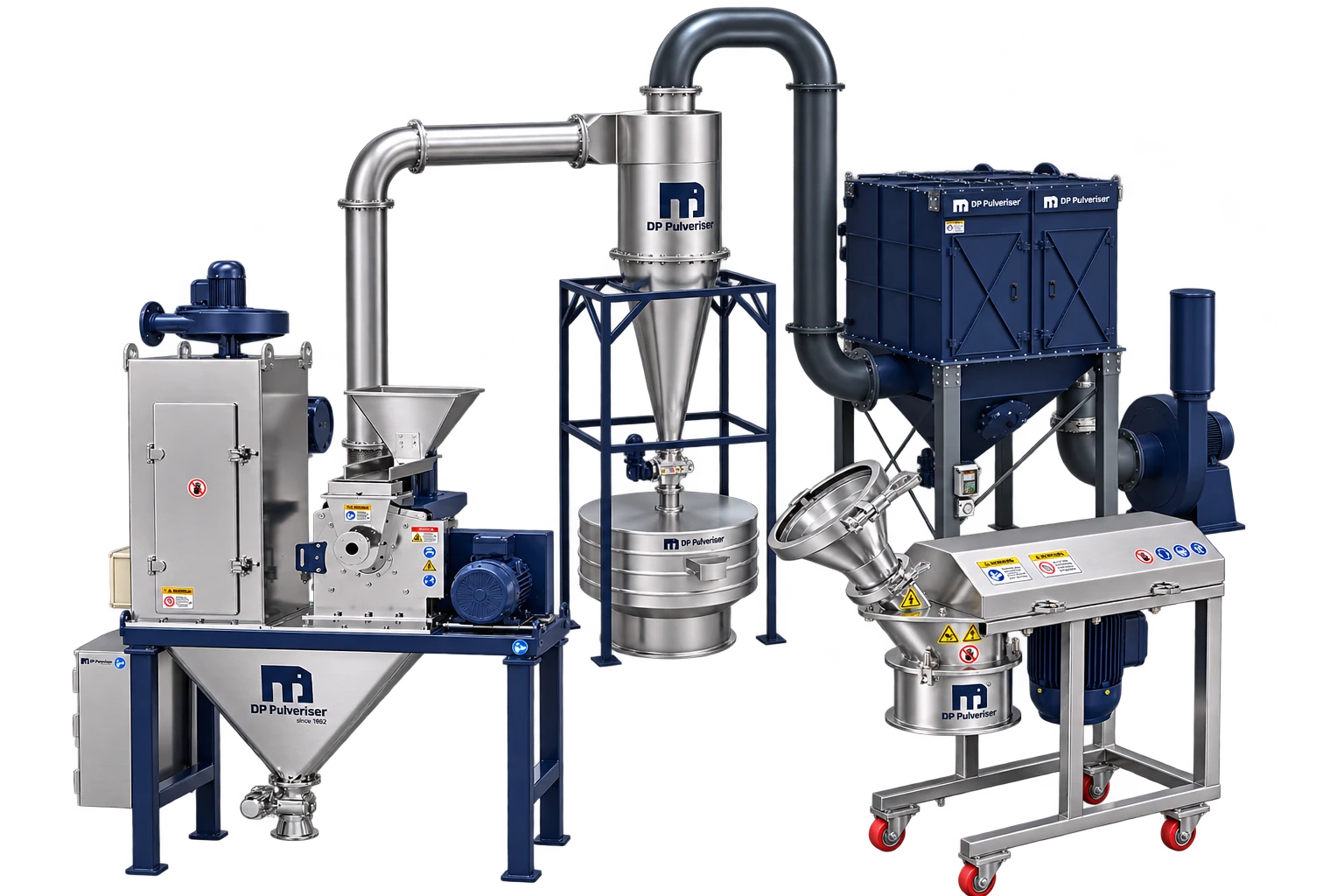
Specialist equipment. Connected process thinking.
Find your milling technology.
DP Pulverizers
Air Classifier Mills
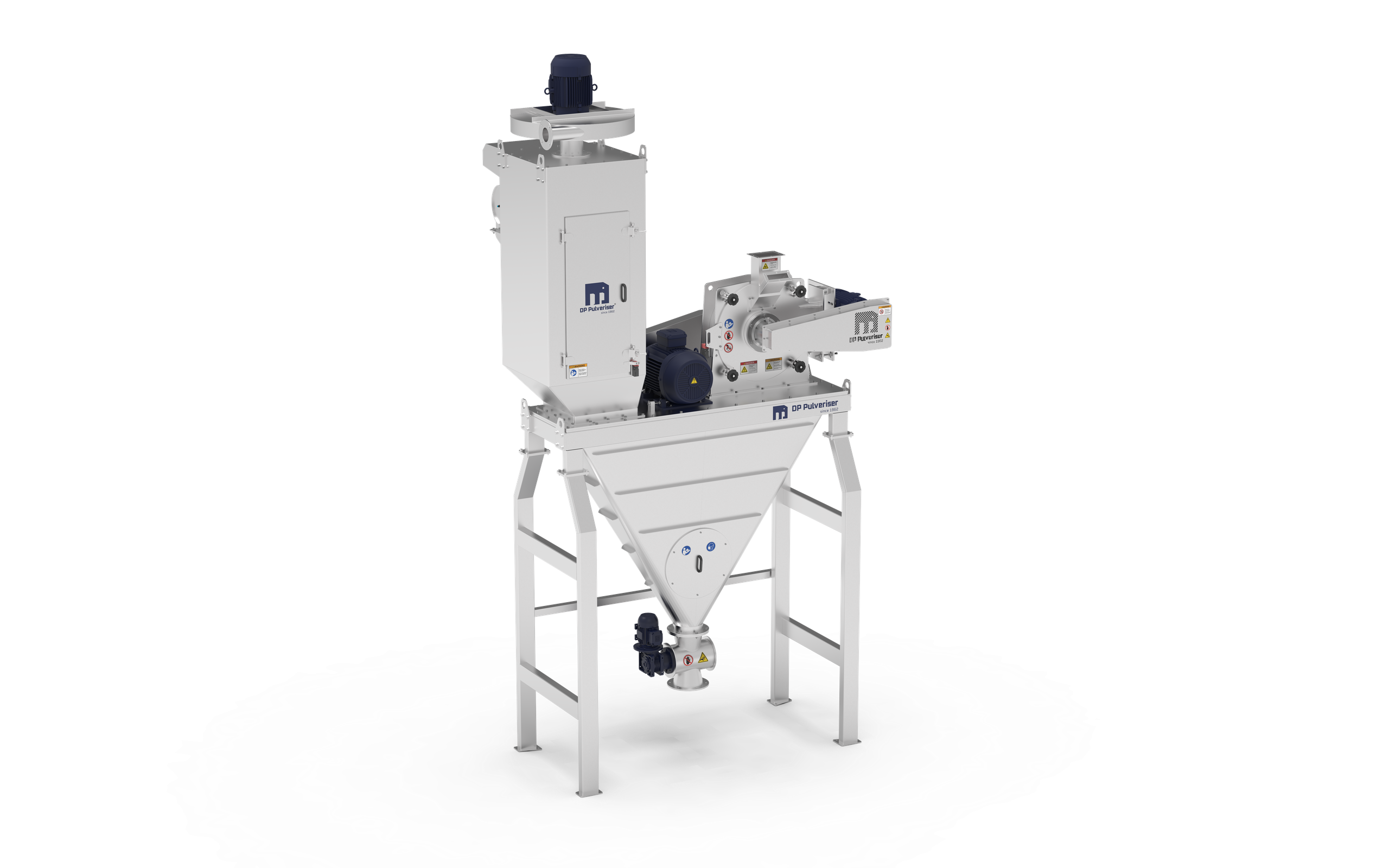
Integrated impact grinding and dynamic air classification for controlled fine powders. Engineer the mill, airflow, feeding and collection as one process.
DP Pulverizers
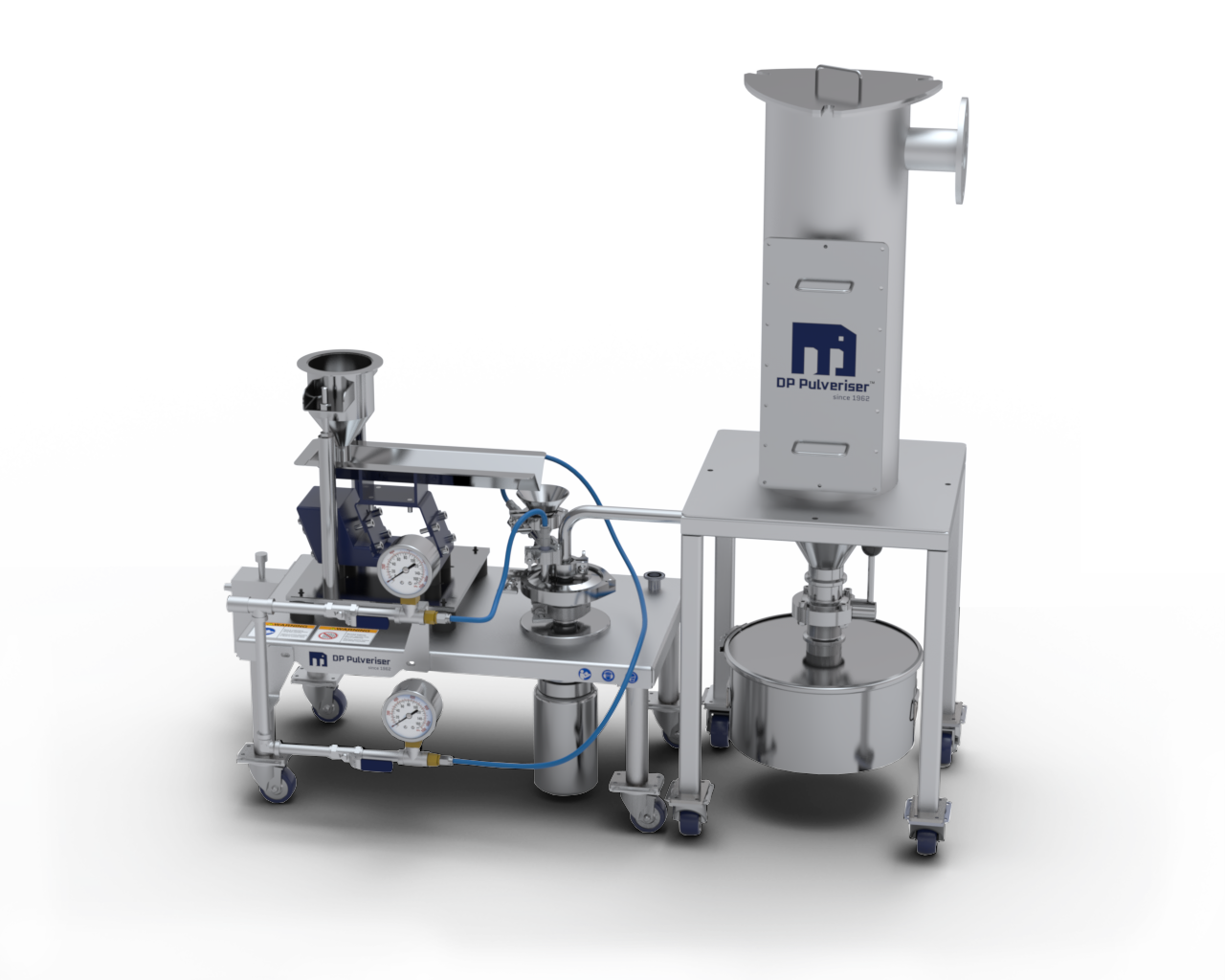
Jet Mills & Micronization Systems
Fluid-energy milling for brittle powders requiring fine or ultrafine particle-size control. Match gas supply, material behavior and collection to the micronization target.
DP Pulverizers
Cryogenic Mills & Grinding Systems
Liquid-nitrogen-assisted grinding for materials that soften, smear or lose important properties during conventional milling—from spices to polymers and elastomers.
Applications that start with your material.
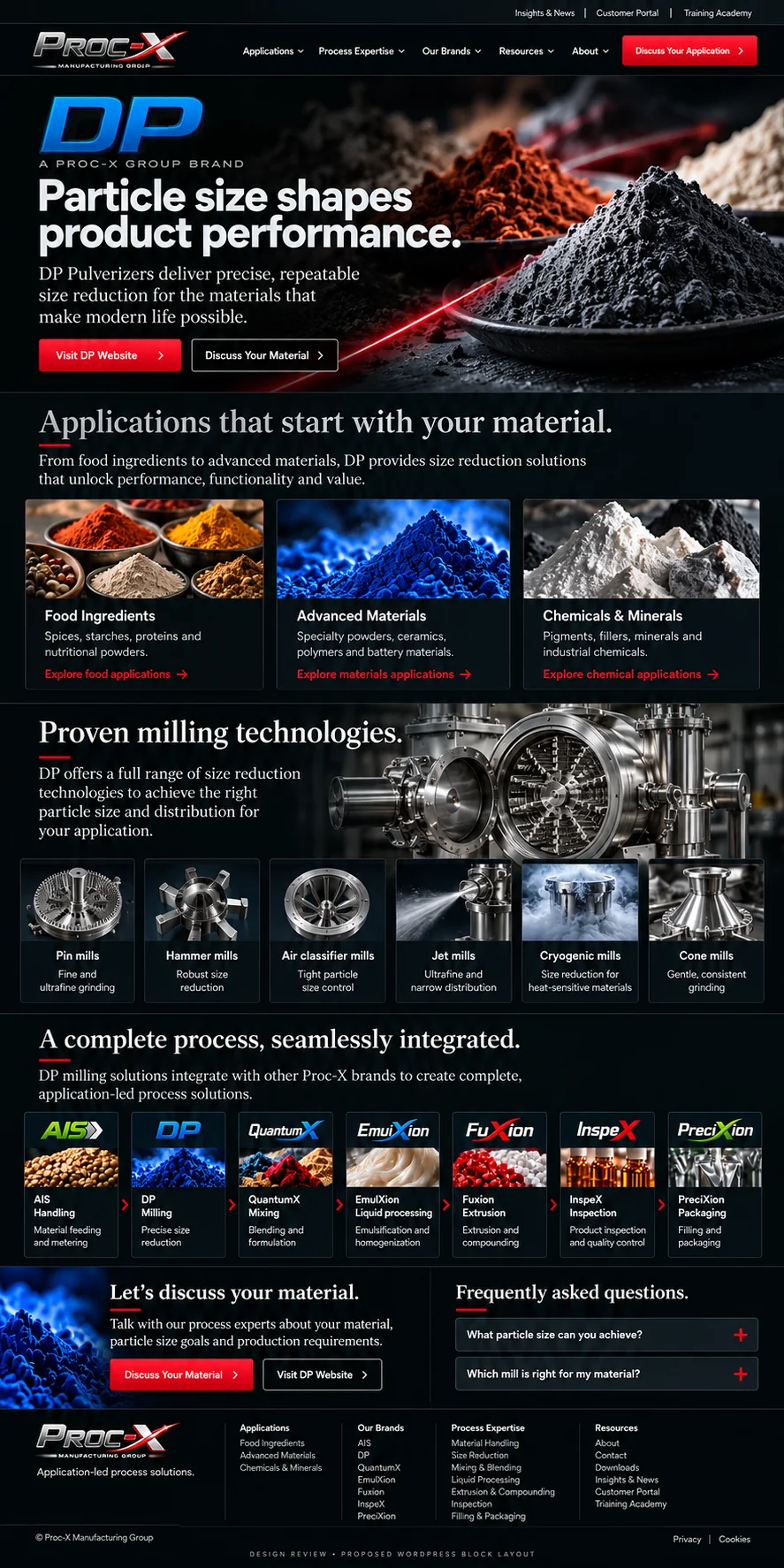
Food ingredients
Pin milling uses impact and can be considered for suitable dry materials.
Advanced materials
A complete milling system may require controlled feeding, collection, filtration, conveying and downstream packaging.
Chemicals & minerals
Representative material and an agreed target help determine whether a proposed process can meet the requirement.
Technologies matched to your process.
Pin mills
Evaluate impact milling for the feed characteristics and target fineness.
Cryogenic milling
Evaluate temperature-sensitive material behavior and cooling requirements.
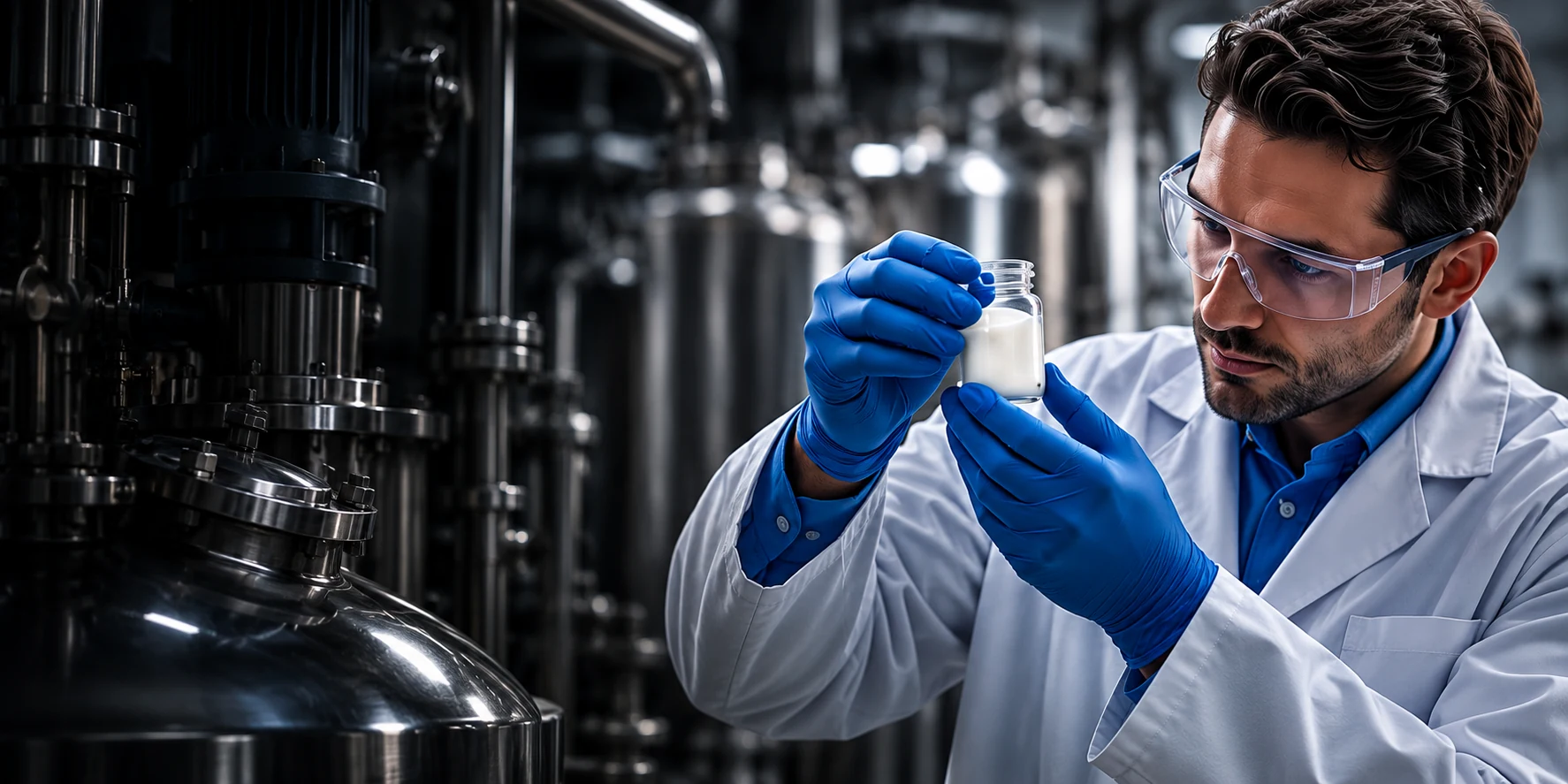
Engineered for real-world materials and processes.
Match the technology to your product characteristics, working capacity, cleaning expectations and connected process stages. Our discussion starts with the material and the outcome you need.
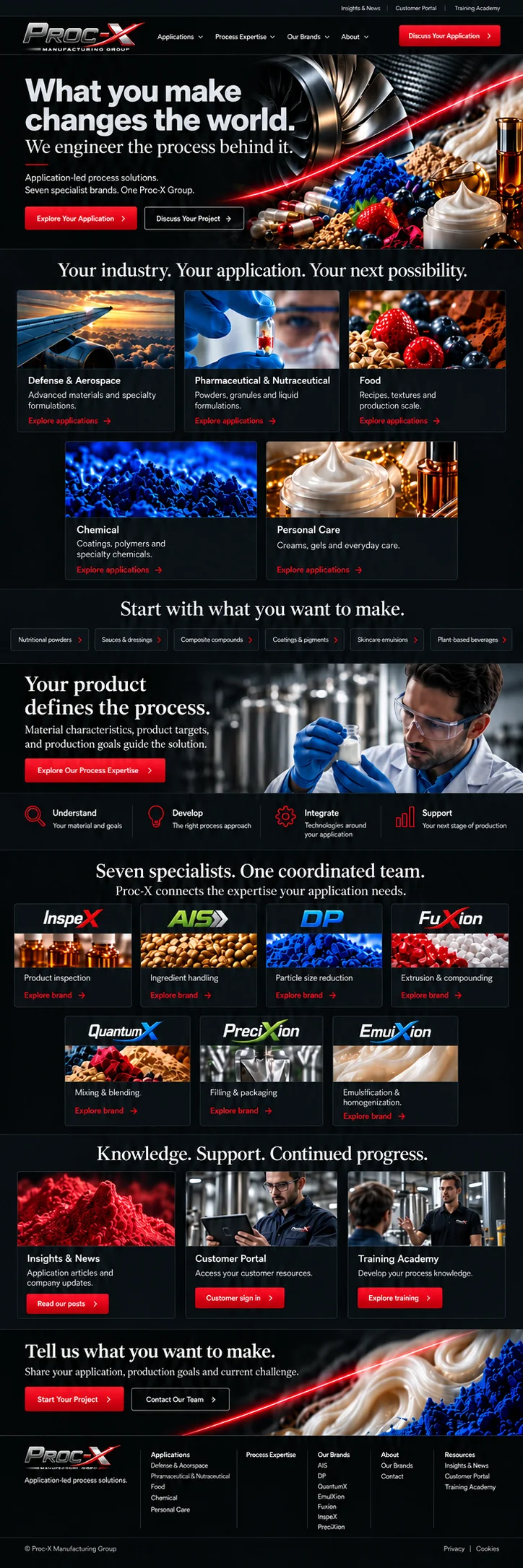
Seven specialists. One coordinated team.

Choose a Mill Around the Result You Need
Start with your feed material and the finished particle-size distribution. A mill name, motor rating or mesh number alone cannot define whether a system will meet your production requirement. Compare the grinding mechanism, classification approach and complete material-handling route.
| Technology | When to evaluate it | What to resolve before selection |
|---|---|---|
| Air classifier mill | Impact grinding with integrated dynamic air classification for suitable dry powders. | Feed characteristics, grindability, airflow, classifier setting, temperature and wear. |
| Jet mill | Gas-driven micronization where fine particle-size control is a priority. | Gas quality and consumption, feed preparation, material response and collection yield. |
| Pin mill | Impact grinding of suitable dry, brittle materials; a candidate where fine grinding does not require an integrated classifier. | Oil and moisture content, softening, rotor configuration and the acceptable fine fraction. |
| Cryogenic grinding | Temperature-controlled grinding where a material softens, smears or needs embrittlement. | Cooling requirement, nitrogen consumption, condensation control and product temperature limits. |
| Hammer mill | Coarser size reduction and preparation of suitable feed for a downstream process. | Feed size, toughness, screen selection, wear and unwanted fines. |
| Conical mill | Size conditioning and deagglomeration where the aim is controlled breakdown rather than ultrafine grinding. | Agglomerate strength, screen opening, particle integrity and required throughput. |
These are selection starting points. Final suitability, capacity and particle-size performance depend on the material, machine configuration and agreed test conditions. Cryogenic cooling is a process condition that can be combined with suitable mill designs; it is not a universal substitute for choosing the right grinding mechanism.
Define a Measurable Milling Requirement
Feed condition
State incoming particle size, moisture, bulk density, hardness or toughness, abrasiveness and any tendency to stick. Identify the variation between production lots.
Finished product
Specify the target distribution, such as D10, D50 and D90, with units and measurement method. Include limits on oversize, fines, contamination and maximum product temperature.
Production duty
Give the required saleable output in kg/h or lb/h, daily operating hours, cleaning frequency and product changeovers. Include the collection and packaging steps.
Installation
Identify utilities, available space, upstream feed arrangements and downstream discharge. Provide the material safety information needed to assess dust and containment requirements.
Evaluate the Complete Milling System
A useful trial records feed rate, operating settings, product distribution, temperature and recovered mass together. Compare usable product yield rather than only the mass entering the mill. Collection, filtration, transfer and cleaning requirements can change the practical output of the line.
For micronization, include gas consumption in the operating-cost assessment. For cryogenic duties, record cooling consumption and the temperature at which the required grinding behavior is achieved. For abrasive feeds, agree which product-contact parts and contamination limits must be evaluated.
Technical Resources
Air classifier mill brochure (PDF) · Jet mill brochure (PDF) · Cryogenic mill brochure (PDF)
Explore DP Pulverizers · Plan feeding and conveying · Discuss a material trial
Send Us Your Milling Requirement
Have your material name, feed size, target distribution, throughput and temperature limit ready. If a target is still uncertain, explain the downstream problem you need the powder to solve.
Questions about your process.
Is mesh size enough to specify a mill?
It may be useful, but a distribution and test method usually define the requirement more clearly. Explain the acceptable oversize and fine fraction as well as any downstream texture or processing requirement.
Can one mill process several materials?
Possibly, but cleaning, wear, feed behavior and operating settings must be reviewed for each material. Provide the full intended product range and identify the most demanding case.
ONE PROCESS. CONNECTED EXPERTISE.
Think Beyond the Machine
Select each operation with its upstream and downstream interfaces in mind. The sequence and equipment depend on your application.
Tell us what you want to make.
Share your application, production goals and current challenge.