Fuxion
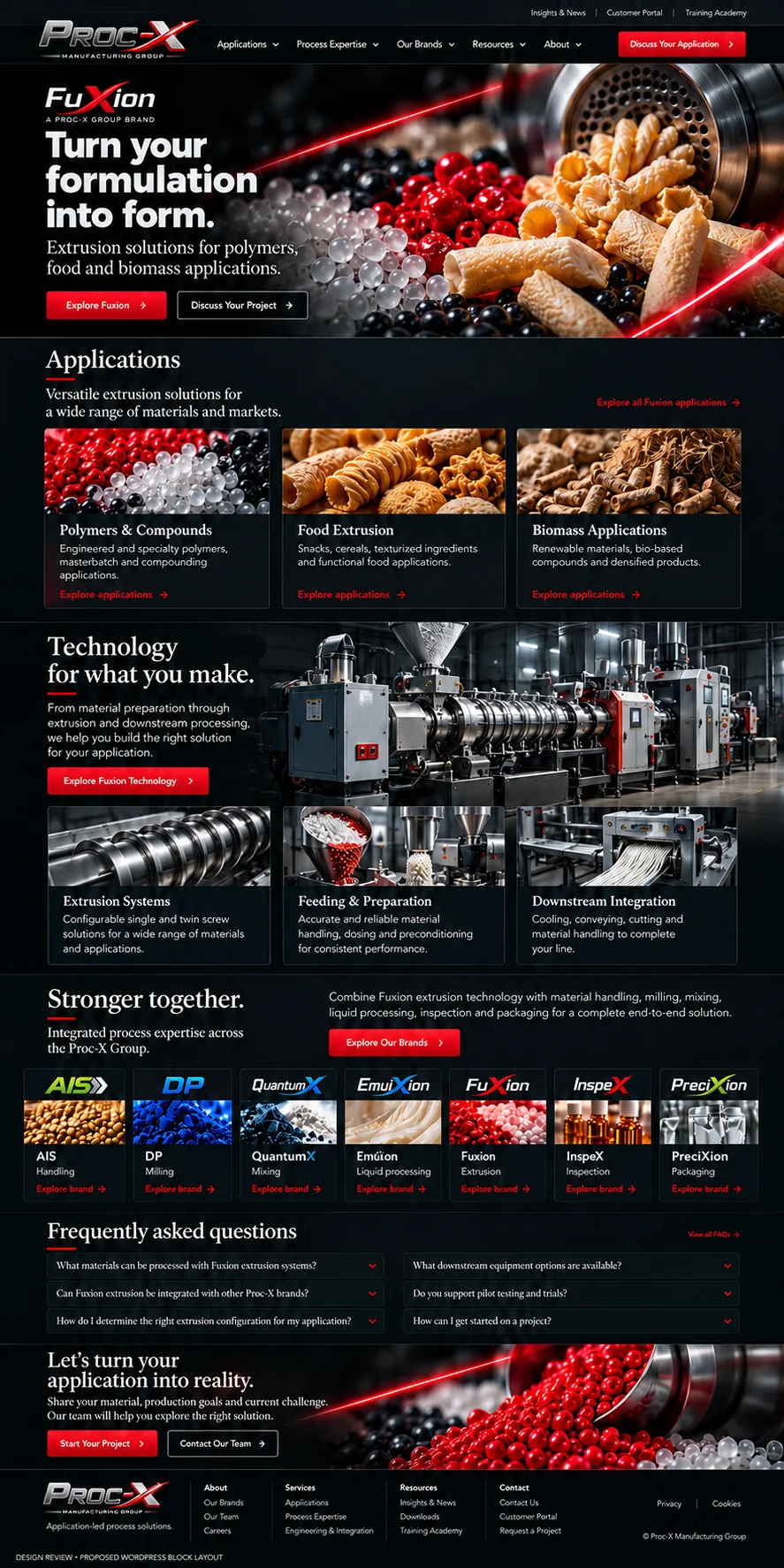
Turn your formulation into form.
Extrusion and compounding solutions built around your ingredients, formulation and finished product.
Versatile extrusion applications.
Polymers & compounds
Single screw and twin screw extrusion provide different processing capabilities.
Food extrusion
Stable ingredient delivery supports consistent operation.
Biomass applications
Identify the expected formulation range, color or material changes and cleaning expectations.
Technologies matched to your process.
Extrusion systems
Specify formulation, residence time and the required output form.
Feeding & preparation
Coordinate raw-material dosing with stable process demand.
Downstream integration
Review cooling, forming, cutting and handling interfaces.

Engineered for real-world materials and processes.
Match the technology to your product characteristics, working capacity, cleaning expectations and connected process stages. Our discussion starts with the material and the outcome you need.
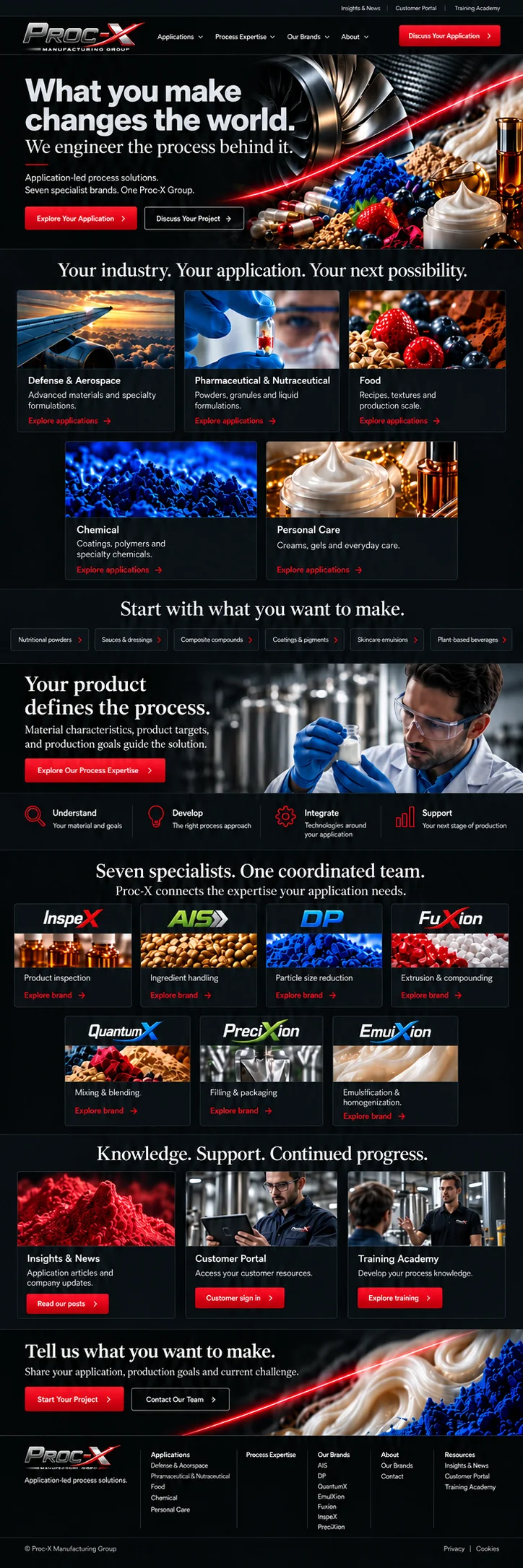
Seven specialists. One coordinated team.

Extrusion & Compounding Systems for Industrial Applications
Connect formulation, feeding and extrusion
Fuxion extrusion technologies can be considered for suitable food, polymer and other compounding applications. An extrusion system must coordinate incoming ingredients, mechanical processing, thermal conditions and downstream handling. Describe the material, feed form, required output and target product characteristics before selecting a screw configuration or nominal machine size.
Single screw and twin screw configurations
Single screw and twin screw extrusion provide different processing capabilities. Selection depends on conveying behavior, mixing requirements, ingredient addition, residence time and the formulation’s thermal sensitivity. Screw design and operating conditions are application-specific. A technology comparison should address the intended product rather than assume that one configuration is always superior.
Feeding and downstream equipment matter
Stable ingredient delivery supports consistent operation. Define bulk ingredients, minor additions, liquids and the required feed-control approach. Downstream cooling, cutting, collection or transfer must match the extruder’s output. Space, utility availability and access for maintenance should be reviewed with the complete line layout.
Plan for recipes and changeovers
Identify the expected formulation range, color or material changes and cleaning expectations. Review the acceptable startup material, product hold-up and changeover procedure. If a new material or formulation introduces uncertainty, discuss a testing plan and the measurements needed to evaluate the process before committing to production performance criteria.
Questions about your process.
Is twin screw extrusion always the best choice?
No. The decision depends on the material and the conveying, mixing and thermal tasks required. Compare the complete process needs, expected formulation range and operating requirements.
What should an extrusion inquiry include?
Provide formulation characteristics, feed form, throughput, desired output form, temperature limits and downstream requirements. Include available utilities and any existing equipment interfaces.
Tell us what you want to make.
Share your application, production goals and current challenge.