PROC-X MANUFACTURING GROUP
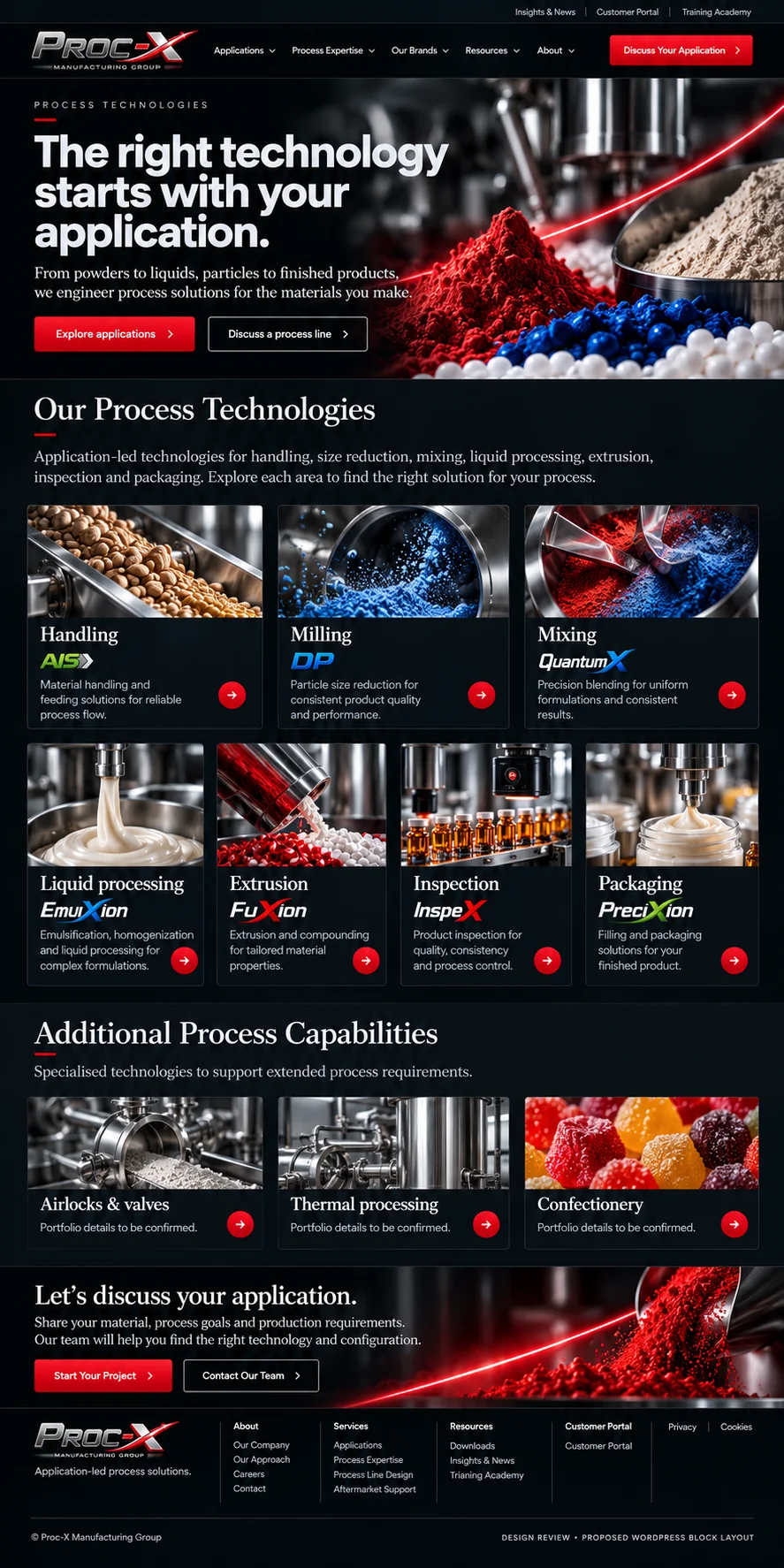
The right technology starts with your application.
Connect the right process technologies around your material and production goals.
Our process technologies.

Additional process capabilities.

Airlocks & valves
Discuss the equipment scope and compatibility needed for your application.
Thermal processing
Discuss the equipment scope and compatibility needed for your application.

Confectionery
Discuss the equipment scope and compatibility needed for your application.
Industrial Processing Technologies: Select the Right Approach
Start with the transformation required
Process technology selection begins with the change you need to make to a material. That may be reducing particle size, distributing ingredients, incorporating powder into liquid, developing an emulsion or preparing a product for packaging. Define the incoming and outgoing conditions before comparing equipment families.
Match the method to the material
Flowability, density, viscosity, abrasiveness, moisture and thermal sensitivity influence technology selection. The operating environment adds another set of requirements, including cleaning, product-contact materials and controls. A useful comparison examines these constraints alongside output and product-quality objectives.
Compare systems rather than isolated capacities
Nominal machine capacity does not establish line capacity. Feeding, processing, transfer, cleaning and downstream demand must be coordinated. A milling system needs appropriate collection; a mixer needs suitable charging and discharge; a filler needs a consistent product supply. These interfaces belong in the initial scope.
Establish the evidence for selection
Where the application is uncertain, define what a test or technical evaluation needs to show. Specify input material, operating conditions, output measurements and acceptance criteria. Use the technology pages to develop the questions for that evaluation, then discuss your application with the Proc-X team.
Questions about your process.
Can two different technologies achieve a similar result?
Sometimes. The better choice may depend on cleaning, energy use, product sensitivity, footprint, recipe flexibility and downstream integration. Compare those practical factors alongside the product result.
What if I already have an equipment specification?
Share it with the application requirements and any fixed interfaces. This allows the discussion to distinguish mandatory constraints from preferences that may have alternative solutions.
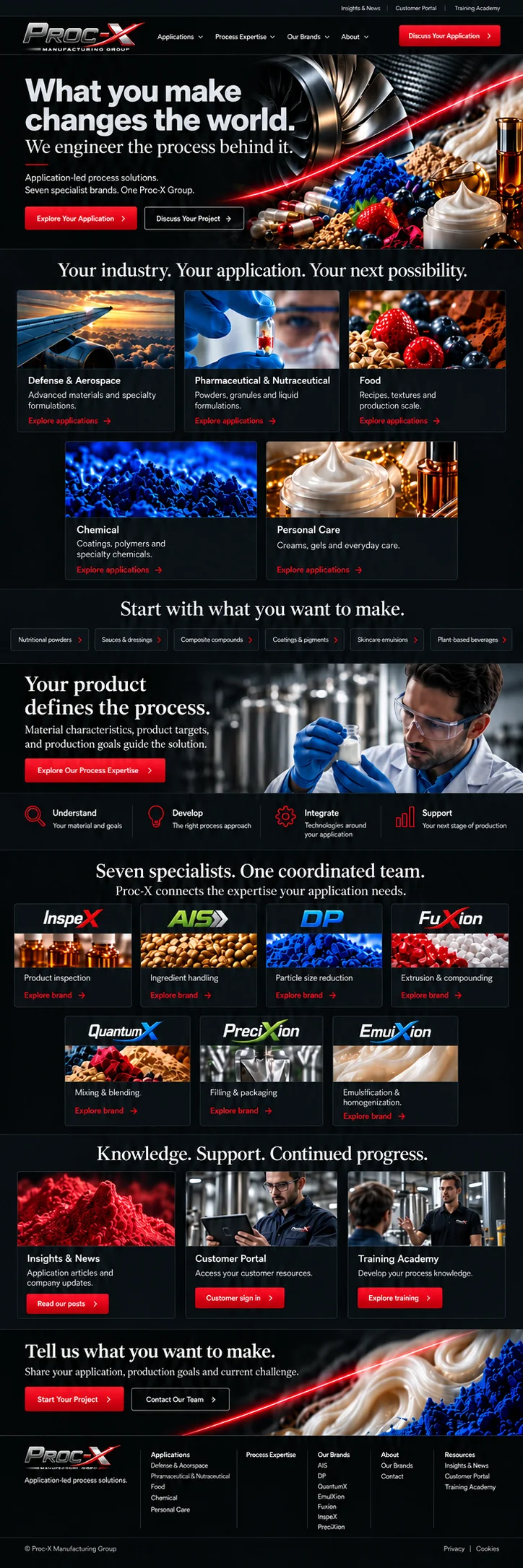
Tell us what you want to make.
Share your application, production goals and current challenge.