EmulXion
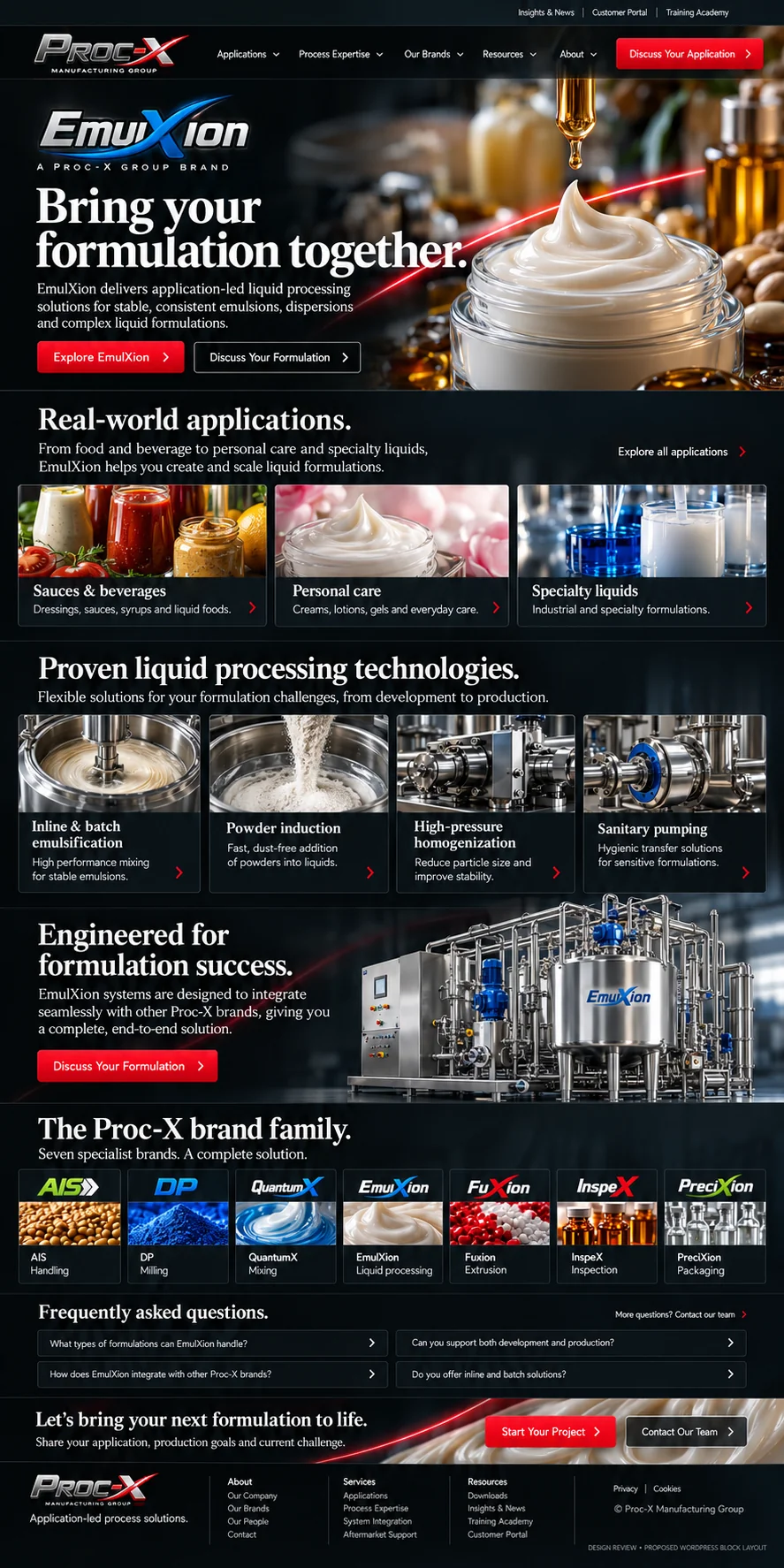
Bring your formulation together.
Mixing, emulsification and homogenization for liquids, creams and demanding formulations.
Real-world applications.
Sauces & beverages
Rotor-stator mixing introduces localized shear and can be considered for appropriate dispersion and emulsification duties.
Personal care
High-pressure homogenization processes a suitable liquid formulation through a pressure-driven homogenizing stage.
Specialty liquids
A liquid-processing system must receive ingredients, circulate or hold the product as needed, and discharge consistently.
Technologies matched to your process.
Inline & batch mixing
Compare recirculation and batch processes for your formulation.
High-pressure homogenization
Assess pressure and temperature effects for a suitable formulation.
Sanitary pumping
Match transfer to viscosity, particulates and cleaning needs.
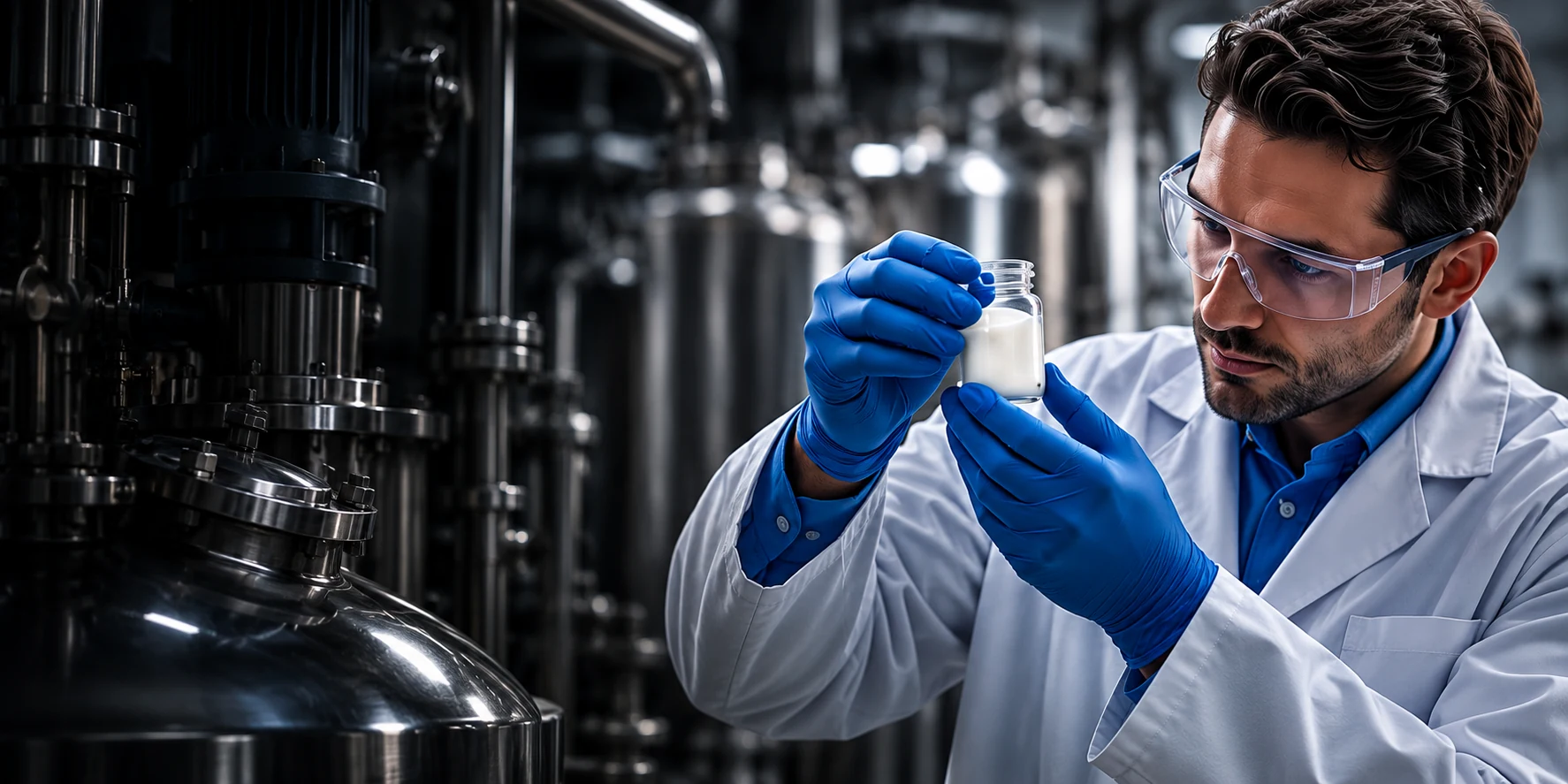
Engineered for real-world materials and processes.
Match the technology to your product characteristics, working capacity, cleaning expectations and connected process stages. Our discussion starts with the material and the outcome you need.
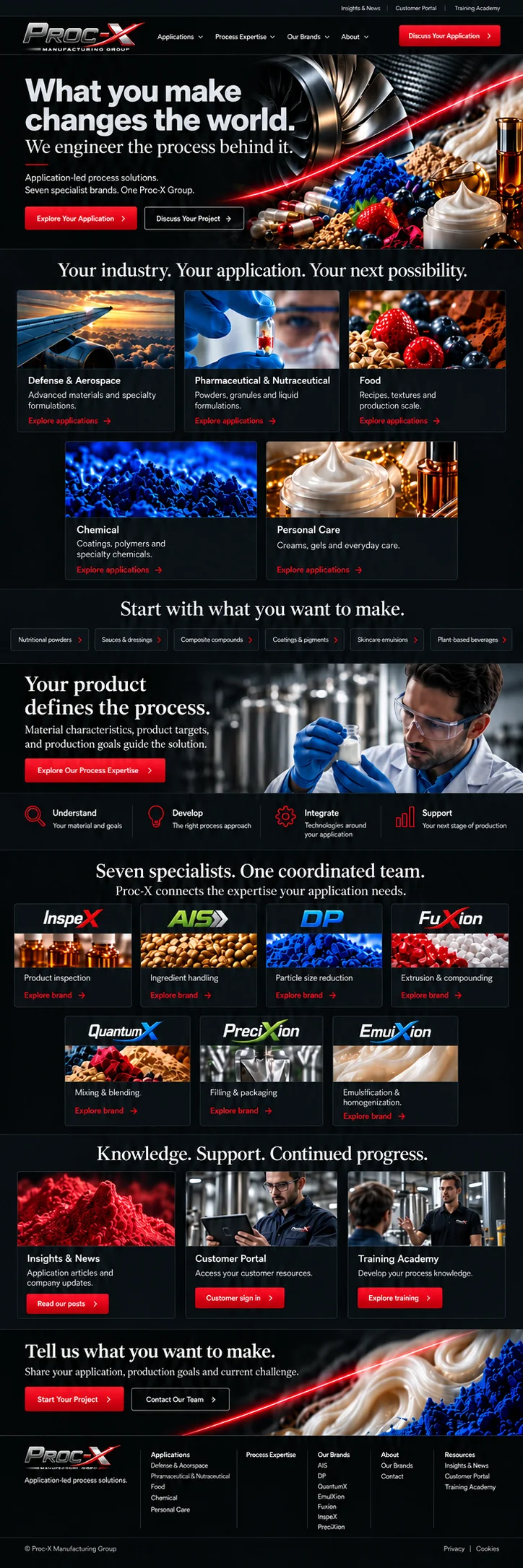
Seven specialists. One coordinated team.

High Shear Mixing, Emulsification & Homogenization Systems
Define the liquid-processing objective
EmulXion technologies support powder incorporation, mixing, emulsification and homogenization. Start by identifying the required result: wetting powder, distributing solids, reducing agglomerates or developing an emulsion. Viscosity, solids concentration, temperature and the desired product structure influence the process. Similar-looking products can need different processing intensity and circulation arrangements.
High shear mixing and powder induction
Rotor-stator mixing introduces localized shear and can be considered for appropriate dispersion and emulsification duties. Powder induction addresses the controlled introduction of dry ingredients into liquid. Selection should consider wetting behavior, addition rate, hydration and how viscosity changes during processing. A suitable installation also needs a clear plan for recirculation, transfer and cleaning.
High-pressure homogenization is a distinct process
High-pressure homogenization processes a suitable liquid formulation through a pressure-driven homogenizing stage. It is not simply a faster version of every batch mixer. Feed preparation, pressure, temperature rise, solids characteristics and product sensitivity need review. The target droplet or particle result and the evaluation method should be agreed for the actual formulation.
Integrate batch preparation and downstream filling
A liquid-processing system must receive ingredients, circulate or hold the product as needed, and discharge consistently. Review pumps, pipework, valves and vessel connections alongside the mixing technology. QuantumX batch equipment and PreciXion filling can form relevant interfaces. Specify allowable aeration, hold time and temperature at filling to guide the complete process discussion.
Questions about your process.
What is the difference between mixing and homogenization?
Mixing distributes ingredients within a bulk product. Homogenization generally targets a more specific dispersed structure or size reduction. The appropriate technology depends on the required product properties, not the terminology alone.
Should I choose an inline or batch configuration?
Compare batch size, recirculation needs, addition sequence, cleaning and production continuity. Inline processing still requires appropriate feeding and downstream handling; it does not eliminate the need to define the full process.
What viscosity should I provide?
Give viscosity with temperature and measurement method, plus the expected range during processing. Describe non-Newtonian behavior if known, because one measured value may not represent startup, mixing and transfer.
Tell us what you want to make.
Share your application, production goals and current challenge.