Home / Milling / Air Classifier Mills
DP Pulverizers · PROC-X MANUFACTURING GROUP
Air Classifier Mills
Grind. Classify. Control.
Integrated impact grinding and dynamic air classification for controlled fine powders. Engineer the mill, airflow, feeding and collection as one process.
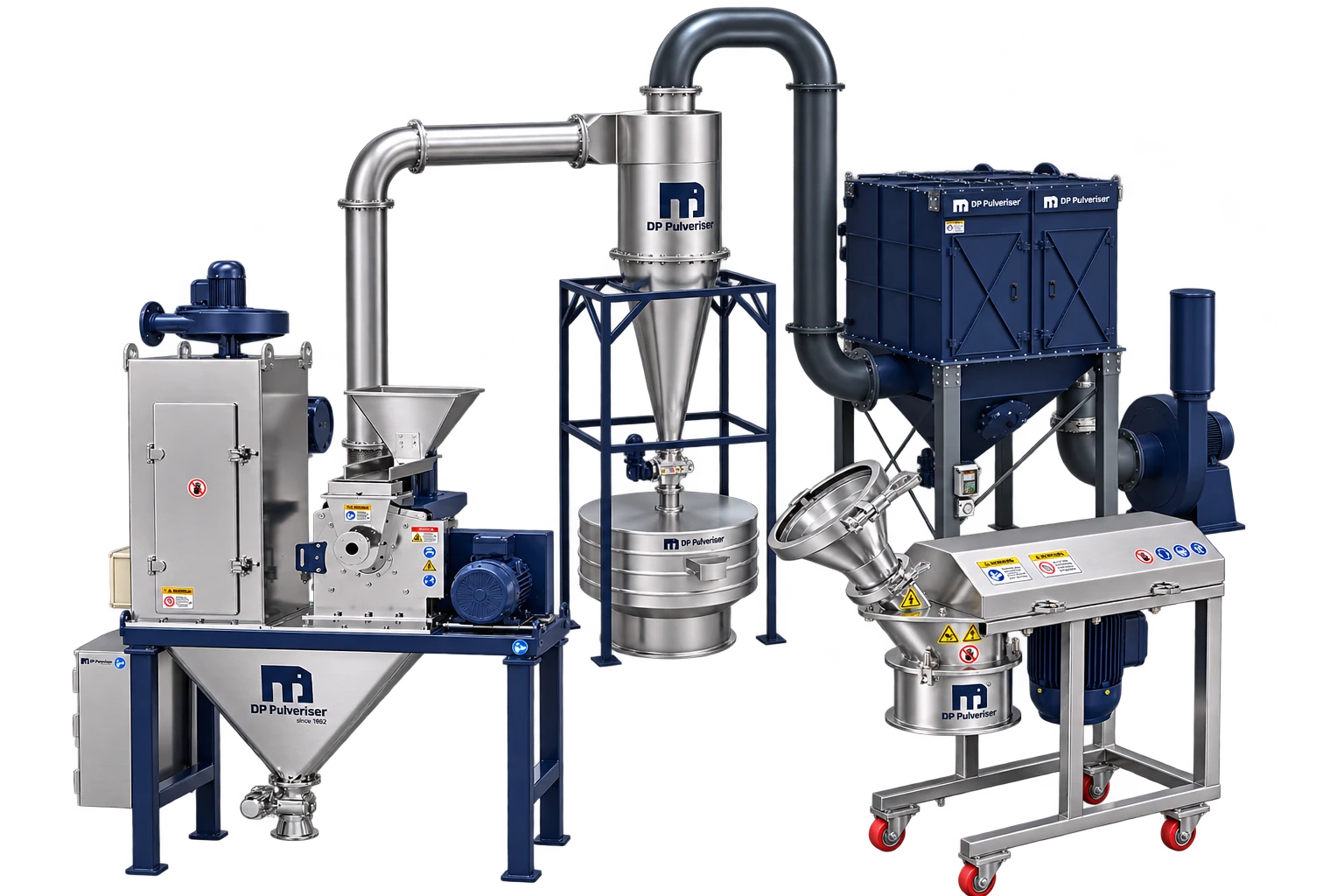
The process, explained.
01
Feed
Meter material into a stable grinding load.
02
Grind
Rotor impact reduces particles in the grinding zone.
03
Classify
Fine particles leave; oversize returns for further grinding.
What is an air classifier mill?
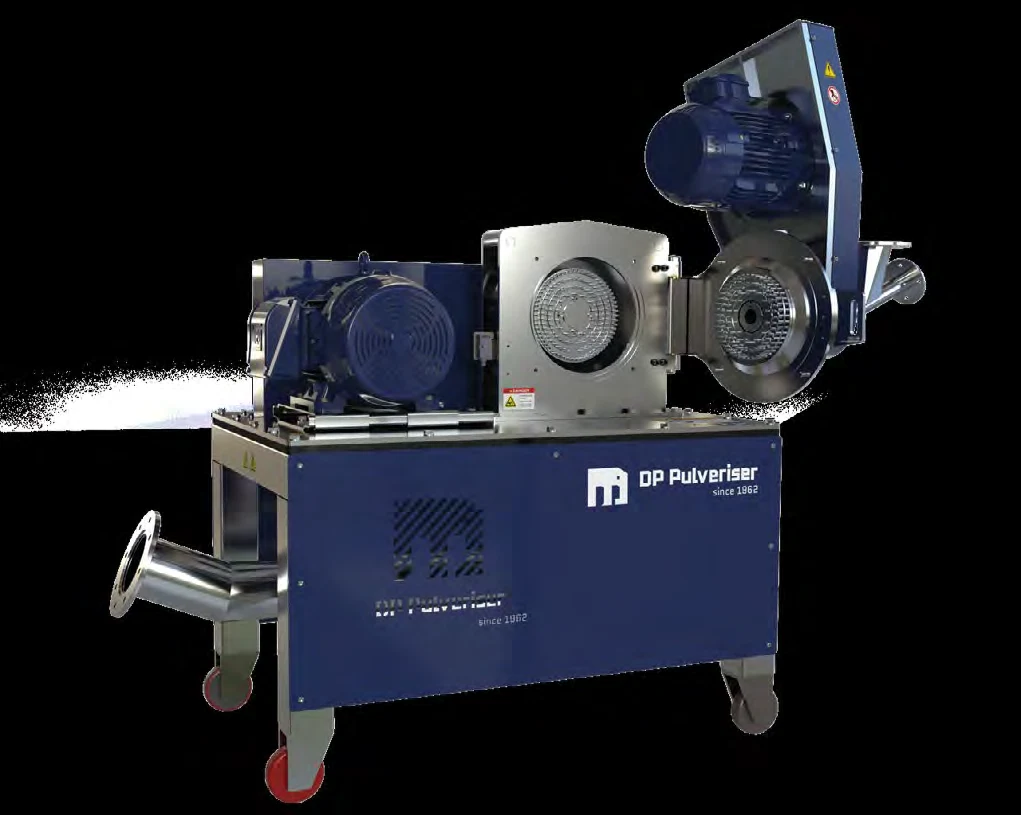
An air classifier mill, also called an air classifying mill or ACM, combines mechanical impact grinding with a dynamic classifier in one machine. Process air carries the ground material toward the classifier. Accepted particles leave the mill; rejected coarse particles return to the grinding zone. The objective is a controlled distribution, not simply the smallest possible average size.
Technical data and configuration
| DP model | Rotor power (HP) | Classifier power (HP) | Maximum airflow (CFM) |
|---|---|---|---|
| DP-ACM-5 | 7.5 | 1.5 | 320 |
| DP-ACM-10 | 10 | 3 | 640 |
| DP-ACM-15 | 15 | 3 | 795 |
| DP-ACM-25 | 25 | 5 | 1,325 |
| DP-ACM-50 | 50 | 10 | 2,650 |
| DP-ACM-75 | 75 | 15 | 3,975 |
| DP-ACM-100 | 100 | 20 | 5,300 |
Published laboratory-to-mid-scale model data from the supplied ACM brochure, PDF page 9. Maximum airflow is a model reference, not a guaranteed operating requirement or throughput. Larger production systems are available; final duties and utilities require engineering confirmation.
Select around the result.
Control the variables that control the powder
Rotor speed influences impact energy. Classifier speed influences the separation point. Airflow, feed rate and internal geometry affect transport, loading, temperature and classification. These variables interact, so a particle-size target should be evaluated together with throughput, yield and operating stability.
Typical particle-size applications
The supplied DP brochure describes typical ACM applications targeting approximately 10–150 microns. This is an application range, not a guaranteed D50, D90 or D97 specification. Define the distribution metric, measurement method, oversize limit and target capacity. Feed size, moisture, friability and temperature sensitivity all influence the achievable result.
From a mill to an integrated system
Proc-X can coordinate the mill with controlled feeding, cyclone separation, filtration, fans, conveying and automation. Material-contact construction and wear options should match the powder. Specify cleaning access, cross-contamination limits and the project protection requirements alongside particle size; these affect the system configuration.
ACM, jet mill or cryogenic grinding?
Assess an ACM where mechanical impact and adjustable classification suit the material and fine-powder target. Consider jet milling for appropriate ultrafine duties, with compressed-gas demand included in the comparison. Consider cryogenic processing when softening, smearing or temperature sensitivity limits ambient grinding. A representative material trial is the strongest basis for the final selection.
Go deeper with DP Pulverizers.
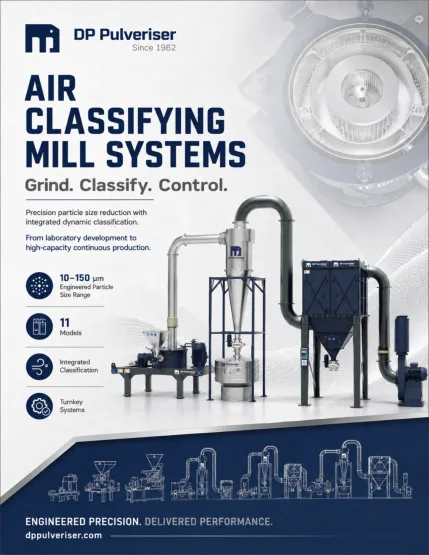
Technical brochure and specialist expertise
Explore the supplied brochure, then discuss the configuration with Proc-X or visit the specialist brand website.
These are the original supplied brochures. Some editions contain earlier contact details or model designations. For current project support, use john.paul@procxinc.com or +1 (872) 260-5071; confirm final specifications in your quotation.
Questions engineers ask.
What is the difference between an air classifier and an ACM?
An air classifier separates particles by their aerodynamic behavior. An ACM integrates classification with an impact-grinding stage, so coarse material can return for further reduction.
Does 10–150 microns guarantee my product specification?
No. The brochure range describes typical applications. The required distribution metric, material properties and capacity must be evaluated together.
Can an ACM process heat-sensitive powders?
Process airflow helps remove grinding heat, but heat is still generated. Evaluate the temperature limit and consider conditioned air or cryogenic processing where appropriate.
Compare related technologies.
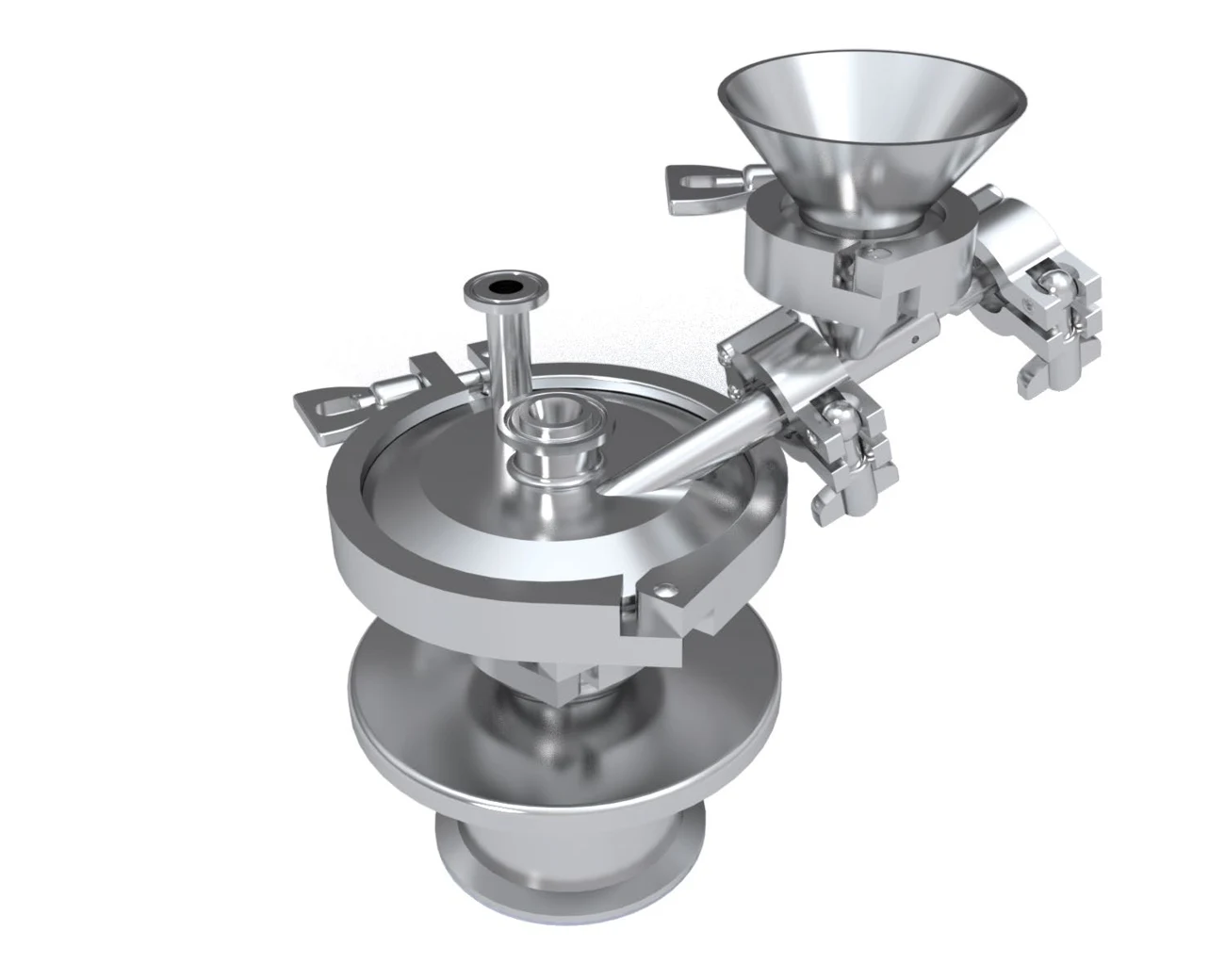
DP Pulverizers
Jet Mills & Micronization Systems
Fluid-energy milling for brittle powders requiring fine or ultrafine particle-size control. Match gas supply, material behavior and collection to the micronization target.
DP Pulverizers
Cryogenic Mills & Grinding Systems
Liquid-nitrogen-assisted grinding for materials that soften, smear or lose important properties during conventional milling—from spices to polymers and elastomers.
Your material writes the specification.
Tell us what you process, the result you need and the capacity you want to achieve. We will help define the next engineering step.