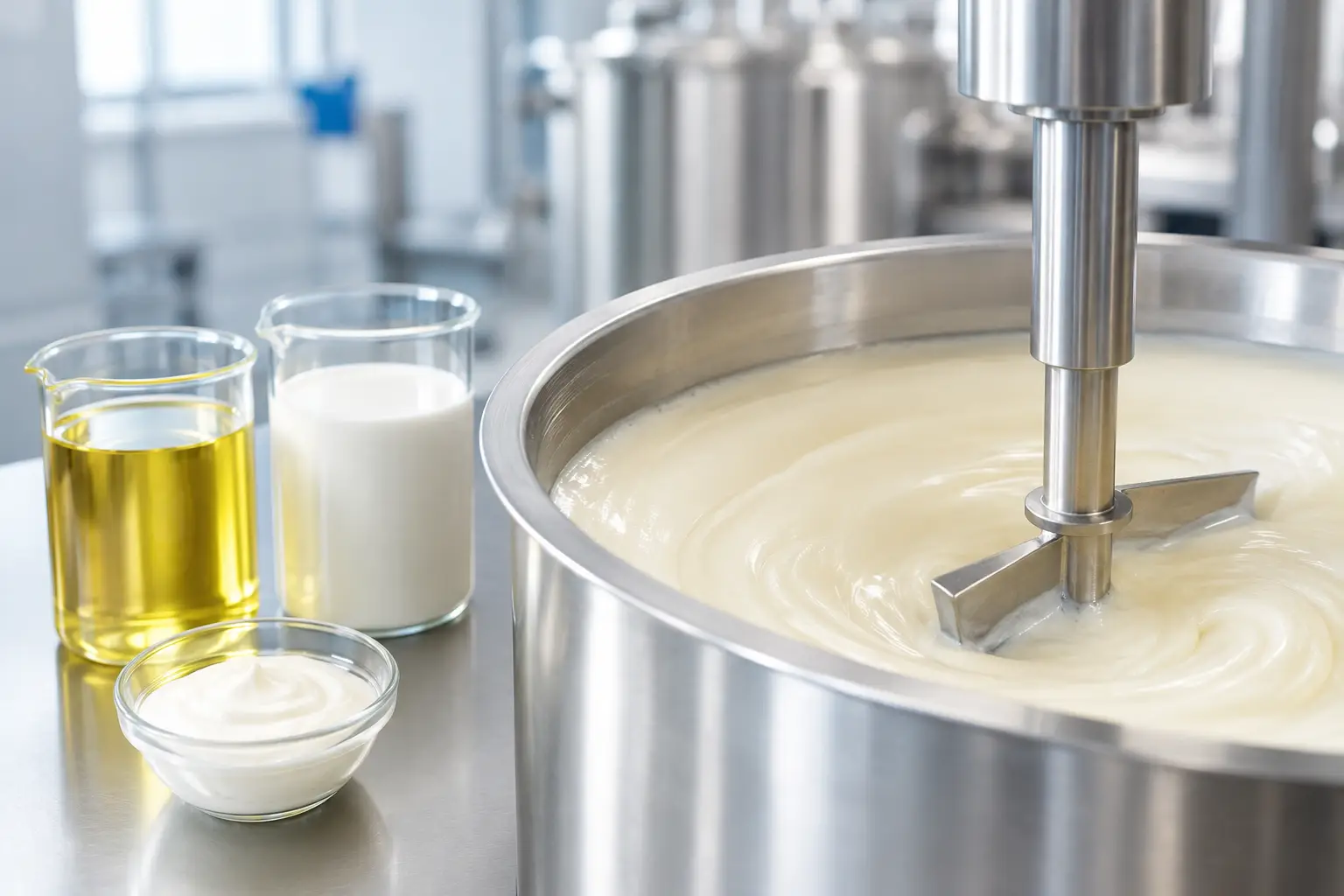
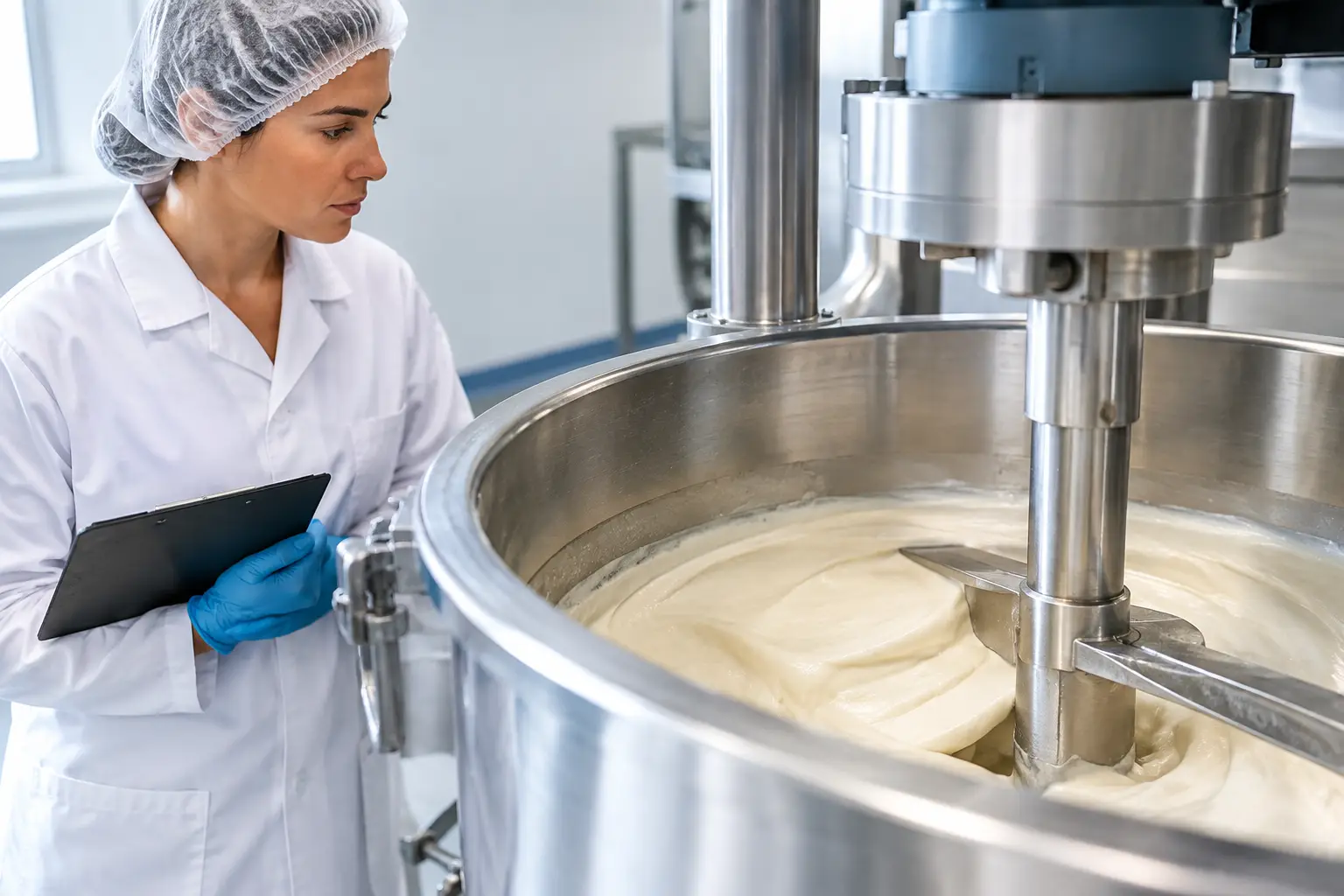
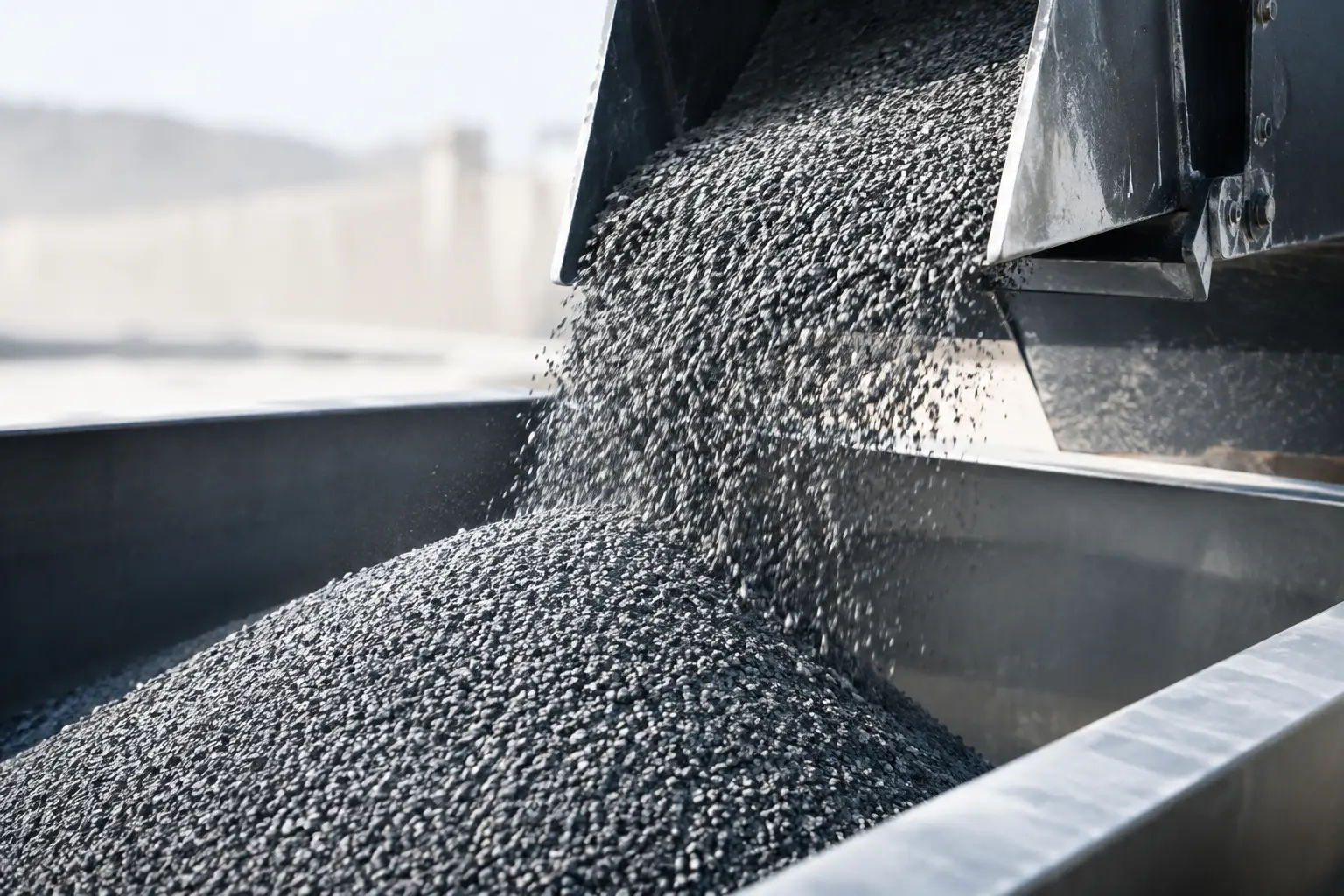
A blend can meet the target formulation on paper and still fail on the production floor. Segregation during transfer, an overfilled mixer, an improperly placed minor ingredient, or an unrepresentative sample can create variability that appears only after packaging or downstream processing. Knowing how to improve blend uniformity requires more than selecting a mixer. It requires control of the full material and process system.
For manufacturers of food ingredients, pharmaceuticals, specialty chemicals, battery materials, and industrial minerals, blend uniformity affects product performance, regulatory compliance, yield, and customer confidence. The practical objective is not simply to mix longer. It is to establish a repeatable process that distributes each component to the required level while protecting particle integrity and preventing the blend from separating before it reaches the next operation.
Define What Uniformity Means for the Product
Blend uniformity must be defined against the product’s functional and quality requirements. A seasoning blend may be evaluated by salt, flavor, and color distribution. A pharmaceutical powder may require assay consistency for a low-dose active ingredient. A battery formulation may depend on highly controlled distribution of conductive additives. The acceptable variation, sample size, analytical method, and number of samples should be established before equipment settings are changed.
This distinction matters because a blend can look uniform while remaining analytically variable. Conversely, a statistically acceptable blend may show visible variation that affects customer perception. Process engineers should identify the critical component or components, establish acceptance criteria, and use an analytical method sensitive enough to detect the variation that matters.
Sampling is part of that definition. Samples taken only from the top of a mixer do not demonstrate uniformity across the batch. A qualified sampling plan should consider locations, depths, sampling tools, sample mass, and the timing of collection. When samples are collected after discharge, the plan must also account for segregation in the discharge valve, conveying line, hopper, and packaging equipment.
Start With Material Characterization
Material behavior sets the limits of any blending process. Before evaluating mixer speed or blend time, characterize the ingredients that enter the system. Bulk density, particle-size distribution, particle shape, moisture content, flowability, electrostatic behavior, friability, and cohesiveness all influence how components move and separate.
Large differences in particle size or density are common causes of segregation. Fine, cohesive powder may form agglomerates rather than disperse. Free-flowing granules may percolate through a finer fraction during handling. Low-level ingredients may adhere to vessel walls or become trapped in dead zones. In each case, more mixing time may not solve the underlying problem.
Particle-size control can be a direct route to better uniformity. Milling, screening, deagglomeration, or classification may reduce the gap between components and improve distribution. That approach involves trade-offs. Aggressive size reduction can generate fines, change bulk density, increase dusting, or damage a heat-sensitive or friable material. The right target is not necessarily the finest particle size. It is a controlled size distribution compatible with the blend and the downstream process.
Moisture control deserves equal attention. Small moisture changes can alter flow, promote agglomeration, increase wall buildup, and change the way a liquid binder distributes. Where materials are hygroscopic or temperature-sensitive, environmental conditions and ingredient storage practices should be included in the process specification.
Match the Mixer to the Mixing Mechanism
The question is not which mixer is best in general. It is which mixing mechanism addresses the material behavior, batch size, required blend quality, and production rate. Tumble blenders can provide gentle convective mixing for free-flowing powders and granules. Ribbon, paddle, plow, and other mechanically agitated mixers provide more active movement and may better handle cohesive materials, broader particle-size distributions, or liquid additions.
High-shear processing can break agglomerates and distribute binders, but it can also create heat, attrition, or changes in particle morphology. A gentle mixer may preserve fragile particles but may not overcome cohesive lumps. The equipment decision should therefore be based on the actual application, supported by material trials where the risk is high.
Mixer geometry matters as much as the mixer category. The impeller or agitator must sweep the working volume effectively, with minimal stagnant regions. Discharge design should allow complete, repeatable emptying. Access points, choppers, liquid injection ports, and load cells must be positioned to support the intended process rather than added as isolated features.
Control Fill Level, Speed, and Blend Time
Every mixer has an effective operating range. Underfilling can reduce the material-to-tool interaction required for efficient mixing. Overfilling can limit circulation, create stagnant zones, and increase the time required to achieve uniformity. A mixer should be operated within its validated working volume, not simply filled to the largest batch that physically fits.
Speed and blend time should be developed together. Higher speed can improve circulation in some systems, but it can also increase particle degradation, heat generation, and segregation risk. The goal is to identify the blend-time curve: the point at which variation falls to an acceptable level, followed by confirmation that additional mixing does not degrade the result.
This is especially relevant when density or particle-size differences are significant. A blend may reach acceptable uniformity at one point and then begin to segregate under continued agitation. Establishing a defined operating window is more reliable than instructing operators to mix “until it looks right.”
Manage Addition Sequence and Minor Ingredients
Low-percentage components often determine whether a batch passes or fails. Adding a small quantity of active ingredient, colorant, flavor, or processing aid directly into a full mixer can produce localized concentration pockets. Preblending the minor ingredient with a compatible carrier can increase its effective volume and improve dispersion.
The addition sequence should be deliberate. Some materials require an initial bed of major ingredients before addition. Others benefit from staged charging that promotes circulation. Liquid additions need controlled spray patterns, droplet size, injection location, and addition rate. Pouring a liquid into one area of a powder bed often creates wet lumps that are difficult to distribute without excessive mixing energy.
Automated weighing and dosing can reduce variability at its source. Accurate load cells, controlled feeders, recipe management, and ingredient verification help ensure that every batch begins with the correct quantities and sequence. For products with narrow tolerances, manual additions are often a larger process risk than the mixer itself.
Prevent Segregation After the Mixer
A uniform blend at the mixer outlet is not necessarily a uniform product at the filler. The interval between mixing and final packaging is a common point of failure. Free-fall transfers, long drop heights, vibrating equipment, pneumatic conveying, intermediate storage, and repeated handling can separate particles by size, density, or shape.
System design should minimize unnecessary transfers and maintain mass flow where practical. Hopper geometry, valve selection, conveyor speed, and conveying air velocity all affect the finished blend. A tall storage hopper may be operationally convenient, but it can increase segregation exposure if material remains in it for extended periods or discharges through funnel flow.
The same principle applies to packaging. If the filler receives an inconsistent feed, fill weights, active concentration, and visual appearance can vary package to package. Uniformity verification should therefore extend through the actual discharge and packaging path, not stop at the blender.
Use Data to Develop a Capable Process
A one-time successful trial is not proof of a capable blending process. Production conditions change: ingredient lots vary, operators change, ambient humidity shifts, and equipment wears. A disciplined program uses blend data to distinguish normal process variation from an emerging equipment or material issue.
Track critical inputs such as ingredient properties, actual batch weight, mixer speed, blend time, liquid addition rate, motor load, and discharge duration. Where automation is appropriate, recipe controls and electronic batch records can prevent unauthorized setpoint changes and provide traceability for investigations. Trend analytical results by batch, ingredient lot, line, and shift to identify patterns that a pass-fail result can conceal.
Validation requirements vary by industry. Regulated manufacturers may need documented installation, operational, and performance qualification. Other facilities may use process capability studies and internal quality specifications. In either case, the technical principle is the same: demonstrate that the equipment and process repeatedly deliver the required blend under defined operating conditions.
Improve Blend Uniformity Through Integrated Engineering
The most reliable answer to how to improve blend uniformity is to treat blending as a connected process, not a single machine setting. Ingredient receiving, storage, size reduction, weighing, charging, mixing, discharge, conveying, and packaging all influence the final result. A well-specified mixer cannot compensate indefinitely for uncontrolled particle size, inconsistent dosing, or a transfer system that re-segregates a finished blend.
Proc-X approaches these applications from the material outward: characterize the ingredients, define the required result, select the appropriate processing mechanism, and integrate the supporting equipment and controls around it. That engineering approach gives manufacturers one coordinated basis for performance, scalability, and accountability.
When blend variation persists, start by mapping the material path and sampling it at each meaningful transition. The first point where variability appears is usually a better investment target than another increase in blend time.