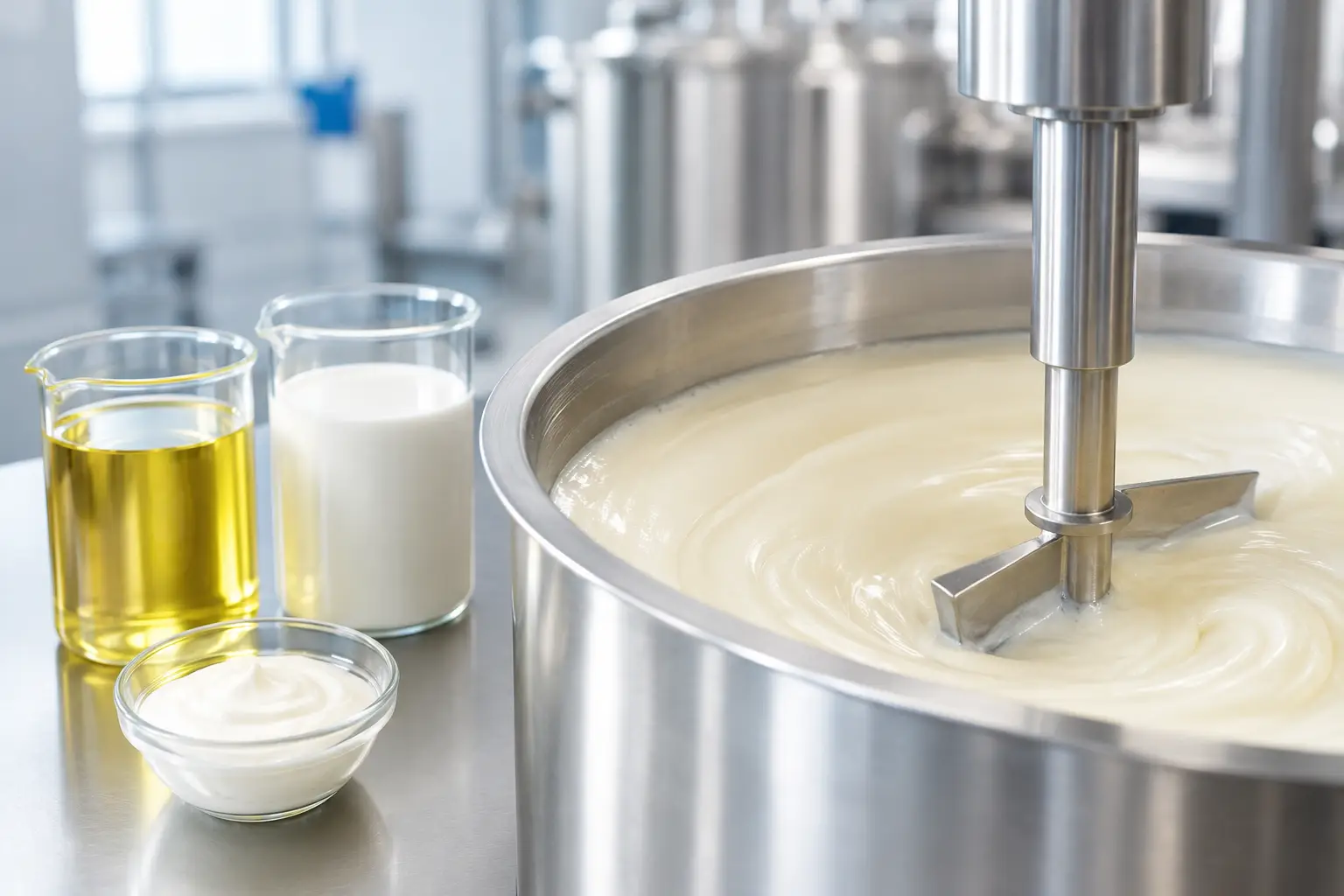
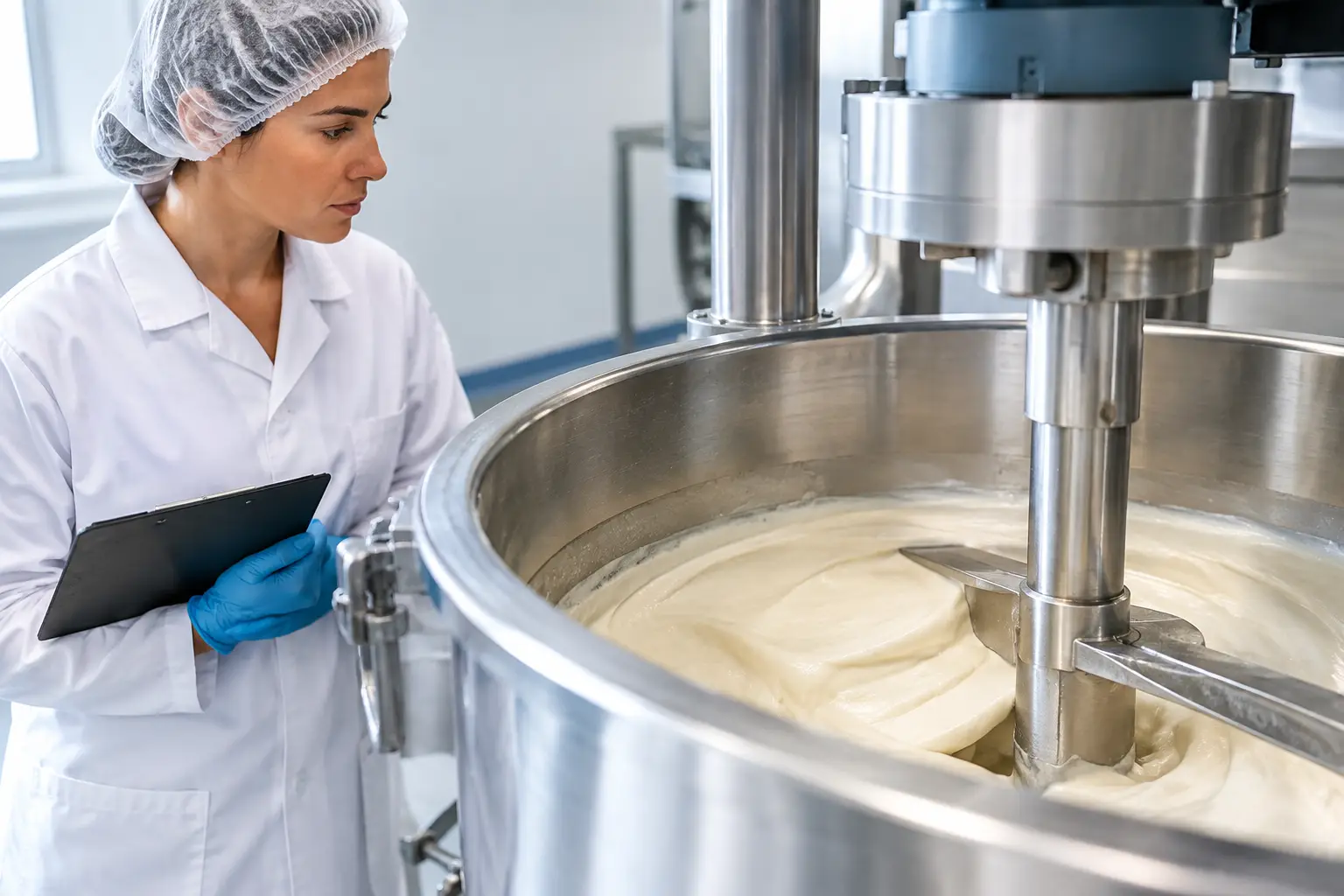
A heat-sensitive powder that dries correctly in the lab can become a costly production problem at scale. Product temperature rises, volatile components are lost, material cakes on heated surfaces, or a dry-looking batch fails final moisture or residual-solvent testing. Vacuum drying systems address these risks by lowering the boiling point of water or solvent, allowing moisture removal at temperatures that better protect the product.
For manufacturers of pharmaceuticals, nutraceuticals, foods, specialty chemicals, battery materials, and advanced powders, the objective is not simply to remove liquid. It is to deliver a stable, uniform material at the required moisture level, particle condition, temperature, and throughput while meeting containment, cleanability, and validation requirements.
Why vacuum changes the drying process
At atmospheric pressure, a liquid must be heated to a relatively high temperature before it vaporizes at a useful rate. Reducing the pressure lowers that boiling point. This gives the process engineer a wider operating window for materials that degrade, oxidize, melt, discolor, or lose functional properties under conventional thermal drying conditions.
The benefit is not automatic. Vacuum improves the thermodynamic conditions for evaporation, but production performance still depends on heat transfer, exposed surface area, vapor removal, material movement, and control of the drying endpoint. A poorly designed vacuum dryer can still create wet pockets, hard agglomerates, excessive fines, long cycle times, and inconsistent batches.
In many applications, the material passes through three distinct stages. Early in the cycle, free surface moisture is removed relatively quickly. As the product becomes drier, moisture must migrate from within particles, granules, or paste structures to the surface. The final stage is often the slowest and most sensitive, particularly when tight residual moisture or solvent specifications apply. Controls, sampling strategy, and dryer geometry must account for each stage rather than treating drying time as a fixed recipe.
Selecting vacuum drying systems by material behavior
The starting point is the material, not the equipment category. A free-flowing crystalline powder, a sticky filter cake, a high-viscosity paste, and a solvent-wet active ingredient may all require vacuum drying, but they do not respond to the same mechanical action or heat-transfer method.
Powders and granules
For powders and granules, the central questions are whether the material remains free-flowing as moisture falls, whether it is prone to segregation, and how much agitation it can tolerate. Gentle mixing can renew the heated surface, expose wet material, and improve batch uniformity. Too much mechanical energy, however, can fracture friable particles, alter particle-size distribution, or generate unacceptable fines.
A static vacuum tray dryer may suit lower-volume products or materials that must remain undisturbed. An agitated vacuum dryer can provide better heat transfer and a more consistent endpoint for cohesive or variable materials. The appropriate choice depends on batch size, product sensitivity, required cycle time, cleaning expectations, and downstream handling requirements.
Pastes, slurries, and filter cakes
Pastes and wet cakes often become more difficult to process as they dry. Their viscosity can rise sharply, and they may transition from a smearable mass to a sticky intermediate phase before becoming a powder. Dryer selection must account for torque demand across the full moisture range, not just the initial feed condition.
Agitated systems can break up wet agglomerates, renew surface area, and prevent wall buildup when designed with the correct mixing elements and clearances. In some processes, a preconditioning step such as dewatering, milling, solvent exchange, or controlled addition of a carrier material can reduce drying time and improve discharge behavior. These are process decisions, not afterthoughts.
Solvent-bearing and hazardous products
When drying flammable, toxic, or high-value solvents, the vacuum system is part of a larger vapor-management design. Condensation capacity, solvent recovery, inerting, relief strategy, emissions control, seals, grounding, and area classification must be engineered together. A dryer that meets throughput requirements but overloads its condenser or creates unstable vacuum control will not deliver a reliable production process.
Product containment may be equally critical. Potent compounds, fine powders, and reactive materials can require closed charging, contained discharge, dust control, wash-in-place capability, and validated cleaning procedures. The drying vessel cannot be specified independently from upstream filtration and downstream milling, transfer, screening, blending, or packaging.
Heat transfer determines capacity
Vacuum does not create heat. Energy must still enter the product through a jacketed vessel wall, heated shelves, internal elements, or a combination of these surfaces. The available heat-transfer area, heating-medium temperature, product contact, and mixing pattern establish the practical evaporation rate.
This is why quoted batch capacity can be misleading. Two dryers with similar vessel volumes may have very different cycle times and usable output. One may operate with a shallow product bed and strong wall contact; another may be limited by poor movement of a dense, insulating material. The useful measure is production output at the required final quality, including charging, drying, cooling, discharge, cleaning, and changeover time.
Engineers should evaluate the full thermal balance. Heating a wet product too aggressively can create localized overheating or crust formation that slows internal moisture release. Running too conservatively may protect the product but consume capacity and utility budget. The right operating profile often uses staged jacket temperatures and vacuum levels, with defined transitions based on product temperature, pressure response, condensate rate, torque, or analytical moisture data.
The vacuum package is not a utility detail
Vacuum performance is frequently treated as an accessory specification. It should be treated as a process-critical subsystem. The pump technology, piping diameter, condenser arrangement, knock-out capacity, instrumentation, and leak integrity all influence the achievable pressure and the stability of the drying cycle.
A system must remove vapor without pulling excessive product fines into the vacuum line. It must also manage non-condensable gases, which can reduce heat transfer and make pressure control erratic. For solvent applications, condenser temperature and surface area must match the vapor load and solvent properties. Where multiple solvents are present, the recovery and control strategy may require additional evaluation.
Leak testing and maintenance discipline matter because small air leaks can materially change drying performance, oxidation risk, and energy consumption. In regulated production, vacuum trends, temperature records, and endpoint data also become part of the batch record and validation framework.
Integration protects the finished product
Drying is rarely the final unit operation. A product may require delumping, milling, classification, blending, metal detection, contained transfer, and filling after it leaves the dryer. If these interfaces are not designed as one system, a successful drying operation can be undone by uncontrolled exposure, moisture pickup, segregation, or handling damage.
For example, a hygroscopic powder may meet its endpoint in the dryer but rapidly absorb moisture during open discharge. A low-density material may require a transfer method that avoids compaction. A material with tight particle-size requirements may need controlled milling after drying rather than aggressive agitation inside the dryer. Equipment selection should therefore consider the entire product path, including cleanability, operator access, material traceability, automation, and future capacity expansion.
Proc-X approaches these decisions as integrated process engineering work. The dryer, vapor-handling package, controls, material transfer equipment, and downstream finishing operations must operate to one defined production standard.
What to establish before specifying equipment
A productive specification begins with measurable process information: feed rate or batch size, starting and final moisture or solvent levels, bulk density, particle-size distribution, temperature limit, vapor composition, desired cycle time, and expected annual operating hours. It should also define product-contact materials, sanitary or regulatory requirements, containment targets, utilities, cleaning method, and available installation footprint.
Pilot testing is especially valuable when the product changes character during drying or when quality attributes are sensitive to mechanical action. Testing can reveal actual evaporation behavior, product temperature response, agitation requirements, discharge characteristics, and final material condition. It also creates the data needed to size the condenser and vacuum equipment correctly instead of relying on assumptions from a lab-scale trial.
The lowest initial equipment price is not always the lowest-risk choice. A system that shortens cycle time but produces inconsistent moisture, requires frequent manual cleaning, or cannot integrate with contained downstream handling introduces costs that appear later as lost capacity, rejected product, and maintenance burden.
A well-engineered vacuum drying installation gives operations teams more than lower-temperature evaporation. It provides a controlled route from wet feed to a stable, production-ready material, with the data, handling discipline, and equipment compatibility needed to repeat that result shift after shift.