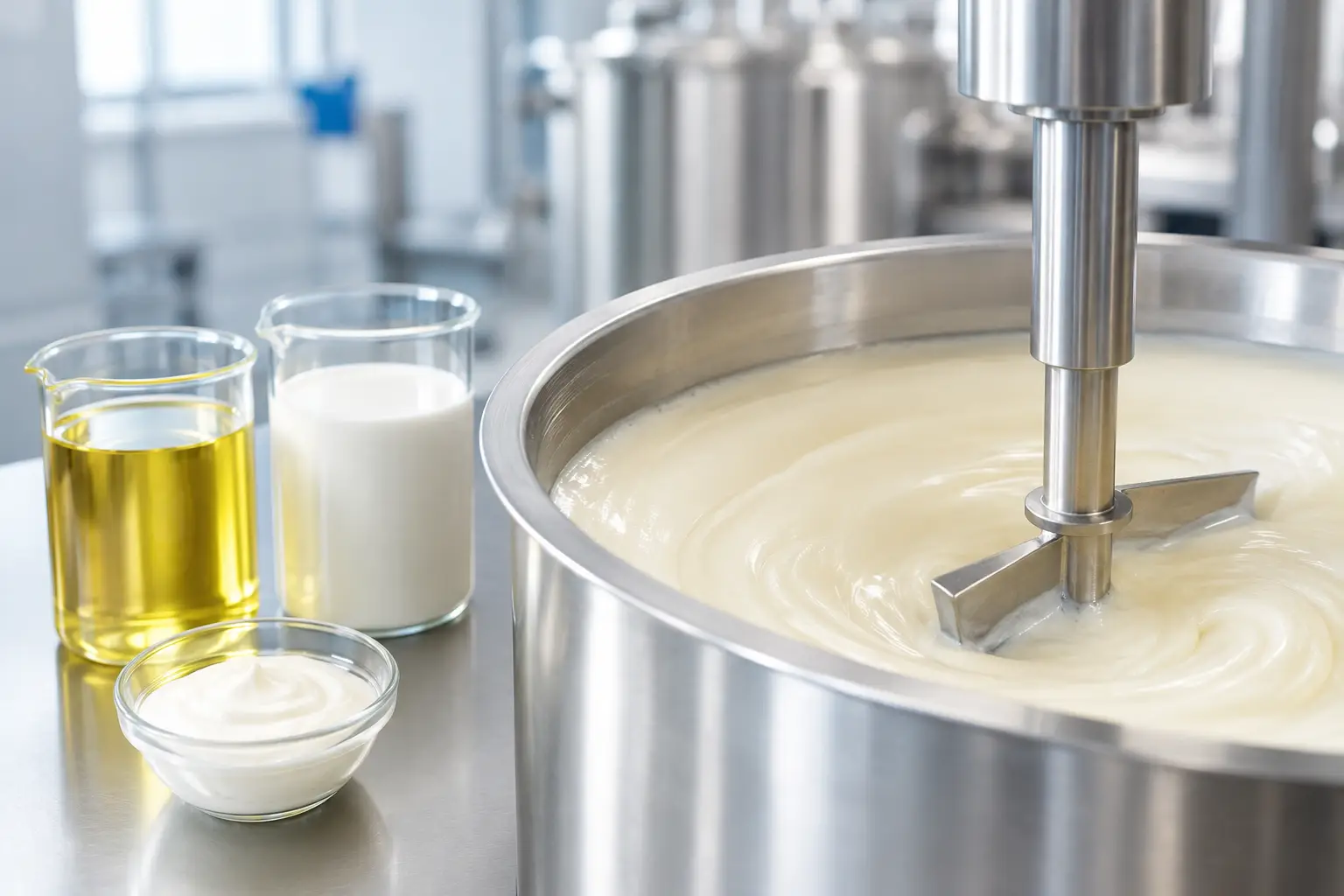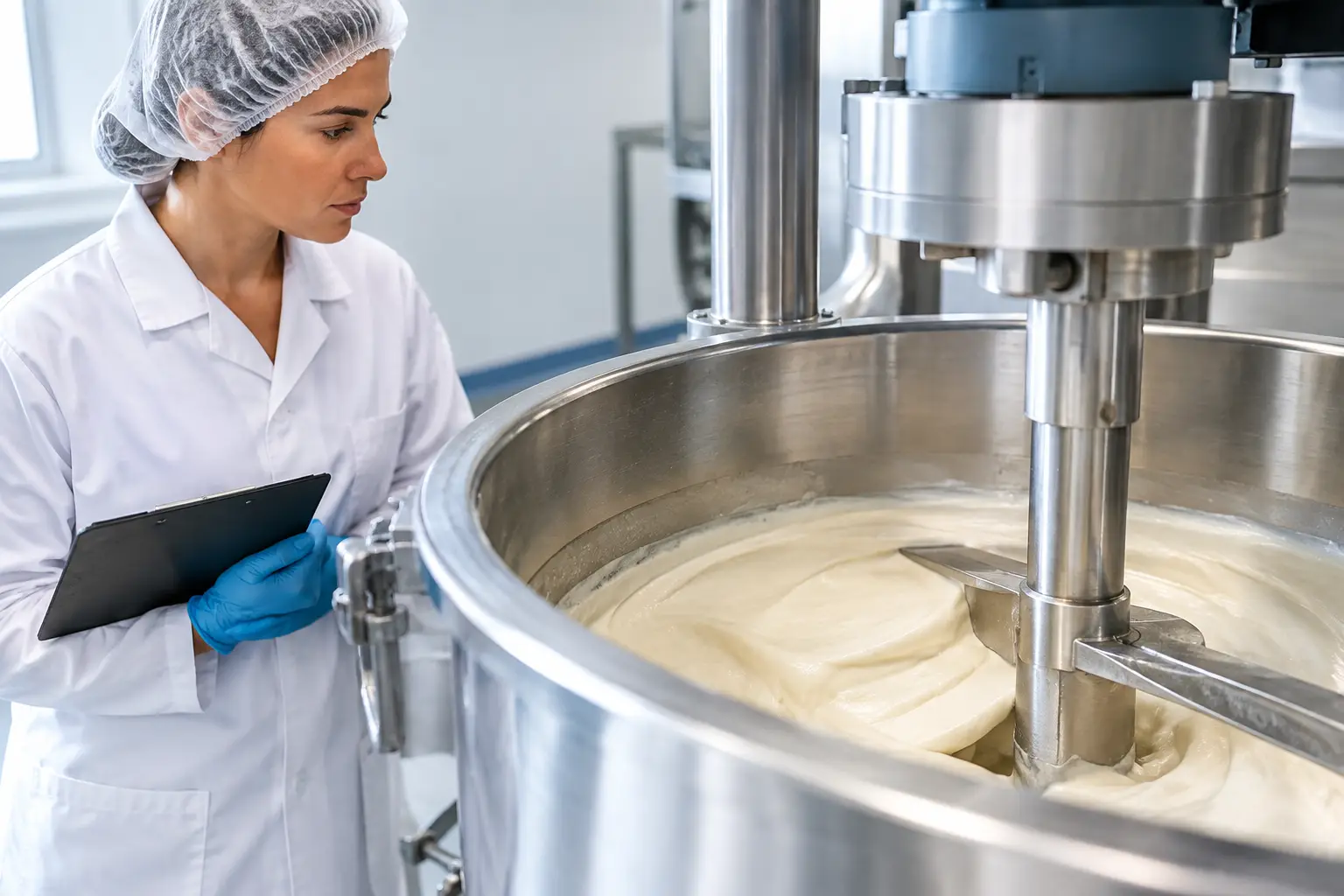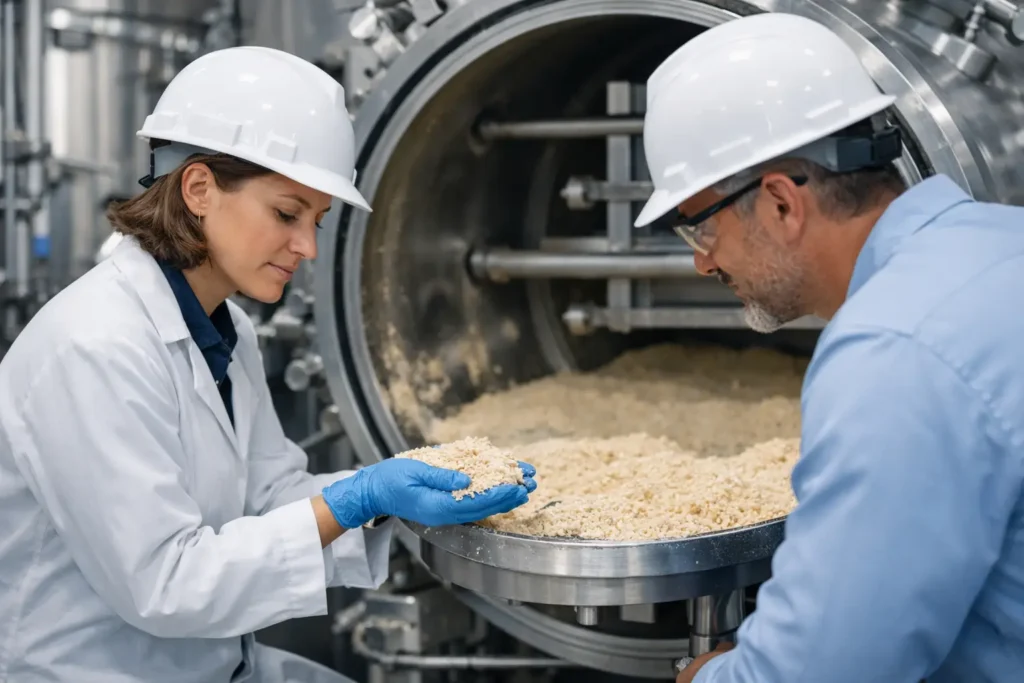
A vacuum dryer can protect a heat-sensitive active, recover a volatile solvent, or turn a difficult wet cake into a consistent downstream feed. It can also become the production constraint if its heat-transfer area, agitation method, vacuum capacity, discharge arrangement, and controls were selected independently. This vacuum dryer review examines the equipment as a process decision rather than a catalog item.
For industrial teams, the question is not whether vacuum drying works. The question is whether a specific dryer can remove the required moisture or solvent at the required rate while preserving particle properties, maintaining containment, and fitting the rest of the line. The right answer depends on the material and the operating objective.
What a Vacuum Dryer Must Accomplish
Vacuum lowers the boiling point of moisture and solvents, allowing evaporation at temperatures that may be impractical under atmospheric conditions. That advantage is significant for pharmaceutical intermediates, nutraceutical ingredients, specialty chemicals, battery materials, food powders, and other products that can discolor, degrade, oxidize, or agglomerate under excessive heat.
But lower pressure alone does not guarantee good drying. The system must supply heat efficiently, expose wet material to an effective evaporation surface, remove vapor continuously, and prevent local overheating or product buildup. As drying progresses, the material often changes from a slurry or wet cake into a cohesive solid, free-flowing granule, or fragile powder. Those changing conditions define the dryer configuration.
A useful review begins with a mass and energy balance. How many pounds of liquid must be removed per batch or per hour? What is the starting and final moisture specification? What is the allowable product temperature? Is the vapor water, a flammable solvent, a solvent mixture, or a corrosive component? Without those answers, nominal vessel volume and horsepower provide little basis for comparison.
Vacuum Dryer Review: The Criteria That Matter
Drying rate is governed by more than vacuum level
Higher vacuum can reduce the boiling point, but it does not automatically shorten the cycle. The drying rate is often limited by heat transfer through the jacket, internal surfaces, or agitator; by vapor migration through the material bed; or by condenser and vacuum-system performance. A dryer that reaches a deep vacuum quickly may still perform poorly if the product forms insulating layers or receives insufficient heat.
Review the expected drying curve, not only the quoted final vacuum. The supplier should define assumptions for charge mass, solvent load, jacket temperature, product temperature, agitation speed, and end-point moisture. For a batch operation, the relevant number is total cycle time, including charging, heat-up, evaporation, final dry, cooling, discharge, and cleaning. For continuous production, residence-time distribution and feed consistency are equally important.
Agitation determines product behavior
Agitated vacuum dryers are often selected because they improve heat transfer and break up wet material during the difficult middle and final stages of drying. However, agitator design must match the product. A paste may require strong wall sweeping and controlled torque. A friable crystal may need gentler movement to avoid excessive fines. A cohesive powder may require geometry that prevents stagnant zones and supports complete discharge.
The evaluation should include minimum and maximum operating fill levels, torque through the full drying cycle, shaft-seal design, scraper clearance, and the ability to process expected variability in feed moisture. A machine sized around an ideal laboratory sample can stall or leave unacceptable residue when commercial feed conditions shift.
Material of construction and containment are process requirements
Product contact surfaces must be evaluated for corrosion resistance, cleanability, extractables risk, abrasion, and regulatory fit. Stainless steel may be appropriate for many applications, but chloride exposure, acidic chemistry, abrasive mineral powders, and high-purity requirements can change the specification. Surface finish, weld quality, gasket selection, and dead-leg control matter when cleaning validation or cross-contamination control is required.
Containment deserves the same rigor. Fine powders, potent compounds, solvent vapors, and oxygen-sensitive products may require sealed charging, contained sampling, nitrogen inerting, filtered venting, or controlled discharge into a downstream bin, mill, blender, or packaging system. A dryer is not isolated from plant risk simply because its vessel is closed during the main cycle.
Vapor handling can determine plant viability
The vacuum system, condenser, receiver, and emissions-control strategy must be designed as one vapor-handling package. Vapor load changes sharply during a batch. Early evaporation may demand high condensing capacity, while late-stage drying may require stable vacuum at a much lower vapor flow. An undersized condenser can overload the vacuum pump, extend cycle time, and increase solvent release risk.
For flammable solvents, teams must assess inerting methodology, oxygen monitoring where applicable, electrical-area classification, grounding and bonding, pressure relief, and the operating logic for abnormal conditions. The appropriate design basis depends on the solvent, concentration, temperature, pressure, and plant standards. It should not be inferred from a generic dryer specification.
Evaluate the Dryer in the Full Production Line
A vacuum dryer may sit between filtration and milling, or it may receive a liquid blend and discharge directly to packaging. Either arrangement changes the engineering priorities. Upstream equipment controls the solids concentration, particle structure, solvent content, and batch variability entering the dryer. Downstream equipment determines the required discharge temperature, bulk density, particle-size condition, and transfer method.
For example, a warm, low-density powder can lose flowability during pneumatic conveying or compact during storage. A product discharged at too high a temperature may absorb moisture before packaging. A vacuum dryer with a technically sound drying cycle can still create a line-level problem if cooling, conveying, screening, milling, and dust collection are not coordinated.
Controls should support repeatable operation rather than simply automate valves. A well-defined recipe manages jacket temperature ramps, agitation profiles, vacuum setpoints, inert-gas additions, condenser operation, and end-point logic. End-point confirmation may use product temperature trends, pressure-rise testing, load cells, moisture measurement, or a validated combination. The right method depends on the critical quality attributes and the risk of overdrying, residual solvent, or batch-to-batch variation.
Common Selection Errors
The most expensive mistakes are usually made before fabrication. One is specifying vessel working volume instead of usable batch capacity across the full product range. Another is treating moisture removal as a simple evaporation calculation while ignoring bound moisture, changing rheology, or low thermal conductivity near the end of the cycle.
Teams also underestimate cleaning and changeover. If a dryer processes multiple formulations, it must be accessible, drainable where required, and designed around the actual cleaning method. Clean-in-place capability is valuable only when spray coverage, residue removal, drain paths, and verification requirements have been considered. Manual cleaning may be acceptable for certain industrial materials, but it has labor, exposure, and downtime consequences.
A final error is buying the dryer and assigning integration later. Controls interfaces, utilities, foundations, access platforms, loading stations, vapor piping, dust collection, and downstream transfer should be resolved during engineering. One manufacturer, one engineering standard, and one point of accountability reduce avoidable handoffs in a critical process area.
How to Run a Defensible Equipment Review
Start with representative material data and production scenarios, including best-case, nominal, and difficult conditions. Pilot trials should replicate the expected feed form, solvent composition, fill level, and final moisture target as closely as possible. Record drying time, product temperature, torque, vacuum stability, condensate rate, particle changes, discharge behavior, and cleaning observations.
Then assess the commercial design against measurable acceptance criteria. These may include annual throughput, maximum batch cycle, residual moisture or solvent, product temperature at discharge, yield, particle-size preservation, containment performance, utility consumption, and validated recipe repeatability. A credible proposal identifies assumptions and shows where further testing is needed.
Proc-X approaches vacuum drying as part of the broader material-processing system, connecting thermal treatment with feeding, transfer, size control, blending, automation, and packaging requirements. That systems view is especially valuable when drying performance must translate into reliable plant output.
The best vacuum dryer is not the one with the deepest vacuum rating or the largest vessel. It is the one that delivers a controlled, repeatable product at the required capacity while remaining maintainable, safe, and compatible with every process step that follows.