A production line can meet its rated capacity on paper and still fail the business case in operation. Changeover losses, material segregation, cleaning requirements, operator intervention, hold times, and control limitations often determine real output more than the nameplate capacity of any one machine. The batch processing vs continuous processing decision must therefore be made at the system level, not as an isolated equipment selection.
For manufacturers in regulated and performance-critical markets, the right process architecture affects product consistency, capital utilization, traceability, labor requirements, and future expansion. Neither approach is universally superior. The correct choice depends on product behavior, demand profile, quality requirements, and the degree to which upstream and downstream equipment can operate as one coordinated system.
Batch Processing vs Continuous Processing: The Core Difference
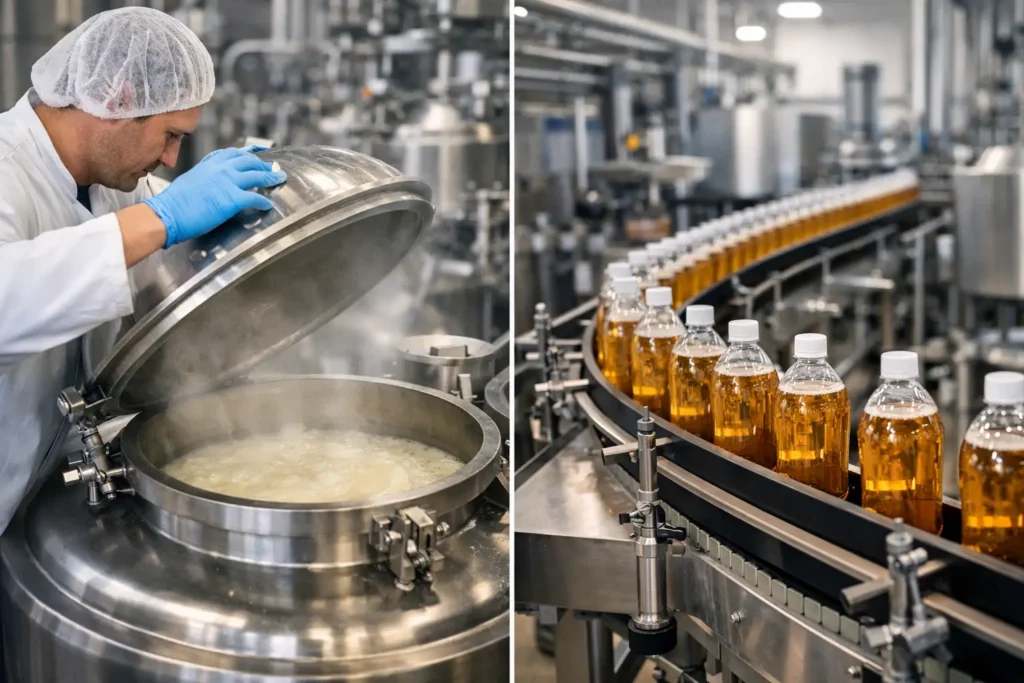
Batch processing moves a defined quantity of material through a sequence of operations. Raw materials are weighed, charged, processed, discharged, and documented as a discrete lot. A batch may pass through milling, blending, thermal processing, extrusion, or packaging before the next batch begins or before the line is cleaned and reconfigured.
Continuous processing moves material through the system without planned stops between individual lots. Feed systems meter ingredients at controlled rates, equipment operates within defined process conditions, and finished product exits continuously. Material residence time and mass flow become central design variables because material is being processed at multiple points in the line at the same time.
The distinction sounds simple, but many real facilities operate in between these two models. A plant may use continuous conveying and milling ahead of a batch blender, or batch formulation followed by continuous extrusion and packaging. Hybrid systems are often the most practical response when different process steps have different requirements.
Where Batch Processing Creates Operational Value
Batch systems are particularly effective when product portfolios are broad, formulations change frequently, or individual lot records are required. They give operations teams a clear material boundary: this specific set of ingredients produced this specific quantity of finished product under documented conditions.
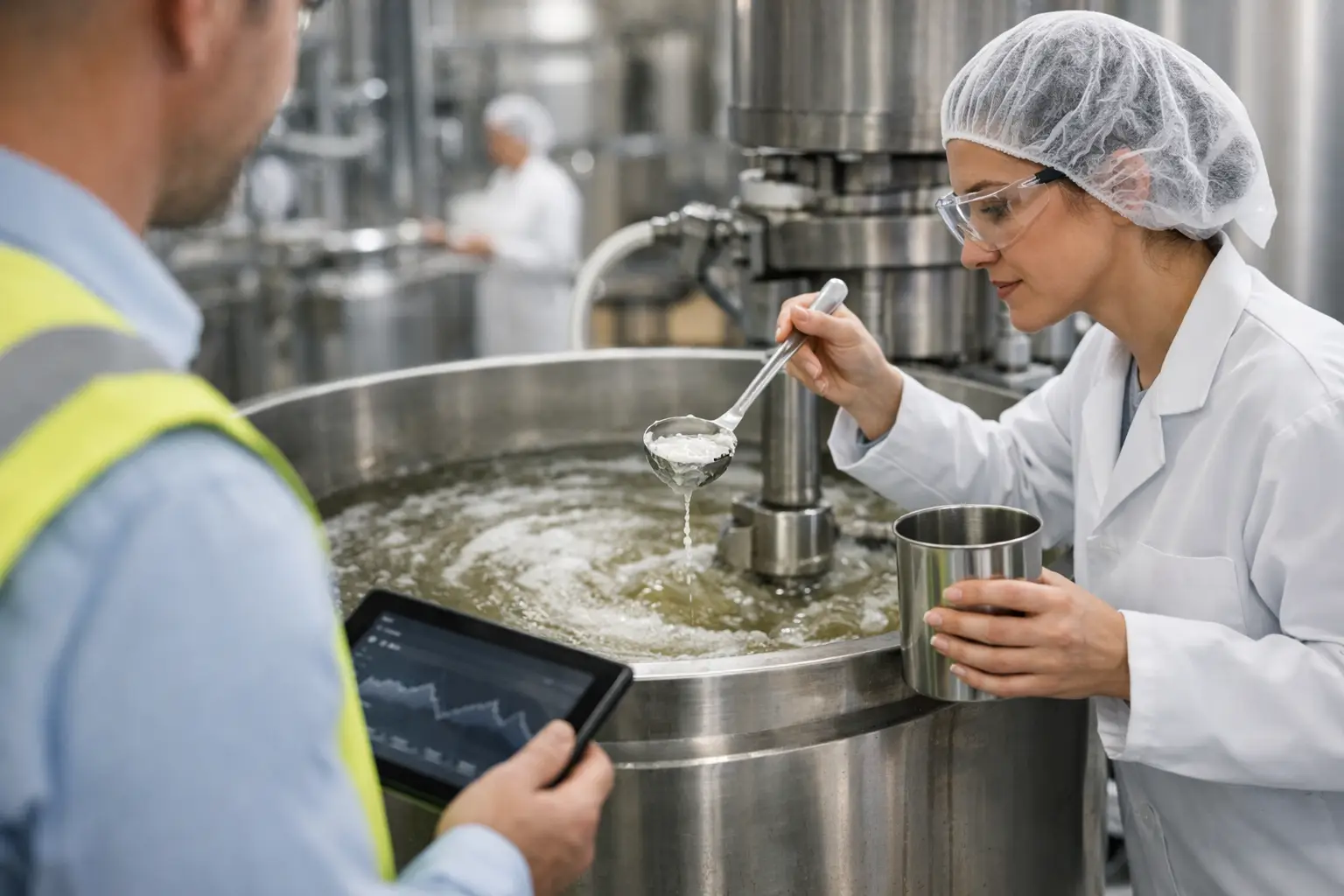
That boundary supports traceability, quality review, and containment. If a raw material issue or process deviation is identified, the affected material can be isolated by lot rather than traced across an extended continuous run. This is a significant advantage in pharmaceuticals, nutraceuticals, specialty chemicals, food applications, and other environments where release procedures and audit readiness are central operating requirements.
Batch processing also offers formulation flexibility. An operation producing many SKUs in relatively modest volumes can change recipes, processing times, and equipment settings without committing an entire line to one sustained operating condition. A properly designed batch system can accommodate a wide range of powders, granules, liquids, and additives, provided the material handling, cleaning strategy, and controls are engineered for those changes.
The trade-off is time between batches. Weighing, charging, mixing, sampling, discharge, cleaning, and setup can create nonproductive intervals. If those intervals are not designed into the capacity model, a line that appears sufficient during equipment sizing can become the constraint after startup.
Batch System Design Requires More Than a Mixer
A batch process is only as reliable as the sequence around the main processing equipment. Poor raw material staging can delay batch starts. Inadequate transfer capacity can extend discharge time. A downstream packaging line that cannot accept the batch discharge profile can force upstream equipment to wait.
For this reason, batch line design must account for vessel utilization, buffer capacity, dust collection, loss-in-weight or gain-in-weight accuracy, material flow characteristics, cleanability, and recipe controls. The objective is not simply to complete a batch. It is to complete repeatable batches at the required quality and schedule with predictable labor and minimal waiting.
When Continuous Processing Delivers Better Economics
Continuous processing is strongest when demand is stable, annual volumes are high, and the product can tolerate a sustained, controlled flow path. By eliminating repeated fill-and-empty cycles, it can increase throughput per unit of installed equipment and reduce material handling steps.
It can also provide tighter process control. Continuous feeders, inline measurement, automated control loops, and consistent thermal or mechanical exposure can reduce variation caused by manual additions and batch-to-batch operating differences. For applications such as high-volume food production, advanced materials, chemicals, battery materials, and continuous extrusion, that consistency can be a substantial performance advantage.
Continuous systems may reduce footprint and work-in-process inventory because material moves directly from one operation to the next. They can also support lower unit labor requirements once established. These gains, however, depend on a line that is balanced from receiving through packaging. A high-capacity continuous extruder provides little benefit if feeding is unstable, downstream cooling is undersized, or packaging cannot absorb the output.
Continuous architecture also concentrates risk. A disruption at one critical point can stop the entire line, and process upsets may affect material produced over a period of time before the condition is detected and corrected. Instrumentation, automation, diversion capability, and process monitoring are not optional additions. They are part of the process design.
Residence Time and Material Behavior Matter
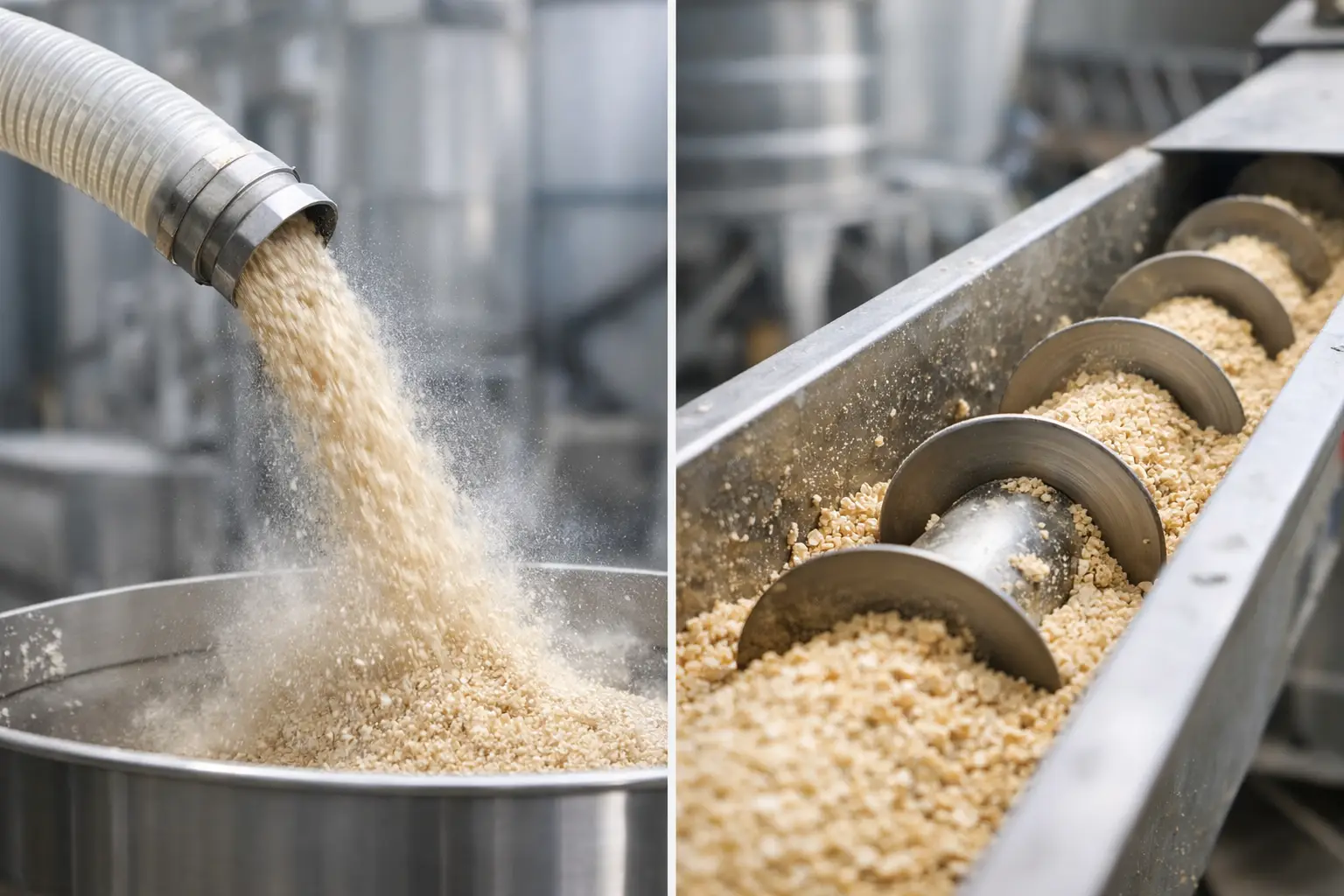
Continuous processing requires a detailed understanding of how materials behave in motion. Powder density changes, feeder refill events, particle-size variation, moisture changes, and cohesive material can all affect mass flow and product quality. The process must be engineered to manage those variables, not merely to move material faster.
Residence time distribution is especially important where blending, reaction, thermal treatment, drying, or extrusion must achieve a defined result. A nominal dwell time is not enough. Engineers must understand how long different portions of material actually remain in the system and whether the equipment produces the needed uniformity at normal and off-normal operating conditions.
The Decision Criteria That Matter Most
Production volume is usually the first factor considered, but it should not be the only one. A lower-volume product with a long campaign schedule may suit continuous processing, while a high-volume operation with frequent formula changes or strict lot release requirements may remain better suited to batches.
Product variety and changeover frequency are equally important. Each additional formulation raises questions about cleaning, purge material, allergen or cross-contamination control, recipe management, and startup scrap. A continuous line can be highly efficient during long runs yet lose its advantage when short campaigns and frequent transitions dominate the schedule.
Quality and compliance requirements should shape the architecture early. Batch records can be intuitive for lot-based release systems, while continuous lines require a defensible strategy for material traceability, state-of-control verification, and segregation of material produced during transitions or deviations. The appropriate approach depends on the regulatory framework, customer specifications, and internal quality systems.
Capital cost must be evaluated beyond the initial equipment purchase. Batch systems may require more vessels, staging areas, and material movement. Continuous systems can require more sophisticated feeding, controls, inline analytics, and automation. Installation complexity, commissioning time, spare-parts strategy, utility demand, validation effort, and long-term serviceability all belong in the economic model.
Why Integration Changes the Outcome
The most common mistake is comparing a batch mixer with a continuous processor as though either operates independently. The meaningful comparison is between complete production systems.
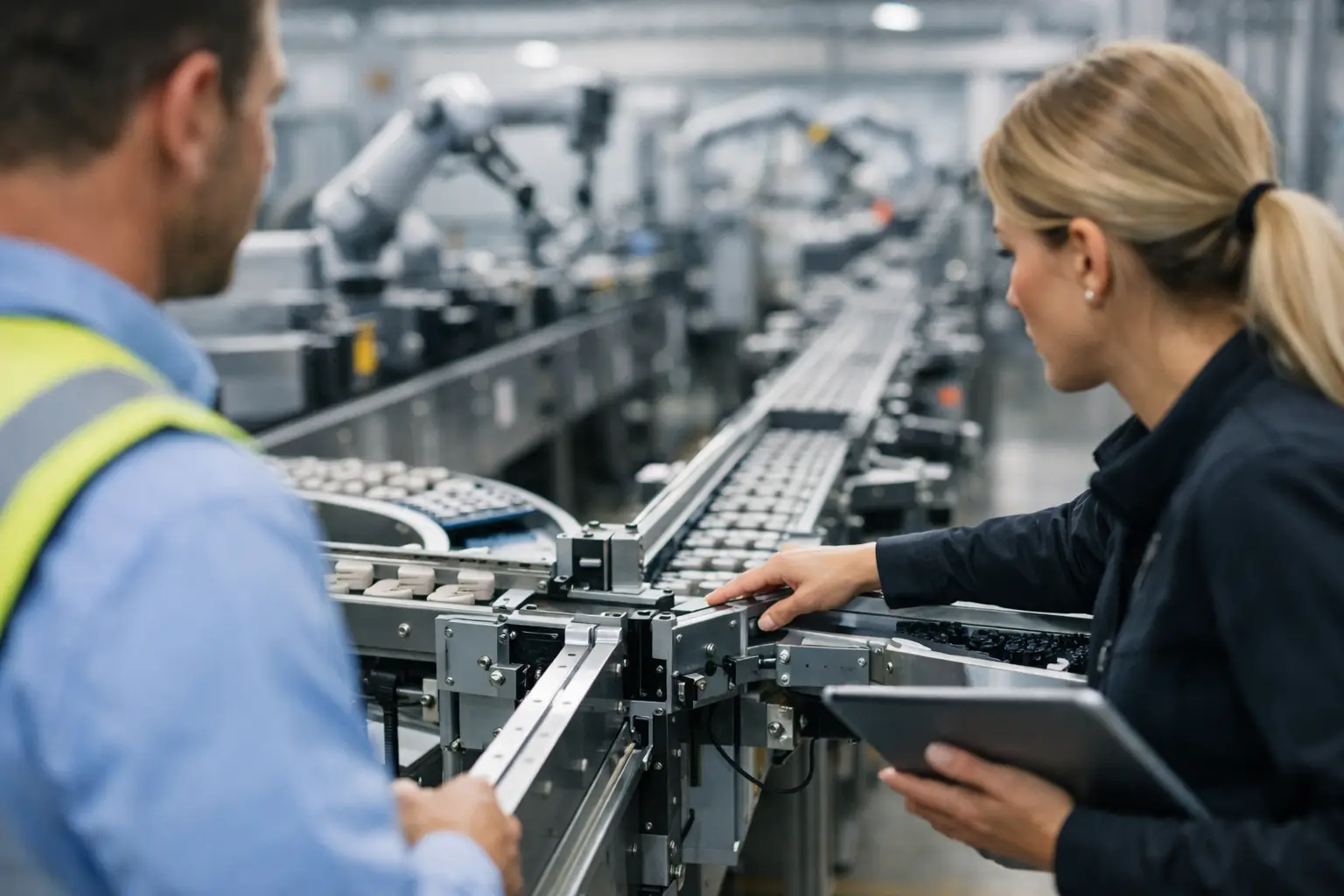
A continuous process requires coordinated raw material handling, accurate metering, process controls, transfer equipment, downstream buffering, packaging integration, and fault response. A batch line requires equally deliberate coordination between material preparation, weighing, charging, processing, discharge, cleaning, and scheduling. In either case, disconnected equipment suppliers can leave critical interfaces unresolved until commissioning, when changes are most expensive.
One manufacturer. One engineering standard. One point of accountability. That model is particularly valuable when processing technologies must operate under a unified controls architecture and meet one defined production objective. Proc-X approaches line design from that system perspective, aligning equipment selection with material behavior, operating sequences, automation requirements, and lifecycle support.
A Practical Path to Selection
Start with the production reality rather than a preferred technology. Define the annual volume by SKU, expected campaign lengths, required availability, changeover windows, material characteristics, quality release strategy, and expansion horizon. Then model the actual operating calendar, including cleaning, maintenance, sampling, startup, shutdown, and planned downtime.
Next, identify the interfaces that can limit performance. These often include feeder accuracy, bulk material flow, transfer rates, surge capacity, dust control, thermal load, and packaging speed. A process concept is credible only when every major interface has a defined operating basis.
Finally, design for the next constraint, not just the current one. If demand is likely to increase, determine whether capacity can be added through parallel batch equipment, higher-rate continuous modules, larger buffers, or expanded packaging. Scalability is not simply adding more equipment later. It is preserving the space, controls capacity, utility infrastructure, and process flexibility to make that expansion practical.
The best architecture is the one that produces the required product reliably under real operating conditions, gives quality teams confidence in the material history, and provides operations with a controllable path to future capacity. That decision becomes far clearer when the entire line is engineered as one accountable process system.