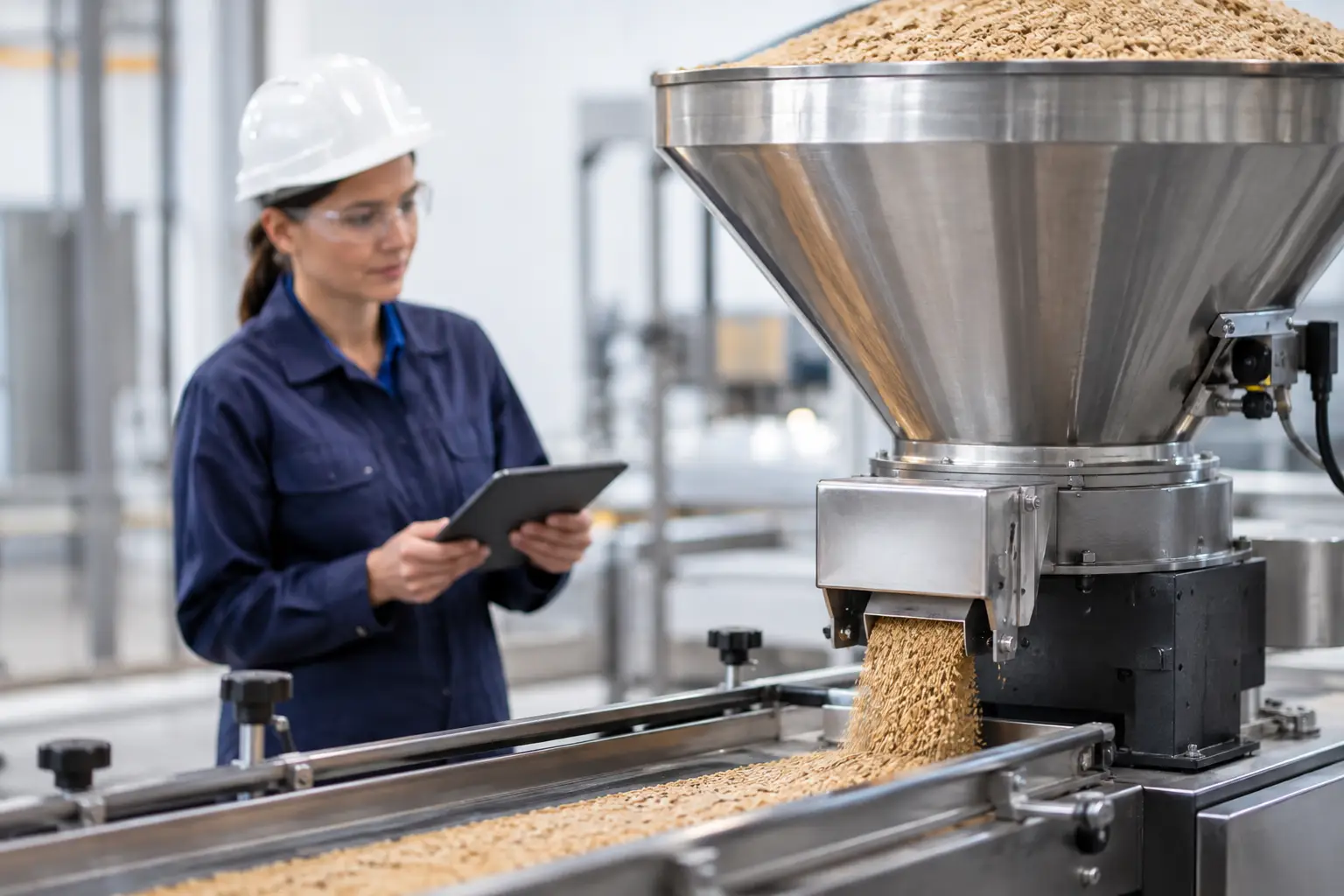
Containment failures rarely begin with a visible powder release. They begin when a material is transferred through an open connection, a liner is changed inconsistently, a sampling point is added late, or cleaning requirements were not considered during equipment selection. The best pharmaceutical containment systems address those points as part of the production process, not as isolated safety additions.
For pharmaceutical manufacturers, containment must protect operators, prevent cross-contamination, preserve product quality, and support a process that can be cleaned, validated, operated, and maintained predictably. The right answer is not always the highest-containment enclosure. It is the system that achieves the required exposure control while supporting the product, batch size, production rate, and operating model.
What Makes a Pharmaceutical Containment System Effective
A containment system should be evaluated as a chain of controlled interfaces. Material may arrive in drums, bags, intermediate bulk containers, or bulk deliveries. It can then be weighed, discharged, milled, blended, transferred, sampled, compressed, filled, and packaged. A high-performance isolator at one process step cannot compensate for an open manual transfer upstream.
Effective containment engineering starts with a defined risk basis. This includes the occupational exposure limit or occupational exposure band, potency, dustiness, particle-size distribution, flow behavior, moisture sensitivity, and toxicological profile of each material. It must also account for the likelihood of operator intervention. A cohesive powder that bridges in a hopper may require manual assistance more often than a free-flowing granule, changing the practical containment requirement.
The system also has to protect the product. Pressure differentials, airflow patterns, material accumulation, and cleaning access influence both operator exposure and batch integrity. For multiproduct facilities, the containment design should be coordinated with the site cleaning strategy, material segregation plan, and validation requirements.
Best Pharmaceutical Containment Systems by Process Need
There is no universal equipment category that qualifies as the best pharmaceutical containment system for every application. The appropriate design depends on where the material enters the process, how it moves, and how frequently the process is opened.
Contained dispensing and weighing stations
Dispensing is often the first significant exposure point in a solid-dose process. Downflow booths, ventilated dispensing stations, and contained weigh booths can provide directional airflow that captures airborne dust during bag opening, scooping, and charging. They are commonly appropriate for lower- to moderate-potency powders when the work can be performed within a controlled airflow envelope.
Their limitations matter. Airflow-based containment depends on correct sash position, operator technique, room conditions, filter maintenance, and disciplined material handling. A booth may not be sufficient for highly potent compounds, highly dusty materials, or repeated interventions that place the operator’s hands and tools outside the effective capture zone.
Isolators and glovebox systems
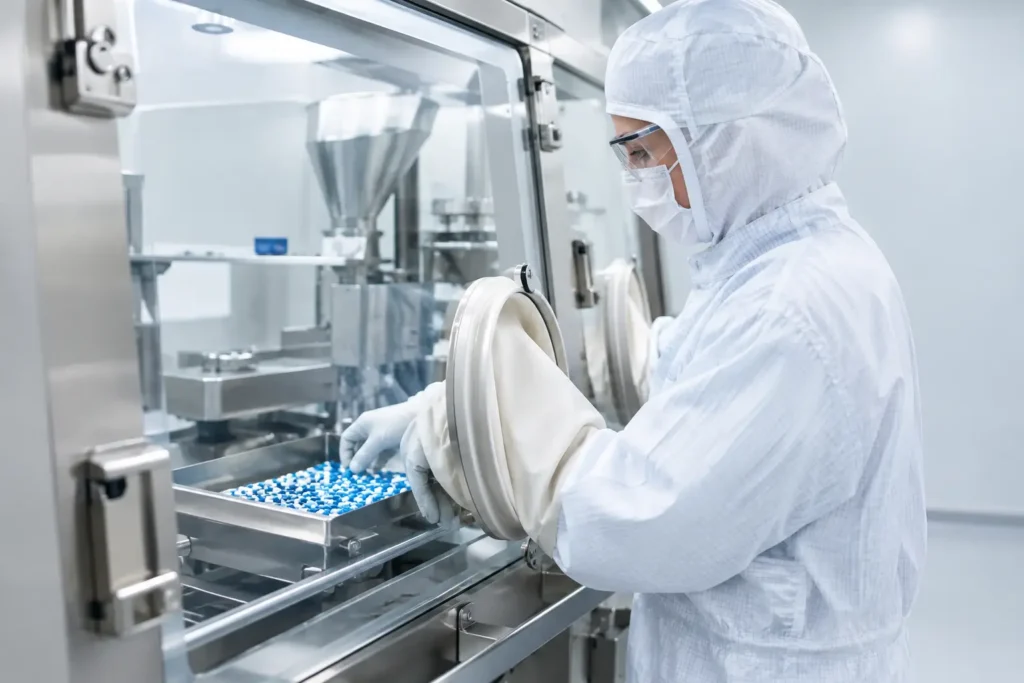
For potent APIs and operations requiring a high degree of separation between personnel and product, isolators provide a more controlled physical barrier. They can be configured for dispensing, sampling, milling, blending interfaces, and contained charging. Glove ports allow operators to manipulate material without direct exposure to the process environment.
Isolators introduce engineering obligations beyond the enclosure itself. Ergonomics must be evaluated for every task, including bag handling, tool use, cleaning, and component changeover. Transfer methods must maintain containment at the point materials enter and leave the enclosure. Pressure control, filter design, leak testing, glove integrity, and decontamination procedures all need defined operating and maintenance standards.
Split butterfly valves and contained transfer connections
A large share of containment risk occurs at equipment connections. Split butterfly valve systems provide a contained method for joining and separating process vessels, bins, drums, and transfer devices. When properly selected and operated, they can reduce dust release during charging and discharge while supporting closed material movement between unit operations.
Valve selection should consider the powder itself. Fine, adhesive, electrostatic, or abrasive materials can affect sealing performance, cleanability, residual hold-up, and component life. The valve size must also support the required flow rate without creating bridging, rat-holing, or excessive transfer time. A contained connection that becomes difficult for operators to use correctly can create a new reliability problem.
Single-use containment for flexible operations
Single-use liners, continuous liner systems, and disposable transfer assemblies can reduce cleaning burden and support rapid product changeover. They can be particularly useful in clinical manufacturing, small-batch production, and facilities handling multiple compounds with limited dedicated equipment.
The trade-off is operational control. Liner installation, sealing, cutting, and removal are critical tasks that require repeatable work instructions and training. Material compatibility, static behavior, puncture resistance, waste handling, and supply continuity should be established before the system becomes central to production. Single-use components can simplify cleaning, but they do not eliminate the need for a complete containment strategy.
Closed processing equipment and integrated lines
The strongest containment outcome often comes from reducing the number of open operations. Closed charging to mills, blenders, granulators, dryers, and tablet presses limits opportunities for release while improving material traceability and process control. Vacuum conveying, contained mechanical transfer, automated dosing, and integrated receiving systems can all contribute when engineered around the actual material behavior.
This approach is especially valuable when containment requirements intersect with capacity expansion. Rather than adding a booth around an existing manual process, manufacturers can redesign the material path to minimize handling points. The investment may be higher initially, but the lifecycle benefit can include lower operator exposure, fewer manual touches, improved batch consistency, and more reliable scale-up.
Design the System Around the Material Path
Containment equipment should never be selected from an exposure rating alone. A process engineer needs to map each material movement, including receiving, staging, charging, sampling, discharge, cleaning, and waste removal. The map should identify where the process is open, who interacts with it, how often the interaction occurs, and what happens when material does not flow as expected.
For example, a potent API may be discharged from a drum through a contained valve into an intermediate vessel, conveyed to a mill, and then transferred to a blender. If the mill screen requires frequent changes or the blender needs manual charging of minor ingredients, those interventions may determine the actual containment performance of the line. The design must cover routine operations and credible non-routine events.
Material properties are equally decisive. Low bulk density powders can remain airborne longer. Hygroscopic materials may adhere to surfaces and complicate cleaning. Friable granules can generate fines during transfer. Heat-sensitive ingredients may limit cleaning or decontamination methods. An engineered solution considers these variables before specifying the enclosure, transfer technology, filtration approach, and cleaning method.
Containment, Cleaning, and Validation Must Align
A system that contains potent powder but cannot be cleaned and verified efficiently may create unacceptable production delays or cross-contamination risk. Cleanability must be evaluated at the design stage, including access to product-contact surfaces, dead zones, gasket locations, discharge valves, filters, and transfer interfaces.
The cleaning approach should match the equipment and product portfolio. Some applications require clean-in-place capability. Others benefit from wash-in-place arrangements, removable components, or dedicated product-contact assemblies. Dry cleaning may be appropriate where water creates material hazards or extended drying time. Each method has implications for validation, turnaround time, operator exposure during cleaning, and waste management.
Containment also affects maintenance. Filters, seals, screens, sensors, and wear parts eventually require service. If maintenance requires breaking containment without a defined procedure and suitable protective measures, the facility will face avoidable exposure and downtime. Engineering teams should include maintenance personnel in design reviews early, not after commissioning.
How to Compare Containment System Suppliers
When comparing suppliers, look beyond a stated containment level or a single piece of equipment. The supplier should be able to explain how the system interfaces with upstream and downstream operations, how airflow and pressure control are managed, and how cleaning and maintenance are performed.
A useful evaluation also includes factory acceptance testing, site acceptance testing, installation requirements, control integration, documentation, and support for qualification activities. For processes involving potent materials, representative surrogate testing or containment performance testing may be necessary to verify that the installed system meets the intended operating conditions.
The most reliable projects assign clear responsibility for the complete production path. A coordinated engineering partner can align equipment geometry, transfer connections, controls, dust collection, automation, and validation documentation before fabrication begins. That reduces the costly field modifications that occur when separately sourced machines do not share the same containment standard.
Build for Normal Work, Not Ideal Work
The right containment system is one operators can run correctly through every batch, shift, and changeover. It must accommodate real material behavior, realistic cleaning windows, maintenance access, and the occasional process upset without forcing workarounds.
For complex pharmaceutical powder handling, Proc-X approaches containment as part of the complete processing system: one material path, one engineering standard, and one point of accountability. The most productive next step is to define the actual operating sequence in detail, then engineer containment around the places where people, product, and process meet.