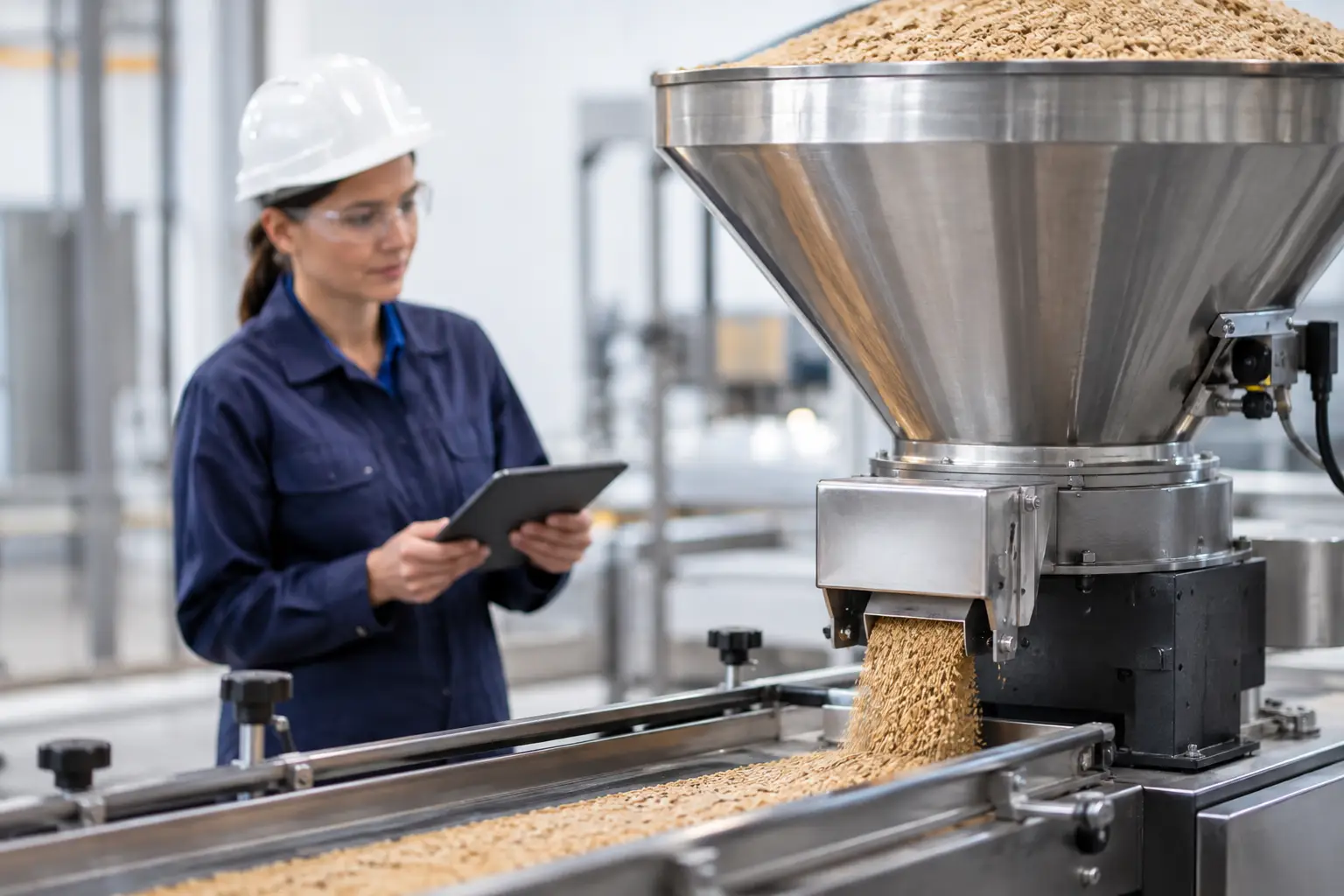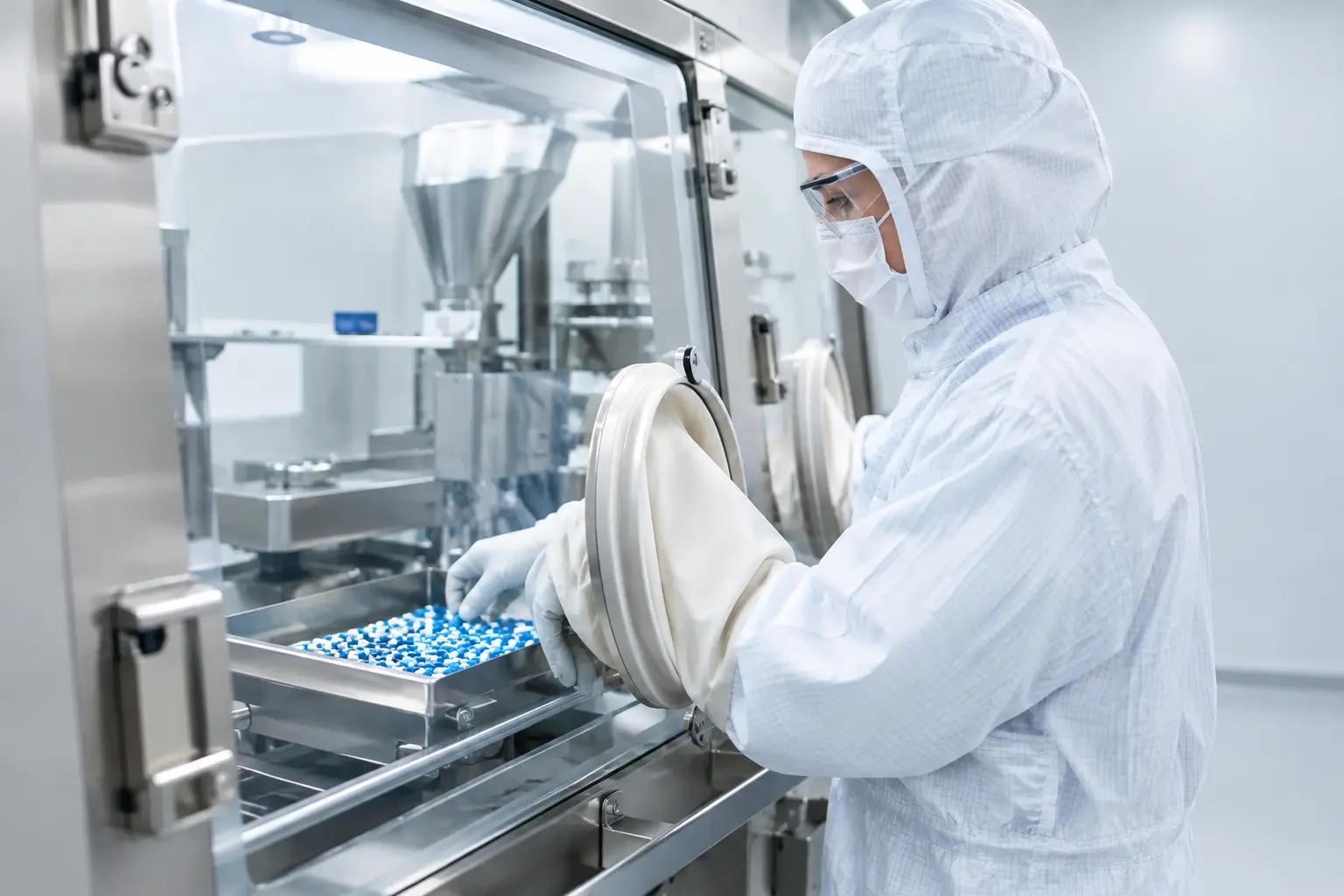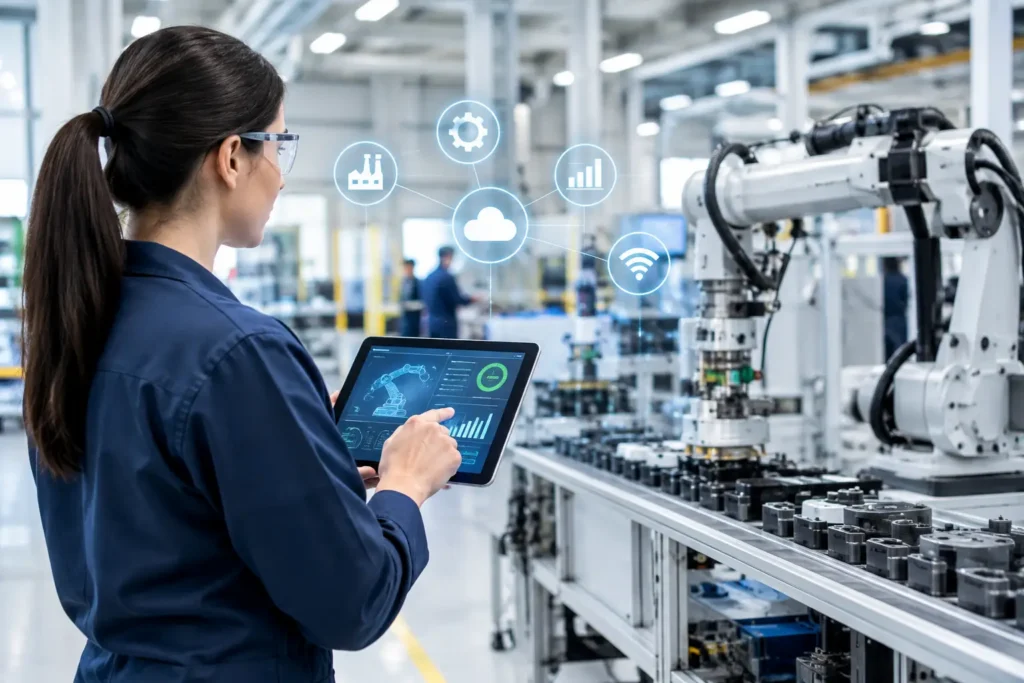
A powder processing line can have modern equipment, capable PLCs, and a plantwide historian yet still operate as a collection of disconnected decisions. Operators may manually reconcile batch records, maintenance teams may lack usable asset data, and quality personnel may discover a deviation after material has moved downstream. Smart factory integration trends are changing that model by connecting process equipment, controls, material flow, quality data, and business requirements around one operating architecture.
For manufacturers handling powders, granules, liquids, pastes, and high-viscosity materials, integration is not a software exercise. It must account for how materials behave, how batches are made, where contamination or segregation can occur, and what documentation the market or regulator requires. The useful question is not whether a plant is “smart.” It is whether the integrated system gives people better control of production, quality, and risk.
Smart Factory Integration Trends Reshaping Processing
Integration is moving from machine connectivity to process context
Early smart manufacturing projects often focused on connecting individual assets. A mixer reports speed and motor load. A feeder reports weight loss. A packaging machine reports output. Those signals are valuable, but they do not independently explain whether the process produced acceptable material.
Current integration programs increasingly organize data around production context: the formula, lot number, operator actions, equipment state, material genealogy, critical process parameters, and finished-product result. This shift matters in processes where a small variation in feed rate, moisture, particle size, temperature, or mixing time can affect downstream flowability, potency, texture, density, or package weight.
A connected feeder, mill, blender, and filler should not merely share status. Their controls and records should support a traceable account of what happened to a specific batch or lot. The required depth depends on the application. A specialty chemical line may prioritize recipe protection and reaction controls, while a nutraceutical operation may prioritize ingredient verification, electronic batch records, and cleanability. The integration design must follow the process risk.
Edge control and plant data platforms are finding clearer roles
Manufacturers are moving beyond the false choice between local control and centralized data. Real-time machine protection, interlocks, motion control, and safety functions belong close to the equipment. They cannot depend on a remote platform or a variable network connection.
At the same time, higher-level systems can collect standardized production data, coordinate recipes, manage electronic records, and present performance information across multiple lines or facilities. This division of responsibility improves resilience. A local system keeps the process safe and controlled during a network interruption, while the plant platform preserves visibility, analysis, and reporting when connectivity is available.
The architecture should define ownership before equipment is selected. Which system is the source of truth for recipes? Where are alarms acknowledged? How are user permissions managed? Which data must be retained for validation, quality review, or customer documentation? Unanswered questions at the front end tend to become expensive custom programming during commissioning.
Material tracking is becoming a core integration requirement
In discrete manufacturing, part tracking is often straightforward. In process manufacturing, material identity can become less obvious as ingredients are received, stored, conveyed, weighed, blended, milled, dried, recirculated, and packaged. A plant may also manage partial lots, rework, multiple staging locations, or shared transfer paths.
Smart factory integration is increasingly built around material genealogy rather than only equipment utilization. Barcode or RFID verification, automated weighing records, inventory transactions, and batch execution can establish a reliable chain from incoming material to finished goods. This is particularly valuable when a quality hold, supplier issue, or customer inquiry requires rapid lot investigation.
Traceability is not limited to compliance. It also reduces operational uncertainty. If the controls can verify the right ingredient, right target weight, right destination, and right sequence, the process relies less on manual memory and paper reconciliation. That does not eliminate the need for trained operators. It gives them clearer confirmation when a process condition is outside its intended state.
Digital twins are becoming practical engineering tools
A digital twin does not need to be a full virtual replica of an entire plant to provide value. For many capital projects, the most useful model is a focused representation of the process sequence, control logic, material routing, and operator interface.
During design, it can help project teams examine recipe transitions, identify routing conflicts, test interlocks, and validate how operators will respond to alarms. During factory acceptance testing, control code and HMI screens can be evaluated against realistic operating scenarios before equipment arrives on site. This can reduce startup uncertainty, especially where several skids, conveying paths, automation vendors, and packaging systems must work together.
The trade-off is effort. A detailed model requires disciplined engineering data and change control to remain useful. Plants should begin with the areas where process complexity, downtime risk, or validation requirements justify the investment rather than modeling everything at once.
AI is being applied to bounded manufacturing decisions
Artificial intelligence is receiving significant attention, but its most credible industrial use cases are specific. It can identify patterns in vibration, motor current, feeder behavior, temperature trends, or process deviations that are difficult to see in routine review. It can also help prioritize maintenance work, detect abnormal operating conditions, and assist engineers in analyzing large volumes of historical production data.
AI should not become an unexamined decision-maker for critical process control. In regulated, safety-sensitive, or quality-critical operations, the logic behind an action must be understood, documented, and appropriate to the risk. A predictive model may indicate that a mill bearing is trending toward failure. The maintenance team still determines the response based on inspection, production schedule, spare parts, and operational consequences.
The quality of the output depends on the quality of the input. Plants with inconsistent tag naming, missing timestamps, unreliable sensors, or poorly defined operating states should correct those foundations before expecting meaningful AI results.
The Integration Decisions That Determine Results
Technology selection matters, but project governance determines whether integration delivers operational value. The following requirements should be defined early because they affect equipment design, controls scope, data architecture, and acceptance criteria:
- Critical quality attributes and the process parameters that influence them
- Material identity, lot handling, rework rules, and required genealogy
- Recipe ownership, version control, approval workflows, and audit trails
- Data retention, cybersecurity boundaries, user access, and network responsibilities
- Startup, validation, training, maintenance, and lifecycle support expectations
These decisions are interdependent. For example, a request for automated batch records affects instrumentation, time synchronization, operator prompts, alarm management, data storage, and review procedures. Adding those functions after mechanical design is complete can create unnecessary rework and leave gaps between the physical process and its documentation.
Standardization is more valuable than a single technology stack
Many manufacturers operate plants built over decades. They may have different control platforms, equipment vintages, and data systems across sites. Replacing every asset is rarely the best path to improvement.
A more practical strategy is to standardize the interfaces, naming conventions, alarm philosophy, recipe structure, and data models that allow systems to exchange usable information. Legacy equipment can often be integrated through appropriate gateways, instrumentation upgrades, or focused control modernization. The objective is not uniformity for its own sake. It is a repeatable engineering standard that makes future expansion, troubleshooting, and training less complicated.
This approach also supports phased capital planning. A plant can start with a high-impact bottleneck, such as automated ingredient dispensing or batch execution, while establishing an architecture that accommodates later additions. The plan should include a clear boundary between what must be standardized now and what can remain local until replacement is justified.
Cybersecurity and availability must be designed together
Connected production systems increase the number of paths through which data and commands can move. That can improve responsiveness, but it also expands the need for access control, network segmentation, backup practices, patch management, and incident response.
Cybersecurity cannot be handed off as an IT-only requirement after controls are installed. Operations, engineering, IT, quality, and equipment suppliers need aligned responsibilities. A security measure that prevents unauthorized access but creates unplanned production disruption has not fully solved the problem. The goal is controlled access that protects both the network and the process.
For critical lines, recovery planning deserves the same attention as connectivity. Plants should know how recipes, PLC programs, HMI configurations, and production records are backed up, restored, and verified. A connected line is only as dependable as its ability to recover from a failure without compromising product quality or operator safety.
Build the Smart Factory Around the Product
The strongest smart factory projects begin with the manufacturing outcome: consistent product, predictable throughput, controlled risk, and usable evidence that the process performed as intended. Equipment, controls, data systems, and people then have defined roles in achieving that outcome.
Proc-X approaches integration from that process-first perspective. Material characteristics, operating environment, production targets, and regulatory requirements should shape the system architecture before a line is treated as a collection of connected machines. One engineering standard and one point of accountability are especially valuable when material handling, processing, automation, and packaging must perform as one system.
The next useful step is to map one representative product path from receiving through finished goods. Identify every handoff where material, data, or responsibility can be lost. That exercise will usually show where integration can deliver its first measurable improvement.