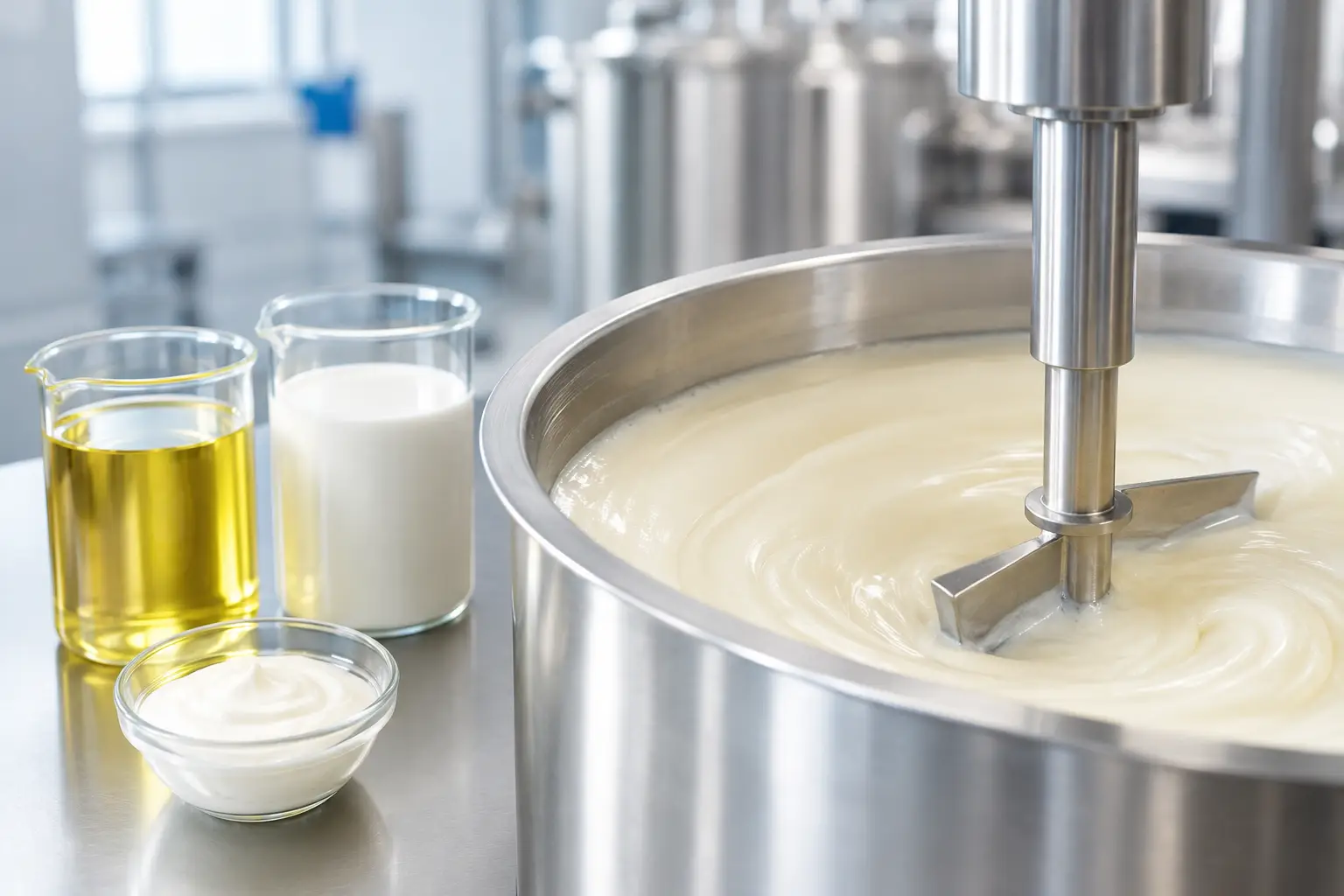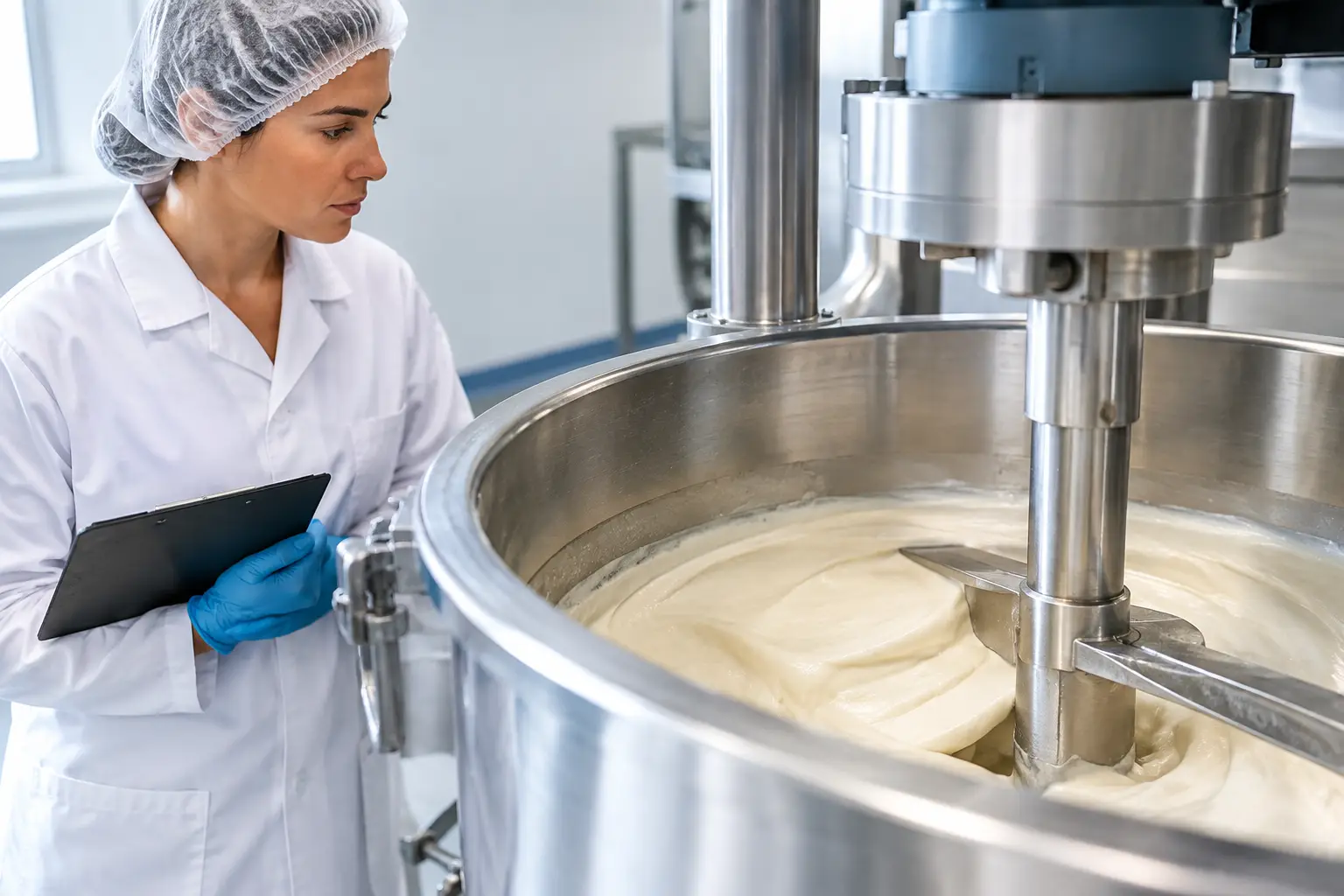
A formulation can look uniform in a laboratory beaker and still fail at production scale. Agglomerates remain in the batch, an emulsion separates after filling, or a powder addition pulls air into the process. Selecting the best high shear mixers starts with the finished-product specification, not a catalog speed rating.
High-shear equipment is designed to apply concentrated mechanical energy where it matters: at the rotor-stator workhead. That energy can disperse powders, reduce droplet size, break soft agglomerates, hydrate gums, prepare emulsions, and improve batch consistency. But a mixer that performs well for a low-viscosity topical emulsion may be the wrong choice for a heat-sensitive slurry, a high-solids battery formulation, or a recirculated chemical process.
The right decision requires a defined process objective, realistic material data, and a view of the entire production system. Mixing is rarely an isolated operation.
What Makes a High Shear Mixer Effective?
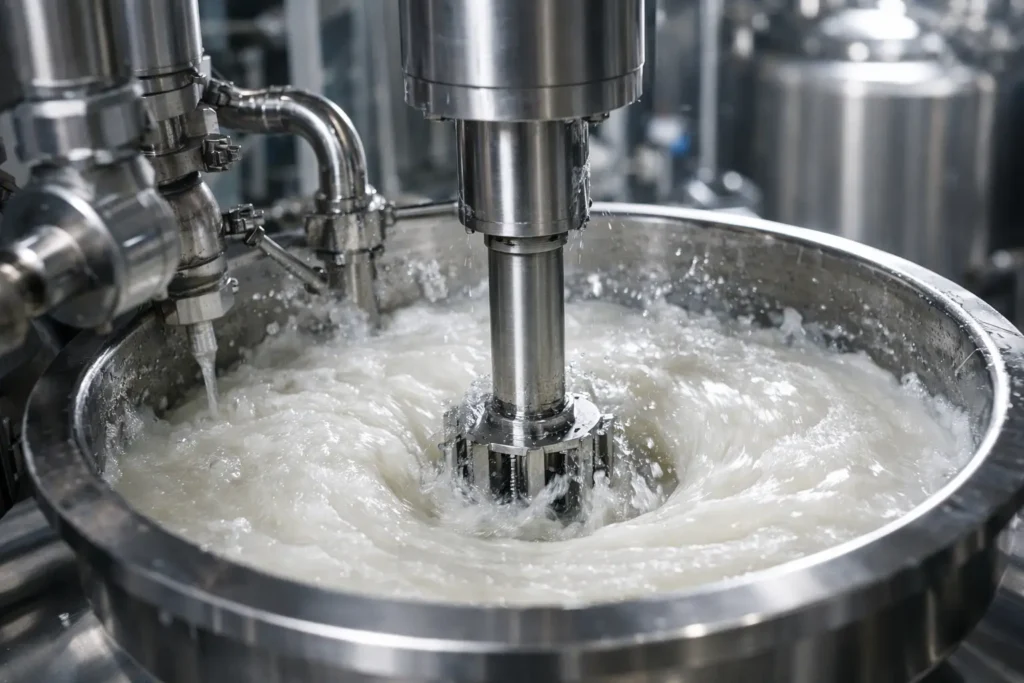
A high shear mixer uses a rapidly rotating rotor in close proximity to a stationary stator. Material is drawn into the workhead, accelerated by the rotor, and forced through stator openings. The resulting hydraulic and mechanical forces create intense localized shear.
The design is materially different from a conventional propeller, turbine, or anchor agitator. Those devices primarily create bulk circulation and maintain uniformity throughout a vessel. A rotor-stator mixer creates a high-energy processing zone. Many applications require both functions: an agitator to move the full batch and a high-shear workhead to process the material passing through it.
Performance depends on more than rotational speed. Rotor tip speed, rotor-stator clearance, stator geometry, workhead diameter, motor power, product viscosity, batch volume, and residence time all affect results. Higher RPM alone does not guarantee finer dispersions or stable emulsions. In some systems, excessive shear can raise product temperature, damage shear-sensitive structures, entrain air, or produce a result that is difficult to reproduce at a larger scale.
Best High Shear Mixers by Process Requirement
There is no universal machine that is the best choice across every product category. The best high shear mixers are the ones matched to the material behavior, production method, sanitary requirements, and downstream constraints.
Batch in-tank high shear mixers
An in-tank mixer is installed directly in a processing vessel, typically from the top, side, or bottom. It is well suited to batch emulsification, powder wet-out, viscosity development, and dispersion where the vessel can provide adequate turnover.
Top-entry configurations are common for moderate-viscosity batches and open or closed vessels. Bottom-entry units can be advantageous when complete vessel sweep, reduced headspace complexity, or clean-in-place performance is critical. Side-entry designs may support retrofit projects where vessel geometry limits top access.
The principal consideration is circulation. If a high-shear head processes only the material immediately around it, untreated zones can remain elsewhere in the vessel. A properly designed batch system may combine the rotor-stator assembly with an anchor, sweep agitator, or other low-speed impeller to maintain consistent turnover.
Inline high shear mixers
Inline mixers process material as it moves through a piping loop or continuous production line. They are often selected when a controlled number of passes, closed processing, repeatability, and straightforward integration with tanks, heat exchangers, filters, or filling equipment are required.
For emulsions and dispersions, a recirculation loop allows operators to establish flow rate, temperature control, and total processing time. The mixer can be operated as a single-pass device when the formulation and feed consistency permit it. In continuous processes, flow stability upstream of the workhead is essential. Starved feed, pressure fluctuations, or inconsistent powder addition can change the actual shear history of the product.
Inline systems also create an engineering trade-off: they can provide strong process control, but they require careful pump selection, piping design, seal compatibility, and cleaning strategy. A high-performance workhead cannot compensate for an undersized recirculation line or a transfer pump that cannot handle the viscosity profile.
Powder induction and dispersion systems
Fine powders often resist wetting. They may float, form fisheyes, bridge at the feed point, or create dust exposure concerns. Powder induction systems use vacuum or controlled suction at the high-shear zone to draw powders directly into a liquid stream, reducing manual dumping and improving incorporation speed.
These systems are particularly valuable for hydrocolloids, thickeners, proteins, pigments, mineral powders, and other ingredients that agglomerate on contact with liquid. The feed system must still be designed around bulk density, flowability, moisture sensitivity, containment needs, and dosing accuracy. Powder induction is not simply a mixer selection issue. It is an ingredient-handling and process-control issue.
High-viscosity and multiphase processing systems
As viscosity rises, bulk circulation becomes more difficult and the operating window narrows. A high-shear mixer may still be required for local dispersion or emulsification, but it often needs support from a close-clearance agitator, twin-shaft mixing arrangement, or recirculation design built for viscous service.
For pastes, gels, filled compounds, and high-solids formulations, evaluate the mixer against the maximum expected viscosity, not only the viscosity at batch startup. Some materials thicken dramatically during hydration, cooling, solvent removal, or solids addition. Equipment that can process the initial liquid phase may lose turnover when the batch reaches its final state.
Start With the Product Quality Target
The most useful specification is not “high shear required.” It is a measurable product outcome. For example, the target may be a maximum agglomerate size, a droplet-size distribution, a defined viscosity range, an absence of visible particulates, a hydration time, or stability after thermal cycling.
This distinction changes equipment selection. A soft powder agglomerate may break apart easily with a standard rotor-stator head. A hard crystalline material will not necessarily be reduced to a smaller primary particle by high shear and may require milling. Likewise, a high-shear mixer can create an emulsion, but long-term stability may depend on surfactant selection, phase ratio, temperature sequence, and homogenization pressure.
Process teams should establish the acceptable range for quality, not just the best result achieved in development. Production equipment must repeatedly meet that range despite variations in raw materials, ambient conditions, operator shifts, and batch size.
Evaluate the Variables That Determine Scale-Up
Scale-up is where otherwise sound mixer selections often become expensive. Laboratory and pilot units have different vessel proportions, liquid heights, workhead-to-batch-volume ratios, and heat-transfer characteristics than production equipment. A larger machine with a larger motor is not automatically an equivalent process.
Maintain the process conditions that drive the desired result. Depending on the application, this may include tip speed, power per unit volume, circulation rate, rotor-stator geometry, residence time, or number of recirculation passes. Testing should document the material state before and after mixing, along with temperature rise and processing time.
Heat deserves particular attention. High shear converts mechanical energy into heat, which can be useful in some applications and unacceptable in others. Heat-sensitive flavors, active ingredients, polymers, waxes, and volatile components may require jacketed vessels, external heat exchangers, controlled processing intervals, or vacuum-capable systems. Temperature control should be engineered into the process rather than treated as an operator workaround.
Air management is equally significant. Vortexing, uncontrolled powder charging, and poorly positioned return lines can entrain air that affects density, appearance, oxidation, fill weights, and downstream deaeration time. A closed vessel, vacuum processing capability, and correctly designed liquid return can be more valuable than additional mixer speed.
Specify Cleanability, Containment, and Reliability Early
The best equipment must remain practical to operate and maintain. For food, pharmaceutical, nutraceutical, and personal-care applications, product-contact materials, surface finish, drainability, elastomer compatibility, clean-in-place coverage, and validation documentation should be specified before a design is released.
For chemical, battery, mineral, and advanced-material applications, abrasiveness, solvent compatibility, dust control, pressure rating, hazardous-area classification, and seal design may take priority. Abrasive solids can shorten workhead and seal life. In such cases, wear materials, inspection access, spare-parts strategy, and planned maintenance intervals are part of the total process design.
A mixer also has to work with upstream and downstream equipment. Consider how ingredients are weighed and delivered, how the vessel is charged, where material is sampled, how the batch is transferred, and whether downstream filling or drying can accept the resulting product. Controls should capture speed, time, temperature, vacuum, flow, and recipe data at the level required for process control and quality documentation.
A Better Procurement Approach
Start a mixer project with representative material testing whenever possible. Test the actual ingredients, including the most difficult powder lot, maximum solids loading, and expected temperature range. Define the intended batch size and production rate, then evaluate whether the proposed machine can achieve the quality target within the required cycle time.
Request an engineering review that addresses vessel geometry, agitation, recirculation, thermal control, feeding, controls, cleaning, and transfer – not only the workhead. This is where a system-level manufacturer such as Proc-X can reduce interfaces and establish one engineering standard across the process.
The most productive mixer decision is one that gives operations a repeatable process, maintenance a serviceable machine, quality a defensible control strategy, and management a capacity plan that holds up after the product moves beyond pilot scale.