PROC-X · APPLICATION ENGINEERING
Vacuum Mixers & Dryers
Mix, dry and recover in one process.
Compare ribbon, fluidized-zone, ploughshare and sigma vacuum mixer/dryers for powders and pastes. Define your thermal duty, moisture target and vapor handling.
Build the specification around your result.
Start with the drying duty
Specify initial and final moisture or solvent content, batch mass, density, temperature limit and allowable cycle time. Vacuum lowers the boiling temperature of the liquid being removed, but drying still needs heat transfer, vapor transport and a suitable recovery system.
Choose the geometry for the material
Ribbon configurations provide bulk circulation; ploughshare processors add intensive movement and optional choppers; fluidized-zone variants offer single- or twin-shaft options; sigma configurations address viscous or sticky compounds. Evaluate how the material changes as it dries, including any sticky phase.
Specify the complete system
Include the vessel, jacket services, agitator, seals, vacuum source, condenser, receiver, filtration and controls. Define utilities and operating conditions together. Batch size alone cannot establish the evaporation rate or final residual content.
Agree the endpoint and test scope
Set the moisture or residual-solvent method, sampling procedure and acceptance criterion. Establish whether testing will use representative material, which equipment is available and what scale-up assumptions remain. Do not assume a single trial machine represents every production geometry.
Explore the equipment.
QuantumX
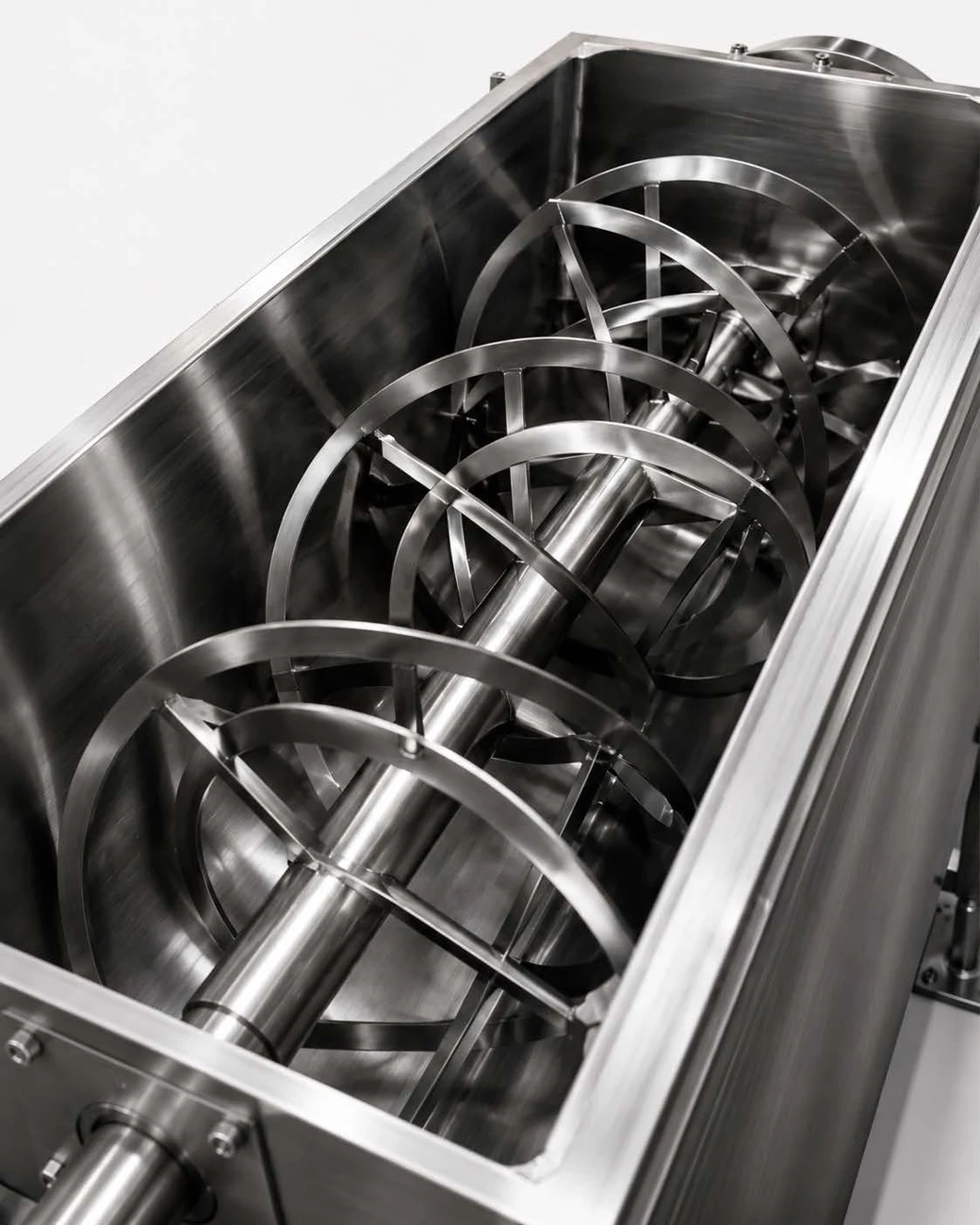
Ribbon Mixers & Blenders
Horizontal and vertical ribbon mixers for powders, granules and selected pastes. Build the blend around your batch size, ingredient behavior and production cycle.
QuantumX
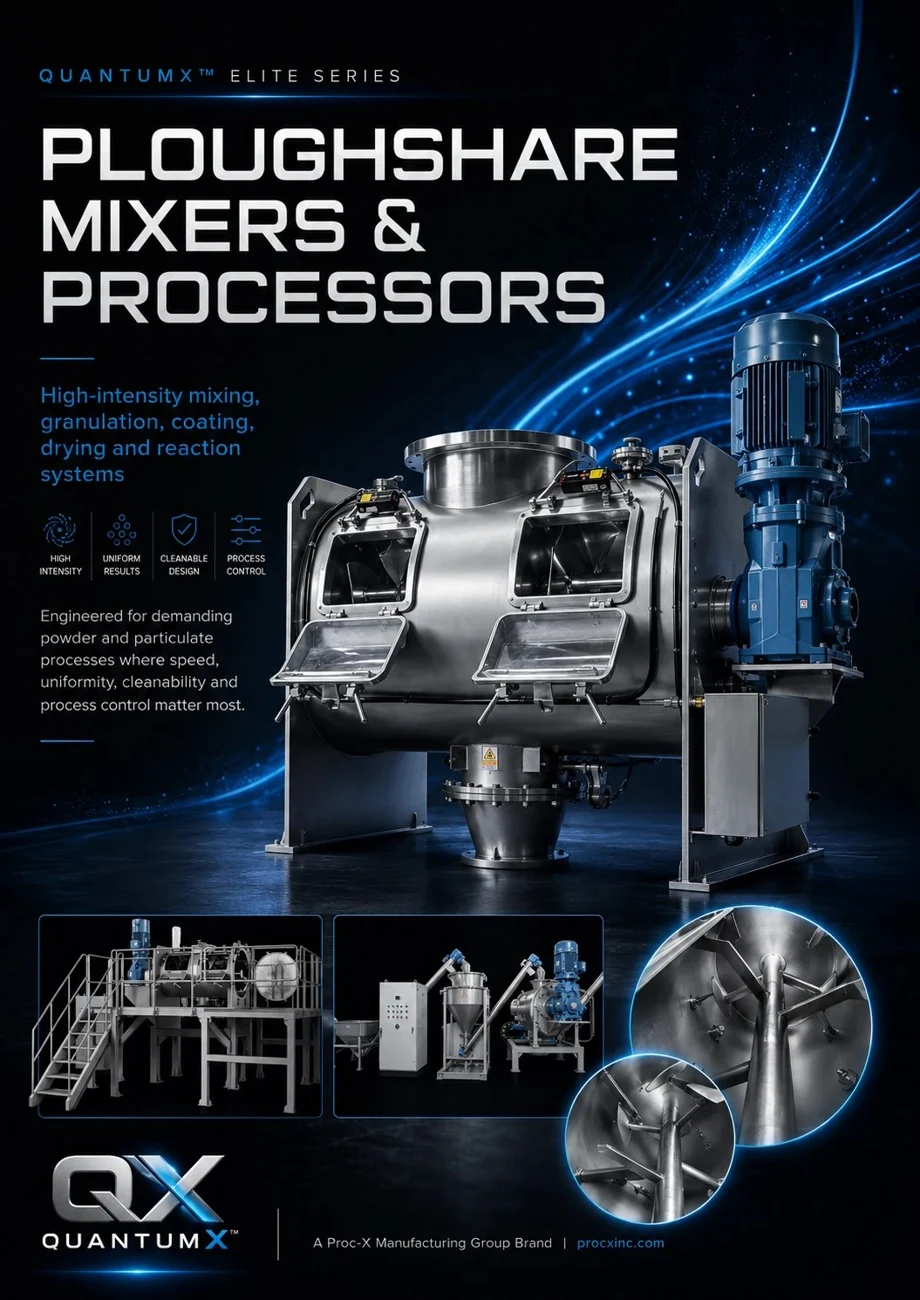
Ploughshare Mixers & Processors
Ploughshare mixers, also called plow mixers, for intensive powder blending, liquid incorporation, coating and granulation—with processor configurations for thermal and vacuum duties.
QuantumX
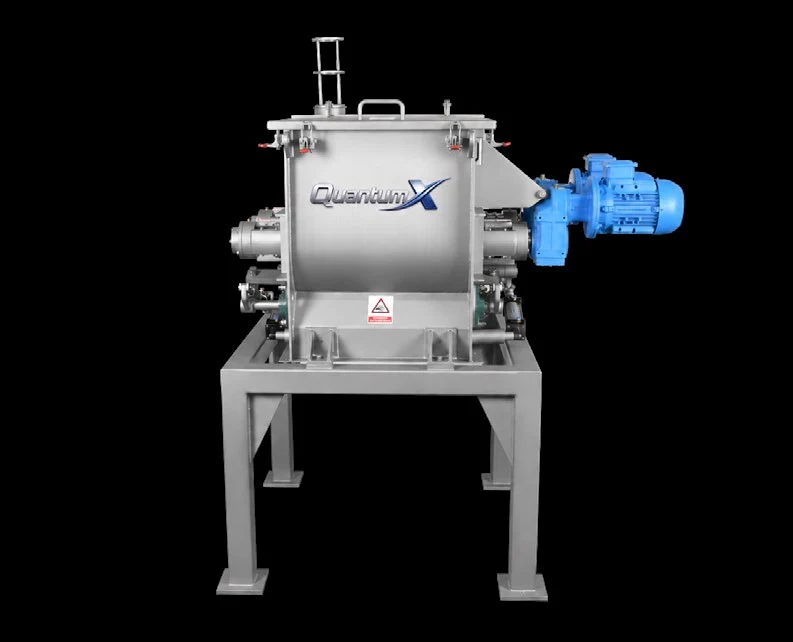
Fluidized Zone Mixers
Single-shaft and twin-shaft fluidized zone mixers for powder blending and selected powder-liquid duties, with vacuum mixer/dryer variants for integrated processing.
QuantumX
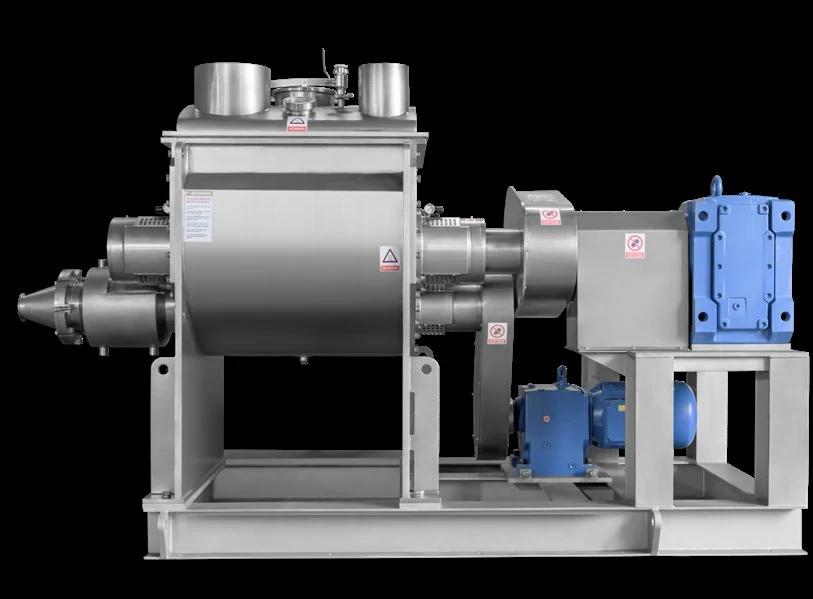
Sigma Mixers & Extruder Discharge
Double-arm kneaders for sticky, high-viscosity compounds—with tilting, bottom-discharge and screw-extruder options to connect mixing with the next process step.
Specialist brand expertise.
QuantumX mixing and vacuum processing ↗
·
DP Pulverizers milling and classification ↗
·
Your material writes the specification.
Tell us what you process, the result you need and the capacity you want to achieve. We will help define the next engineering step.