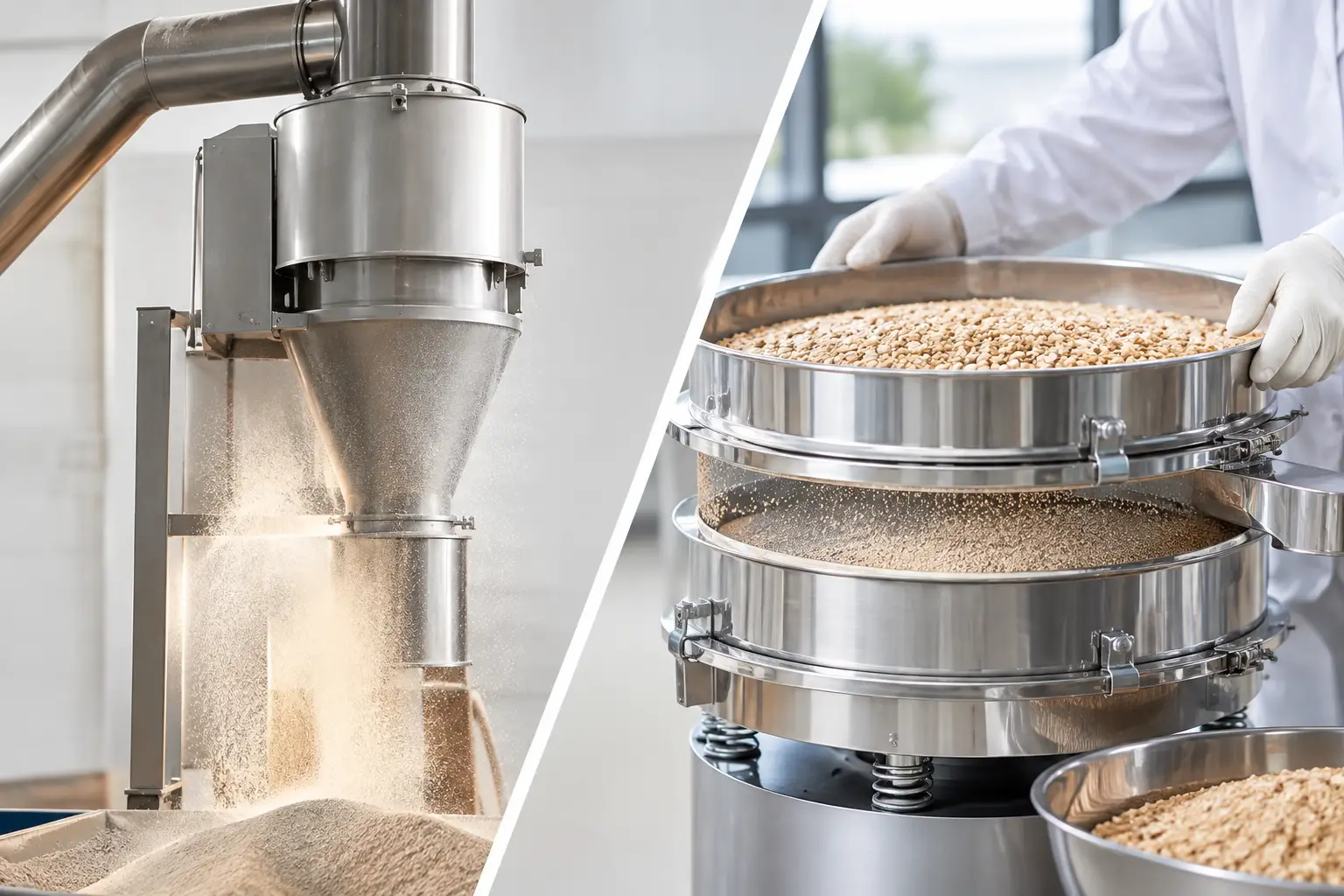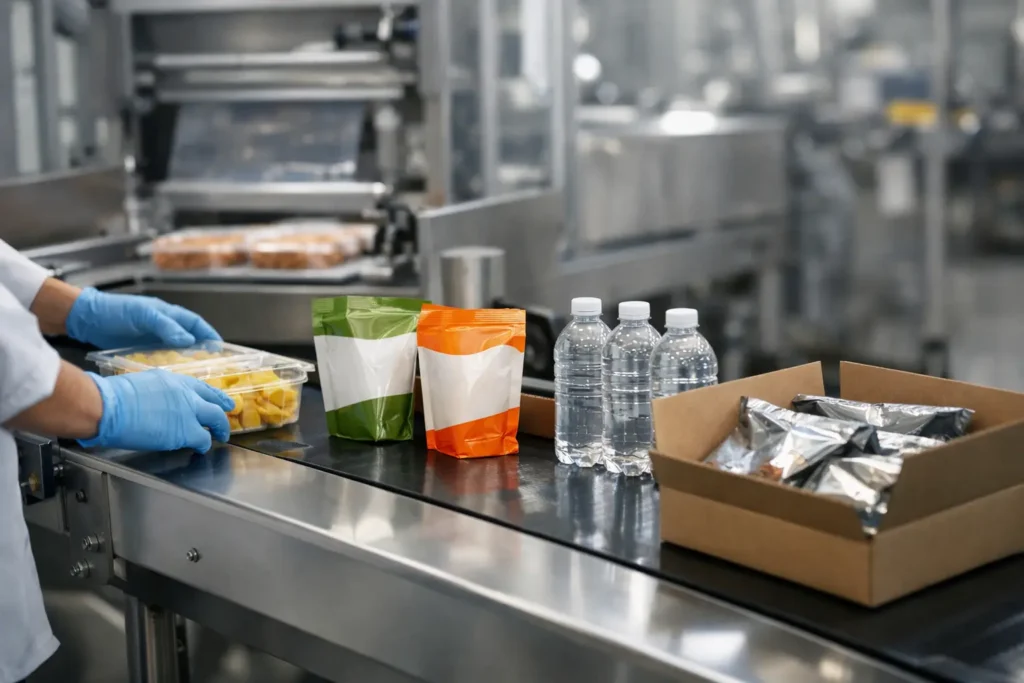
A processing line is not truly production-ready when the mixer runs, the extruder holds rate, or the thermal system reaches spec. It is ready when finished product arrives at packaging at the right condition, the right rate, and with enough control to sustain output without creating downstream disruption. That is the practical meaning of packaging readiness in processing lines – and it is where many capital projects either prove their value or expose avoidable integration gaps.
In complex manufacturing environments, packaging is often treated as the final machine set. In reality, it is the point where upstream variability becomes expensive. Small fluctuations in bulk density, temperature, particle size, moisture, feed consistency, surge capacity, or transfer timing can cascade into underfilled packages, seal defects, stoppages, product loss, and unstable throughput. When packaging underperforms, the problem is frequently not packaging alone. It is a line-level readiness issue.
What packaging readiness in processing lines actually means
Packaging readiness in processing lines is the ability of the full process system to deliver product to packaging in a controlled, repeatable, and supportable state. That includes product quality, but it also includes flow characteristics, buffering strategy, equipment synchronization, controls integration, sanitation requirements, and operator response under normal and upset conditions.
This is why packaging readiness should be evaluated as a system condition rather than a packaging equipment checklist. A bagger, filler, cartoner, or container handling system can only perform within the limits created by the upstream process. If the line cannot present stable product at a predictable rate, packaging becomes the point where instability surfaces.
For technical decision-makers, this distinction matters. A line that meets individual equipment specifications on paper can still fail in operation if transfer assumptions, control logic, or material behavior were not engineered around the realities of packaging. Readiness is not about whether each machine works independently. It is about whether the complete process works together.
Why packaging is where integration problems show up first
Packaging equipment is unforgiving because it operates on cadence, repeatability, and tight process windows. Fill weights, seal quality, container indexing, label placement, lot coding, and final product presentation depend on consistent inputs. Variability that upstream equipment can absorb often becomes visible at packaging immediately.
A blending system may tolerate some feed inconsistency. A thermal stage may recover from modest rate shifts. Packaging usually has less room to compensate. If product temperature remains above target, films may distort or seals may weaken. If product has not cooled uniformly, stickiness or clumping may impair filling accuracy. If bulk transfer introduces segregation, package-to-package variation can increase. If there is insufficient surge capacity, minor upstream interruptions quickly force packaging stops.
The trade-off is straightforward. A highly responsive packaging system can improve output, but only if the upstream process is engineered to support that speed. Otherwise, faster packaging simply exposes instability faster.
The upstream conditions that determine readiness
Material behavior is one of the first variables to examine. Powders, granules, pellets, viscous products, and formed products all interact differently with hoppers, transfer systems, feeders, and filling equipment. A product that flows well at discharge from one process step may compact, bridge, smear, or separate before it reaches packaging. Readiness depends on understanding how the product behaves not just during processing, but during handoff.
Rate control is equally critical. Packaging equipment needs a product supply profile it can rely on. That does not always mean a constant process rate. In some lines, controlled buffering is the better solution, especially where thermal residence time, batch cycles, or upstream surge events are unavoidable. The key is engineering capacity and control strategy so packaging sees stable input even when the process itself has natural variation.
Product condition at transfer also matters. Temperature, moisture, particle size distribution, and bulk density directly influence package performance and downstream quality. In regulated sectors, these factors also affect compliance, traceability, and release confidence. Packaging readiness therefore starts well before the packaging room. It starts where process decisions shape the final state of the product.
Controls architecture is often the deciding factor
Many readiness failures are not mechanical failures. They are control failures. The equipment may be capable, but the line is not coordinated.
A processing line feeding packaging needs shared logic around speed matching, permissives, accumulation management, interlocks, recipe handling, alarm response, and restart sequencing. Without this level of coordination, routine events become line-wide disruptions. A brief interruption upstream can starve packaging. A packaging stop can force uncontrolled product accumulation. Restarting may require excessive manual intervention, waste product, or extended sanitation checks.
Integrated controls architecture changes that. When the process line and packaging systems are designed with coordinated automation standards, the line can react predictably to changing conditions. It can slow, buffer, stop, recover, and report with far less ambiguity. That does not eliminate every upset, but it reduces the frequency and cost of those events.
For manufacturers evaluating new systems or upgrades, this is a major decision point. Separate machines with separate control philosophies may appear acceptable during procurement, yet create years of operating friction. Unified controls engineering provides operational clarity that standalone equipment packages often do not.
Packaging readiness should be designed early, not verified late
One of the most common project errors is addressing packaging integration after major upstream design decisions are already fixed. At that stage, the team is often trying to fit packaging around process assumptions rather than designing the full system around end-to-end performance.
A better approach is to define packaging requirements at the front end of the project. What package formats will run? What throughput range is required at launch and after expansion? What fill accuracy, product presentation, sanitation standard, and changeover frequency are expected? What level of traceability is required? How much upset tolerance is acceptable before yield or labor cost is affected?
These questions influence more than the packaging equipment selection. They affect surge design, transfer methods, line layout, thermal control, dust management, access for maintenance, recipe logic, and cleaning strategy. In other words, packaging readiness should shape processing decisions, not merely receive them.
This is especially important in facilities where production scale is expected to grow. A line that supports current packaging demand may not support future speed, automation, or package diversity without major rework. Designing for readiness means accounting for where the operation is going, not only where it starts.
Where single-source integration reduces risk
In multi-vendor projects, packaging readiness can become a gray area. The processor blames the packaging OEM. The packaging supplier points to product inconsistency. The controls contractor identifies interface limitations. The plant is left managing the gap.
That accountability problem is one reason integrated project execution matters. When one engineering partner is responsible for the processing line, controls strategy, transfer systems, and packaging integration, readiness is addressed as a design requirement rather than a handoff problem. The result is usually faster commissioning, clearer ownership of performance issues, and fewer field modifications after startup.
This does not mean every line should be configured the same way. It depends on product, regulatory requirements, plant constraints, and production strategy. But for complex manufacturing environments, one coordinated engineering standard across the line creates a measurable advantage. That is particularly true where packaging throughput is high, changeovers are frequent, or product characteristics are difficult to manage.
How to evaluate readiness before startup
A useful readiness review goes beyond mechanical completion and FAT signoff. It should test whether the line can support sustained packaging performance under realistic operating conditions.
That means validating actual product behavior through transfer and accumulation points, confirming control responses to routine stoppages, checking that operator interventions are practical, and verifying that sanitation and maintenance access do not compromise uptime. It also means confirming that packaging performance data can be traced back to upstream process conditions. If the line cannot show where variability begins, improvement becomes slower and more expensive.
Throughput should be assessed at expected operating ranges, not only at ideal target rate. Some lines perform well at full speed but become unstable during lower-rate production, startup, or product changeover. Others hold rate but lose accuracy. Readiness means the system performs predictably across the operating window that the plant will actually use.
Proc-X approaches this challenge as an integrated system responsibility, because packaging performance is only as reliable as the process conditions feeding it.
The operational value of getting it right
When packaging readiness is engineered correctly, the gains are not limited to the packaging area. The full operation benefits from more stable throughput, better yield, lower manual intervention, faster startups, more reliable scheduling, and fewer disputes about root cause. Quality performance improves because package outcomes are tied to controlled process inputs, not operator workarounds.
Just as important, readiness creates room for growth. Lines that are designed around coordinated processing and packaging are easier to scale, easier to automate further, and easier to support over time. That matters in industries where product mix changes, compliance expectations tighten, and production targets rarely stand still.
The final measure is simple. Packaging should not be the place where upstream uncertainty is discovered. It should be the point where integrated engineering proves its value, one stable package at a time.