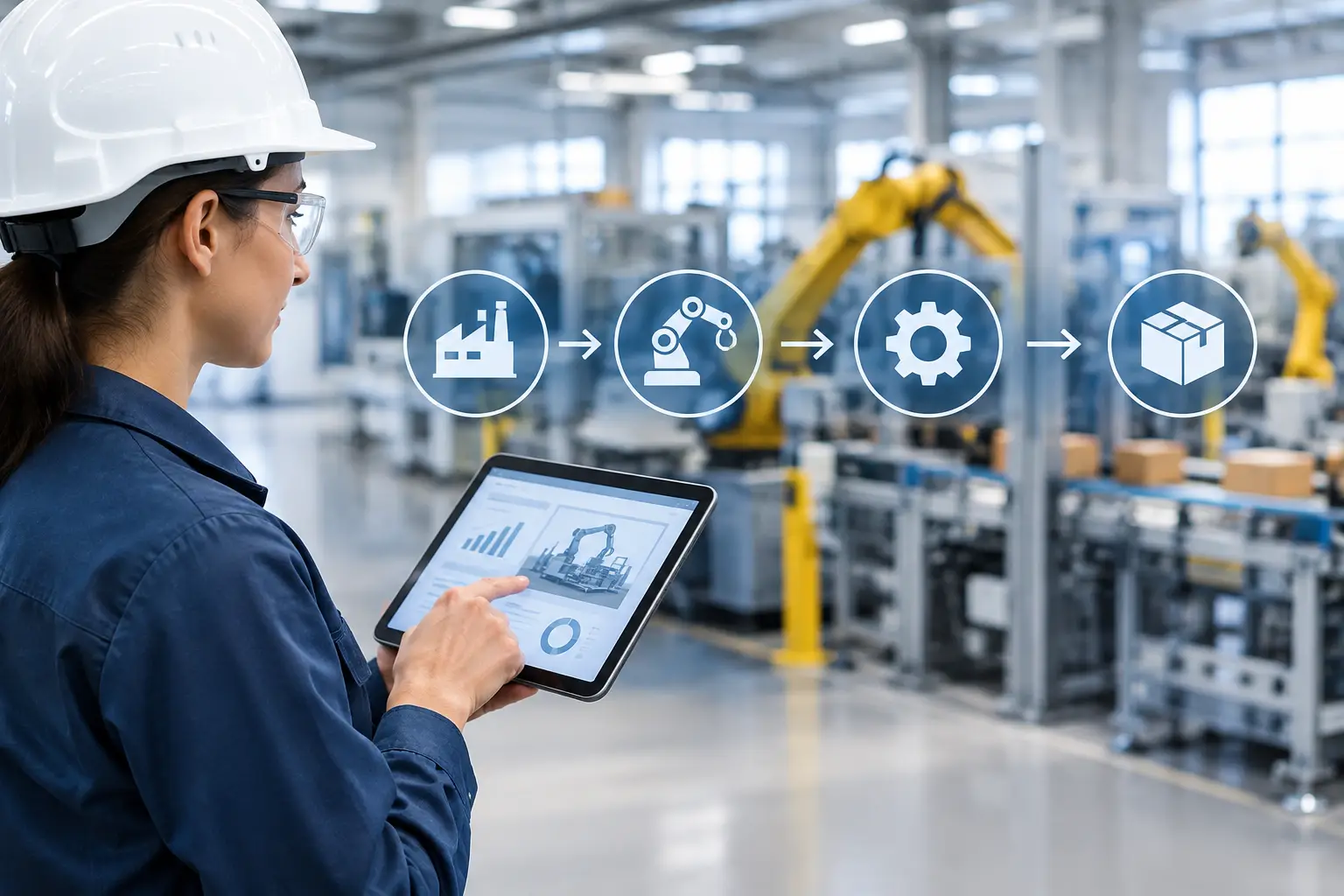
When a chemical production line underperforms, the root cause is rarely a single machine. More often, the issue sits at the interfaces – how materials enter the system, how equipment responds to variable feedstock, how controls manage transitions, and how the full line behaves under real operating conditions. That is why chemical processing line engineering matters. It is not just equipment selection. It is the disciplined design of an entire production system so throughput, safety, quality, and maintainability work together.
For chemical manufacturers, that distinction has direct operational consequences. A line that looks acceptable on a layout drawing can still create chronic bottlenecks, inconsistent batch quality, dust exposure risks, thermal inefficiencies, or extended startup times if the process is not engineered as one coordinated system. In regulated and performance-driven environments, those gaps become expensive quickly.
What chemical processing line engineering actually includes
Chemical processing line engineering begins with process intent and ends with sustained plant performance. Between those points sits a sequence of decisions that determine whether the line will run as designed after installation, not just during factory testing.
At the front end, engineering must account for raw material properties, target throughput, formulation variability, environmental requirements, and the specific duty of each process step. Bulk solids behave differently than liquids. Hygroscopic materials create handling constraints. Abrasive or corrosive chemistries influence equipment metallurgy, wear components, and maintenance intervals. Heat-sensitive products narrow the operating window for drying, blending, milling, or extrusion.
That is why line engineering cannot be approached as a chain of isolated machines. Feed systems affect mixer stability. Milling performance affects downstream blending uniformity. Thermal processing affects packaging conditions. Controls architecture affects every transition, alarm response, and operator action. Good engineering connects those dependencies early, before they become field problems.
Why system integration matters more than individual equipment
Many chemical plants still inherit a multi-vendor structure over time. A feeder from one supplier, a mixer from another, separate controls logic, third-party packaging integration, and site-level modifications layered on top. Each component may be technically sound. The problem is that performance accountability becomes fragmented.
This is where chemical processing line engineering separates engineered systems from assembled lines. The goal is not to collect best-in-class components in theory. The goal is to build a line where mechanical design, automation, material transfer, utilities, safety systems, and commissioning strategy are developed to a common standard.
That common standard reduces hidden failure points. Controls can be aligned to actual process logic instead of retrofitted around equipment limitations. Mechanical interfaces are designed rather than improvised. Utility loads can be planned accurately. Startup sequencing becomes more predictable. Service support is clearer because system ownership is clearer.
There is a practical business case here. A line with one engineering philosophy and one point of accountability usually reaches stable production faster than a line managed through vendor handoffs. Not because every project is simple, but because responsibility is not diffused when decisions get difficult.
Core design priorities in a chemical processing line
Material behavior comes first
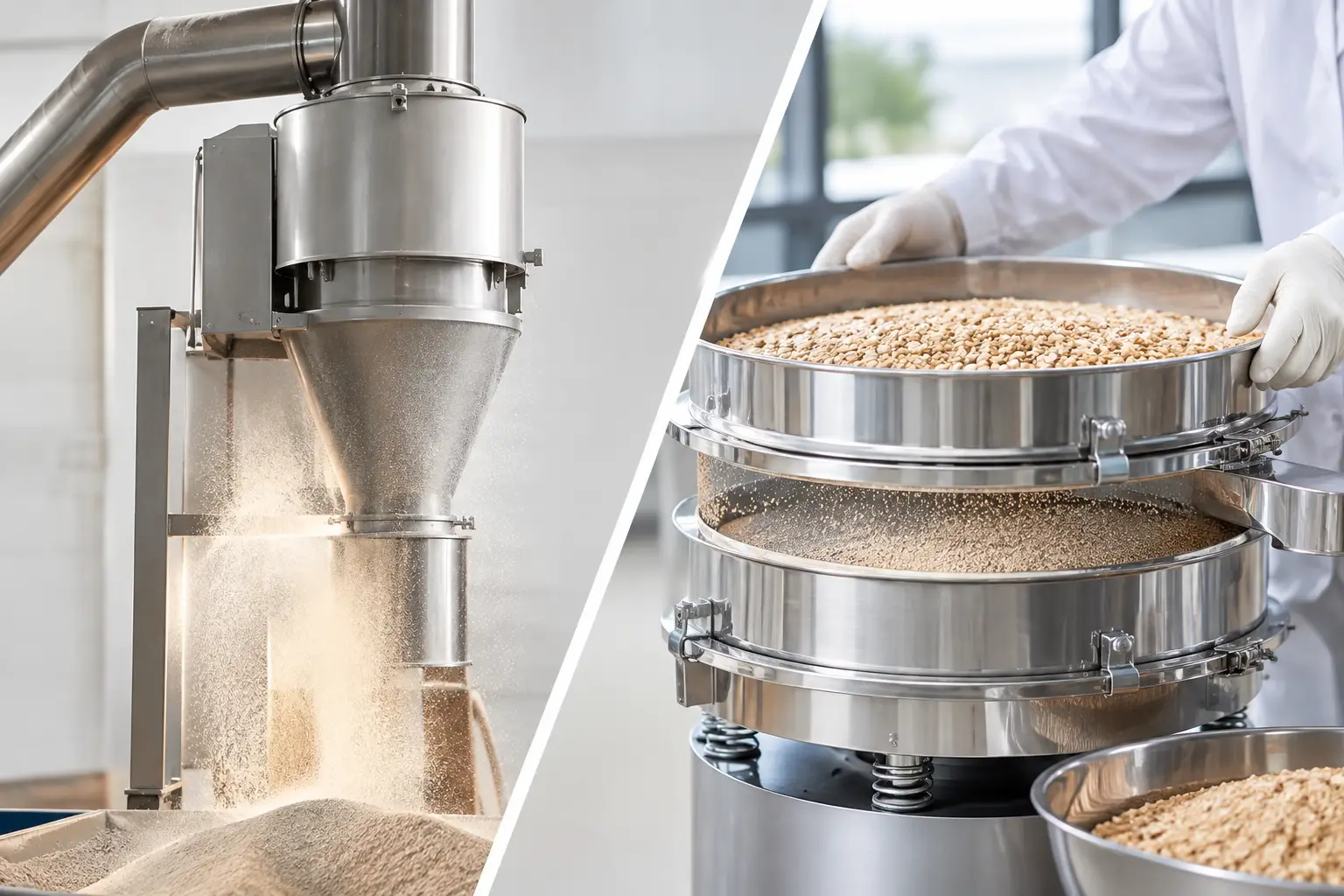
In chemical manufacturing, material behavior drives line design more than nameplate capacity does. Powder flow, particle size distribution, bulk density, moisture sensitivity, temperature response, and reactivity all influence how the process should be configured.
A line engineered for free-flowing materials may fail quickly when exposed to cohesive powders. Transfer methods that work for one formulation may damage another. The wrong feeder design can create surge loading downstream. The wrong milling approach can generate excessive fines, dust, or heat. These are not minor adjustments. They shape line stability and product consistency from the first step onward.
Throughput must be matched across the full process
One oversized machine does not create a high-capacity line. Real throughput depends on the slowest stable section of the process, plus the losses introduced by changeovers, cleaning, startup, product transitions, and operator intervention.
Engineering teams need to evaluate both steady-state performance and realistic plant conditions. Can upstream handling maintain reliable feed? Can blending residence time support the required uniformity at target rates? Can thermal equipment recover from fluctuations? Can packaging absorb normal variation without forcing the process to stop? A line is only as productive as its least coordinated function.
Controls architecture is part of the process design
Controls should not be treated as a separate layer added near the end of the project. In chemical processing, automation is part of the line’s operating discipline. It affects recipe management, alarm handling, interlocks, traceability, data visibility, and the consistency of every critical transition.
Integrated controls also reduce startup risk. When each machine arrives with different logic structures, operator interfaces, and communication assumptions, commissioning becomes slower and troubleshooting becomes harder. A coordinated controls architecture creates cleaner integration, more reliable line behavior, and a better foundation for optimization over time.
Engineering for safety, compliance, and maintainability
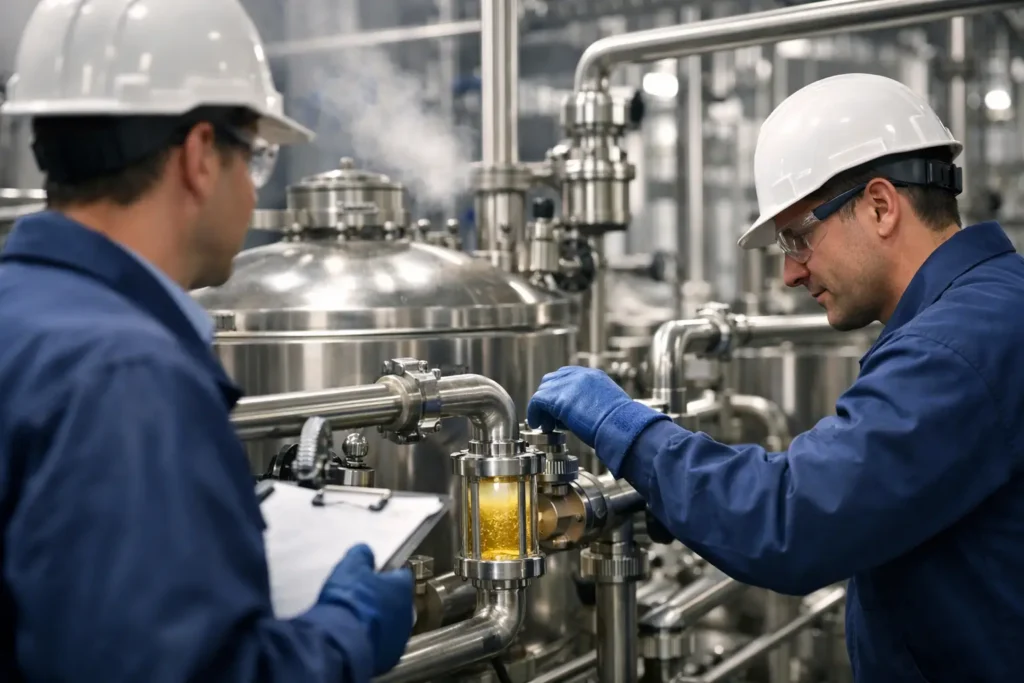
A chemical line that meets output targets but creates recurring safety exposure or maintenance burden is not well engineered. Design decisions must account for operator access, cleaning requirements, hazardous area classification, containment strategy, ventilation, thermal protection, and safe response to upset conditions.
There is always some level of trade-off. Higher containment may increase complexity. More aggressive automation may require additional training and validation. Greater flexibility for future products may reduce optimization for the current formulation set. These are not reasons to avoid investment. They are reasons to engineer the line around the plant’s actual operating priorities.
Maintainability deserves the same level of attention as process performance. Service access, wear part replacement, isolation points, cleanout design, and spare parts standardization all influence lifecycle cost. In many facilities, preventable downtime comes less from catastrophic failure than from equipment that is difficult to inspect, difficult to clean, or difficult to restore after a routine intervention.
Where projects often go wrong
Most line failures do not begin with fabrication. They begin with assumptions made too early and challenged too late.
One common issue is designing around ideal material behavior instead of actual plant variability. Another is sizing equipment for peak throughput without considering normal operating range. Projects also struggle when utility demand, footprint constraints, dust management, or packaging integration are treated as secondary details. They are not secondary. They are part of the process.
Another frequent problem is fragmented project execution. Mechanical equipment may be specified correctly, but controls, installation sequencing, commissioning scope, and operator readiness are left to separate parties. That structure tends to create delays at the exact point when schedule pressure is highest. Once the line reaches site, unresolved interface questions become expensive.
This is why many manufacturers now prefer a single-source engineering model for complex systems. Proc-X Manufacturing Group operates from that position: one manufacturer, one engineering standard, one point of accountability across the integrated line. For chemical operations where uptime, compatibility, and long-term support matter, that model reduces both technical and commercial risk.
How to evaluate a chemical processing line engineering partner
The right engineering partner should be able to discuss more than equipment features. They should be prepared to define how the full line will behave, how risk will be managed, and how system performance will be supported after startup.
That conversation should include process development, equipment compatibility, controls integration, commissioning methodology, FAT and SAT expectations, service structure, and scalability. It should also address what happens when the process changes. New formulations, higher throughput targets, stricter traceability, and plant expansions are common realities. A line engineered only for the first operating condition may create limitations much sooner than expected.
Experienced manufacturers also ask a harder question: who owns the interfaces? That question usually reveals the real strength of the project model. If responsibility is distributed across multiple vendors, the plant often becomes the final integrator. If responsibility is centralized under one engineering authority, execution becomes more controlled and performance support becomes more straightforward.
Chemical processing line engineering as a long-term strategy
The strongest processing lines are not the ones with the longest equipment list. They are the ones engineered to perform consistently under real plant conditions, adapt to change, and remain supportable over time.
Chemical processing line engineering should therefore be treated as a strategic operating decision, not just a capital project phase. The value sits in fewer compatibility issues, faster path to stable production, clearer accountability, and a line that can be optimized instead of constantly corrected.
For manufacturers planning new capacity, modernizing legacy systems, or consolidating multiple process steps into one coordinated platform, the most useful question is not which machine to buy first. It is whether the entire line is being engineered to run as one system on day one and keep performing years later.