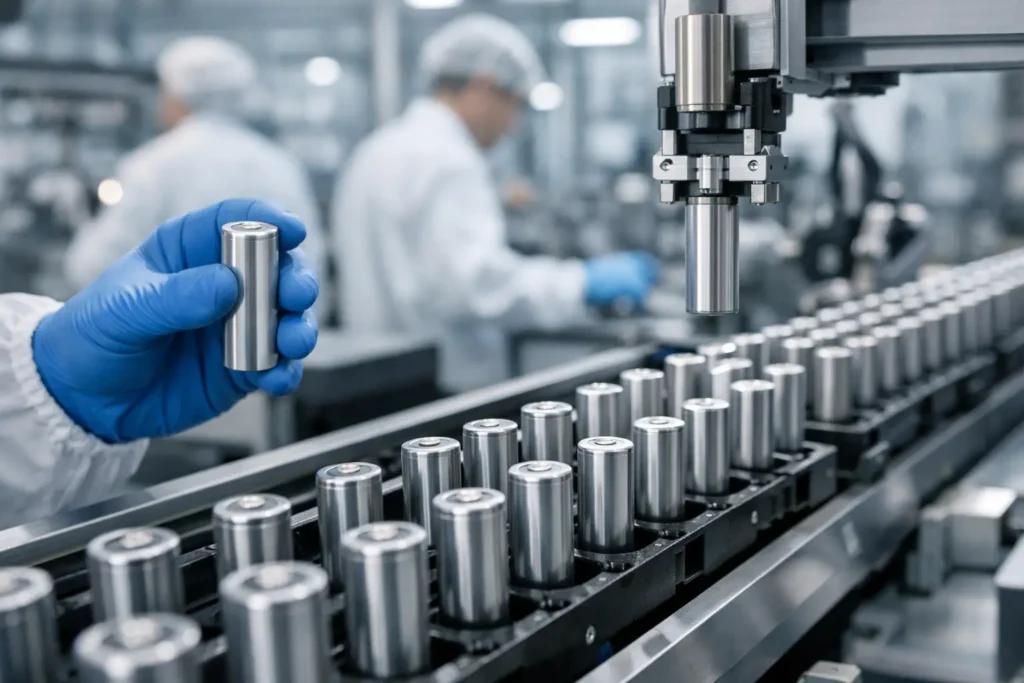
A battery line rarely fails because of one major machine. More often, performance erodes at the handoff points – where powders move between systems, where mixing parameters shift between batches, where thermal conditions drift, or where controls logic is patched together across multiple vendors. In battery manufacturing, those gaps are where throughput, yield, safety, and product consistency are won or lost.
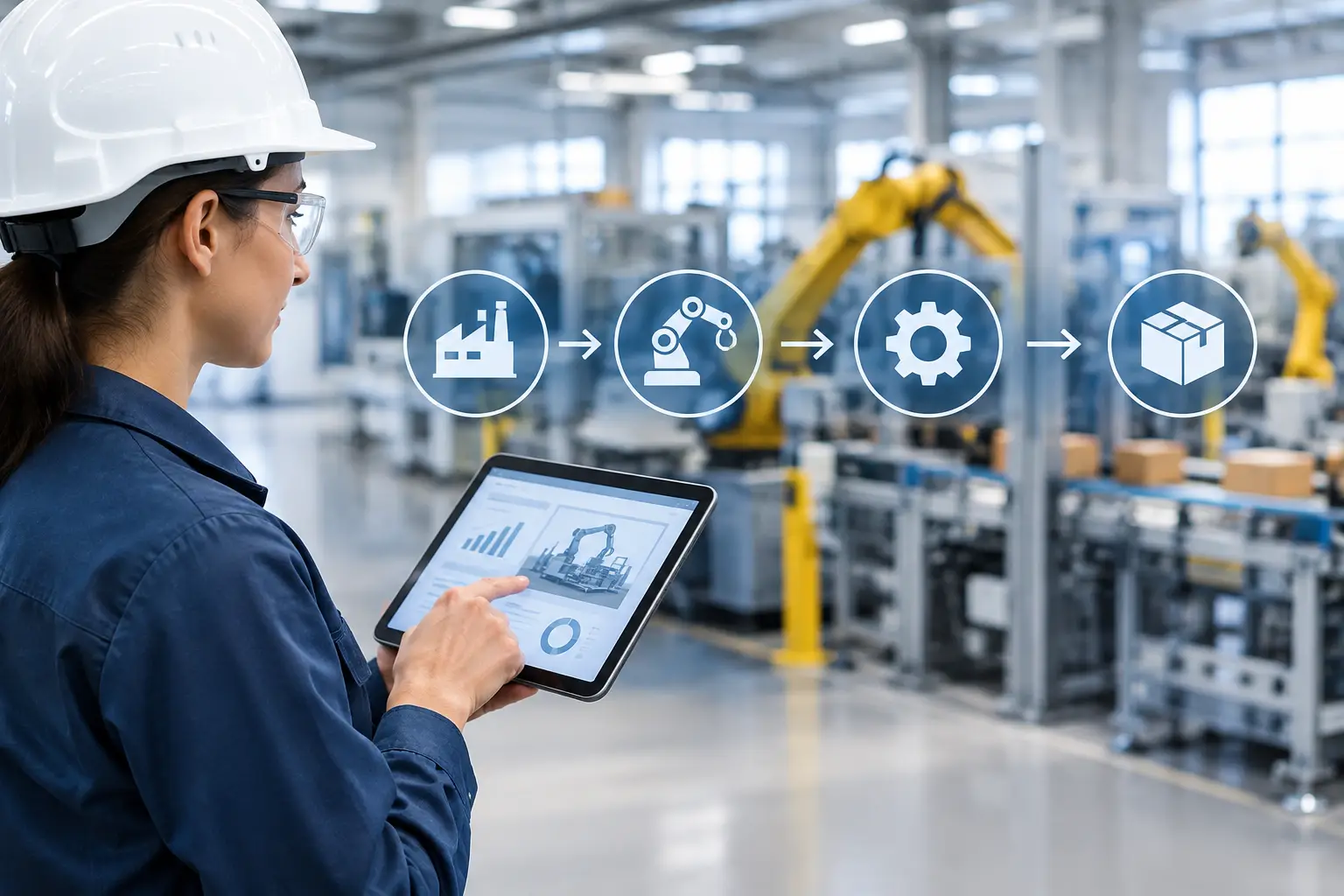
For manufacturers expanding cell production or bringing new chemistries into commercial operation, the central challenge is not just selecting equipment. It is building a process platform that behaves like a coordinated system from raw material intake through final packaging. That distinction matters because battery production places unusual demands on every stage of the line: tight particle control, contamination prevention, atmospheric management, repeatable mixing, thermal precision, and traceable automation.
Why battery manufacturing is a systems challenge
Battery manufacturing is often discussed in terms of end products – EV cells, energy storage systems, consumer electronics, or defense power platforms. On the plant floor, however, success depends on upstream process stability. Cathode and anode materials must be handled, milled, blended, conveyed, and conditioned with extreme consistency before downstream forming, assembly, and testing can deliver acceptable results.
This is why fragmented line design creates risk. A high-performing mixer cannot compensate for unstable feed rates. An advanced mill will not solve poor dust containment. Well-designed thermal equipment will still underperform if material transfer causes segregation or if controls architecture does not coordinate residence time, temperature, and throughput across the line.
For technical buyers, the implication is straightforward: evaluating isolated machines is not enough. The real question is whether the full process line has been engineered for compatibility, predictable performance, and lifecycle support.
The critical process blocks in battery manufacturing
Most battery manufacturing environments share a similar set of upstream processing requirements, even when chemistry, scale, and end-use vary. Raw materials must be received and introduced safely. Powders often require size reduction or milling to meet particle targets. Materials then move into mixing and blending stages where dispersion, homogeneity, and batch repeatability directly affect downstream quality.
From there, thermal processing may be required for drying, conditioning, or material transformation, depending on the process design. Bulk material transfer systems must maintain flowability and containment while minimizing segregation and product loss. Packaging and discharge also need to support traceability, environmental controls, and safe handling of finished materials or intermediates.
Each step carries its own engineering demands, but the greater risk comes from interaction between them. Transfer distances affect bulk density and feed behavior. Milling changes particle morphology that can alter mixing performance. Temperature and moisture conditions influence both handling and final material characteristics. In a battery plant, process stages are interdependent by default.
Material handling and containment
Battery materials are often abrasive, dusty, reactive, or sensitive to contamination. That makes material handling more than a logistics issue. It is a process integrity issue.
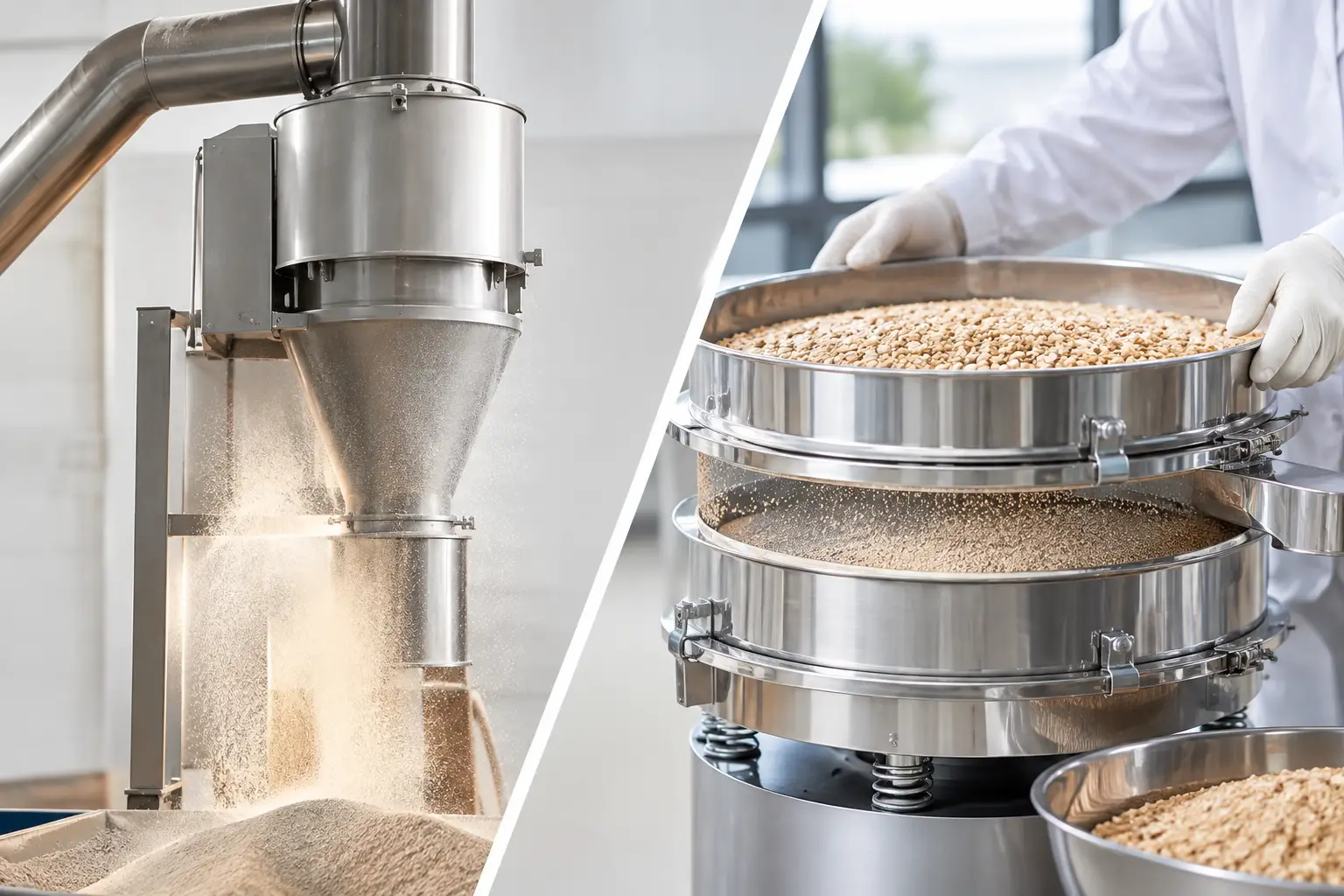
Poorly engineered intake, conveying, and discharge systems can introduce foreign material, generate dust hazards, create housekeeping burdens, and reduce inventory accuracy. Vacuum conveying, enclosed transfer, controlled feeding, and dust-managed receiving systems are often necessary not only for operator safety but also for product quality and environmental control. The right design depends on the specific chemistry, particle size distribution, and facility layout.
Milling, mixing, and blending
These stages are where many performance targets are either set up for success or compromised early. Particle size reduction must be consistent enough to support downstream coating, compaction, or electrochemical behavior. Mixing and blending must deliver uniformity without damaging sensitive material characteristics or introducing variability from batch to batch.
This is rarely solved by buying the most aggressive or highest-speed equipment. In many cases, the right answer is a process design that balances energy input, throughput, cleanability, and repeatability. What works for one chemistry may be completely wrong for another. Process development and scale-up discipline are essential here.
Where battery production lines commonly break down
The most common problems in battery manufacturing are not mysterious. They show up as inconsistent feed behavior, batch variability, dust escape, material buildup, poor system communication, extended commissioning, or chronic troubleshooting between vendors. These are not separate issues. They are symptoms of weak line integration.
A multi-vendor approach can appear flexible during procurement, but it often creates accountability gaps during installation and startup. One supplier owns the feeder, another the blender, another the controls package, and another the thermal unit. When throughput misses target or material behavior changes at scale, root cause analysis becomes slow and fragmented.
This is especially costly in battery projects because ramp-up timelines are aggressive and product qualification windows are unforgiving. If process stages are not engineered to work together from the start, the line may technically run while still failing on yield, consistency, or maintainability.
What integrated battery manufacturing looks like
A well-engineered battery manufacturing platform starts with process logic, not a shopping list of equipment. Material characteristics, throughput goals, facility constraints, safety requirements, quality objectives, and expansion plans should shape the entire line architecture.
That means upstream and downstream systems are selected with shared engineering standards, coordinated controls, and planned interface points. Feeders are sized for actual material behavior. Conveying is designed around containment and transfer efficiency. Mixing systems are matched to chemistry and batch profile. Thermal equipment is integrated based on process timing, not added later as a stand-alone utility.
Automation also plays a larger role than many teams expect. Unified controls are critical for recipe management, interlocks, data collection, alarm handling, and production visibility. When controls architecture is fragmented, operators are forced to compensate manually, and repeatability suffers. In contrast, a coordinated platform helps standardize operation across shifts, shorten training time, and improve traceability.
For manufacturers building new capacity, this integrated approach also simplifies future scale-up. Expansion becomes more manageable when the original line was designed with common engineering standards and a clear controls strategy rather than pieced together around short-term purchasing decisions.
Engineering priorities that matter at scale
As battery manufacturing moves from pilot or early commercial operation into sustained production, the priority set changes. Lab success proves chemistry. Scaled manufacturing proves whether the process can deliver that chemistry consistently, safely, and profitably.
At scale, reliability matters as much as nominal throughput. A line that meets target only under ideal conditions is not enough. Manufacturers need stable material flow, predictable maintenance intervals, manageable cleaning procedures, and process controls that reduce variability rather than document it after the fact.
They also need engineering accountability. When one partner takes responsibility for the full process system, line integration becomes a design requirement instead of a field correction. That reduces commissioning friction, shortens the path to validated performance, and gives operations teams a clearer support structure once the plant is live.
This is where a turnkey process engineering model can create measurable value. Companies such as Proc-X Manufacturing Group are structured around that principle: one manufacturer, one engineering standard, and one point of accountability across the integrated production platform. For battery manufacturers managing capital intensity, quality risk, and aggressive launch schedules, that structure is often more than a procurement preference. It is a risk-control strategy.
Battery manufacturing will reward disciplined execution
Demand growth has put battery manufacturing under pressure to scale quickly, but speed does not reduce process complexity. If anything, it magnifies the cost of weak integration. Powder handling, milling, blending, thermal processing, transfer, packaging, and controls all have to work as a coordinated production environment, not as separate purchases installed in sequence.
The manufacturers that build durable advantage will not be the ones with the longest equipment list. They will be the ones that treat process integration, system compatibility, and engineering accountability as core production decisions from day one. When the line is designed to perform as one system, scale becomes easier to manage and a lot less expensive to relearn.