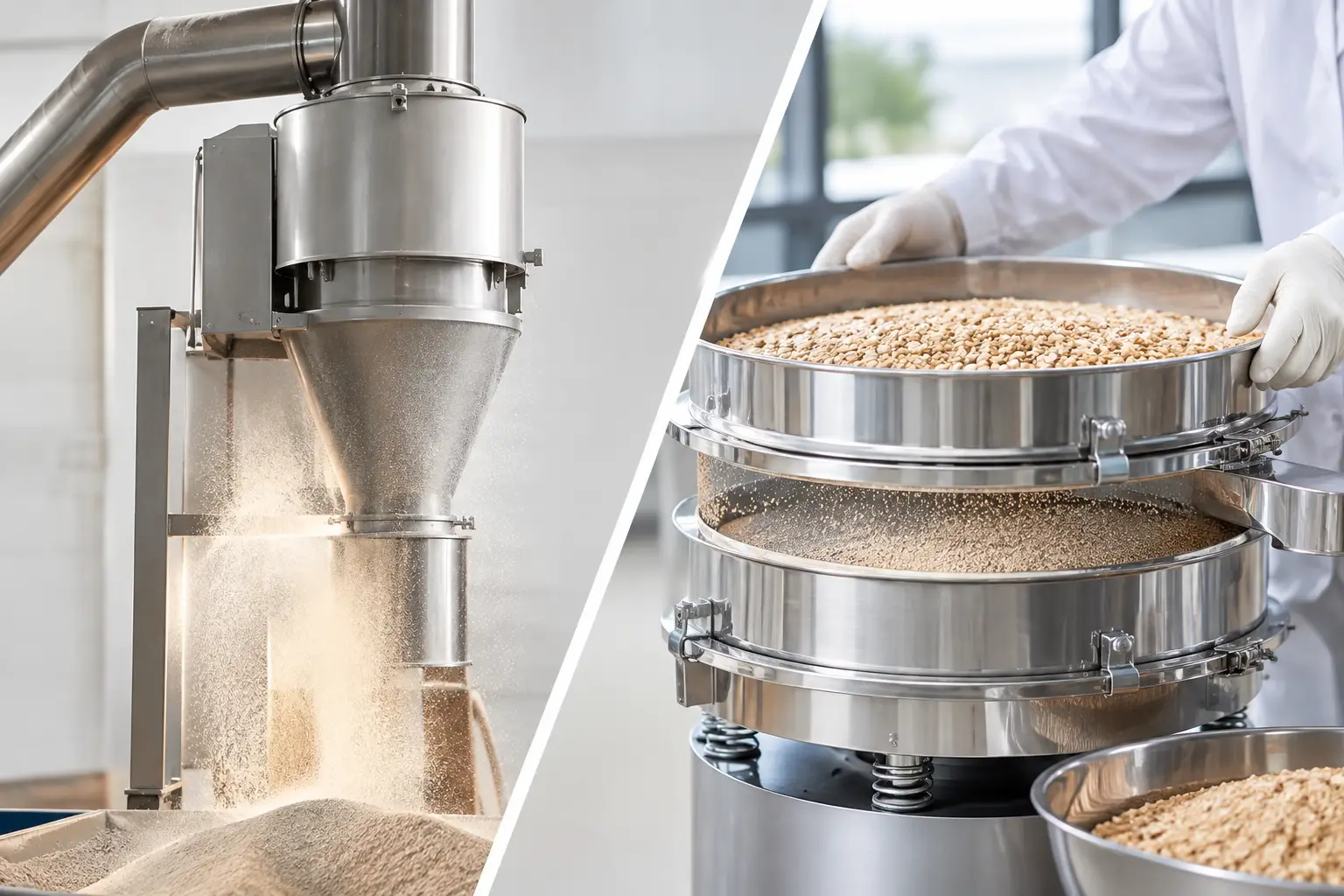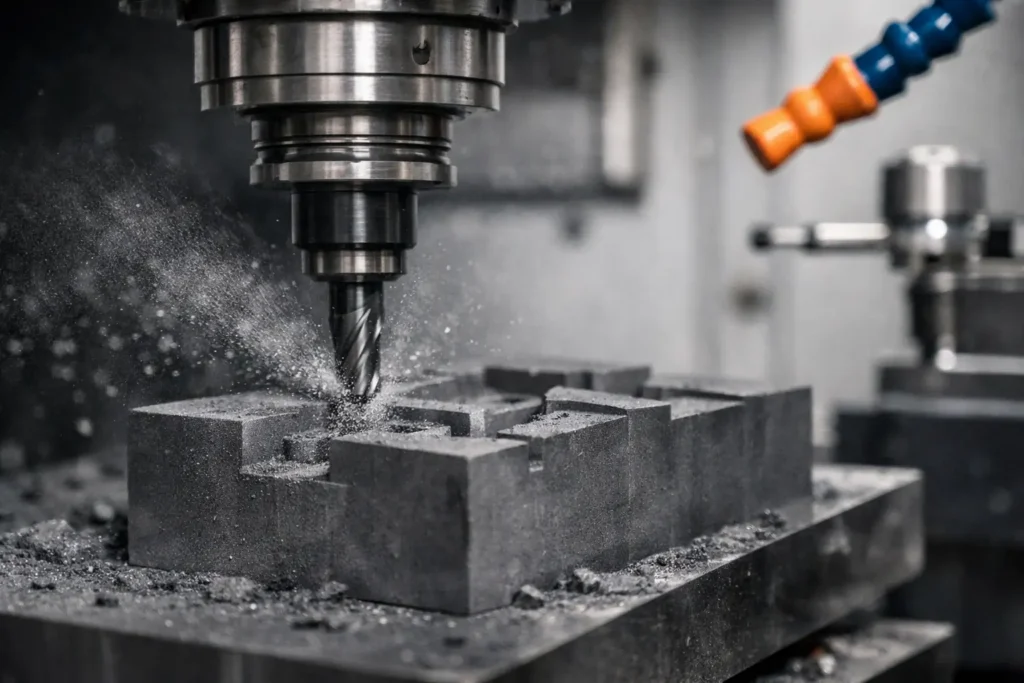
A graphite milling project usually looks straightforward on paper until the first production trial exposes the real variables – feed inconsistency, dust behavior, heat sensitivity, particle size drift, and housekeeping demands that ripple across the entire line. That is why graphite milling is rarely just a milling decision. It is a process design decision with direct consequences for throughput, product quality, operator safety, and downstream equipment performance.
Graphite behaves differently from many conventional industrial solids. Its lubricity, friability, low bulk density in some forms, and tendency to generate fine airborne dust can complicate size reduction and material handling alike. For manufacturers producing battery materials, advanced carbon products, chemicals, and other performance-sensitive formulations, success depends on treating the process as an integrated system rather than an isolated machine purchase.
Why graphite milling requires a system-level approach
Graphite can enter a process in several physical forms, including natural flake, synthetic graphite, granules, lumps, or pre-processed powder. Each behaves differently under mechanical stress. Some grades fracture readily and generate excess fines. Others require tighter energy input to achieve the target particle size distribution without overprocessing.
That variation matters because milling performance is inseparable from upstream and downstream conditions. Feed presentation, metering accuracy, tramp material protection, dust collection, conveying method, and packaging requirements all influence whether the mill operates consistently or becomes the source of recurring instability.
In practical terms, a line designed for graphite milling must control more than final particle size. It must also manage feed uniformity, residence time, temperature rise, containment, and product transfer. If those elements are handled by disconnected equipment packages with different controls philosophies and different service organizations, the line may technically run while still underperforming in production.
Material characteristics that drive graphite milling design
The first design variable is the graphite grade itself. Natural graphite often retains morphology that must be preserved to some extent depending on the end use. Synthetic graphite may offer greater consistency but can still respond differently to shear and impact forces based on precursor material and thermal history. Hardness alone does not tell the full story.
Particle size targets also need precision. Some applications require a broad distribution for packing density or blending behavior. Others require a narrow distribution to support conductivity, coating consistency, or downstream mixing. A process built around average particle size alone often misses what matters most – the shape of the distribution curve and the control of oversize and fines.
Moisture can be another hidden variable. Even when graphite is handled as a nominally dry material, ambient conditions, storage method, and upstream processing can change flowability and mill response. Minor changes in moisture or agglomeration can alter feeder performance, create buildup, and reduce classification efficiency.
Then there is dust. Graphite dust is messy, conductive, and persistent. It can affect housekeeping, electrical considerations, maintenance planning, and contamination control. In regulated or highly performance-driven manufacturing environments, dust management cannot be treated as a secondary utility function. It is central to process reliability.
Selecting the right graphite milling method
No single milling technology is correct for every graphite application. The right choice depends on required particle size, throughput, feed form, contamination tolerance, heat sensitivity, and how the product will be handled after milling.
Hammer and impact mills can be effective when the goal is efficient top-size reduction and high throughput, but they may create a wider particle distribution than some applications allow. Pin mills can deliver finer size reduction with more controlled action, yet the operating window depends heavily on feed condition and process air management. Air classification mills become attractive when tight control over fines and particle cut point is required, though they introduce added complexity in airflow balance and system tuning.
In some cases, milling alone is not enough. The process may require staged size reduction, in-line screening, or closed-loop classification to meet specification consistently. That is especially true when incoming graphite varies by lot or when the finished product must feed a sensitive blending, compaction, extrusion, or coating process downstream.
The key point is that mill selection should start with the process objective, not the machine brochure. A mill that achieves the target particle size in a lab can still fail in production if feeding, conveying, dust collection, or controls are not engineered around the actual operating conditions.
Process control matters as much as the mill itself
Graphite milling performance depends on stable operating conditions. That starts with controlled feed delivery. Irregular feed rates produce irregular grinding energy, which leads directly to particle size variation and throughput instability. For light, dusty, or variable-density graphite, feeder design and refill strategy are often more important than expected.
Airflow is another critical variable, particularly in systems using pneumatic conveyance, internal classification, or dust extraction tied closely to mill performance. Too little airflow can increase retention and heat. Too much can shift cut points, pull usable product into collection, or increase wear in transfer paths. This is where system integration becomes operationally valuable – the mill, fan, filter, rotary valves, and controls must behave as one coordinated process.
Temperature control also deserves attention. Graphite itself tolerates demanding environments, but the process may still be sensitive to thermal rise because of additives, binders, downstream handling requirements, or particle integrity concerns. Monitoring bearing temperatures, process air temperatures, and differential pressure trends helps operators catch drift before quality moves out of range.
Automation should support repeatability rather than simply indicate machine status. Recipes, interlocks, trending, alarm rationalization, and process feedback all contribute to stable production. In larger facilities, the difference between a functional graphite milling system and a reliable one often comes down to how well controls architecture aligns the full line.
Dust containment, safety, and housekeeping
Any discussion of graphite milling that ignores dust control is incomplete. Fine graphite can migrate into surrounding areas, load filters quickly, and create persistent housekeeping demands. Depending on the application and facility design, containment may also be tied to product purity, operator exposure, and electrical risk management.
Effective dust control starts at the source – enclosed transfer points, properly designed inlets and outlets, controlled aspiration, and filtration sized for the actual process load rather than nominal airflow assumptions. Poorly matched collection systems can pull valuable product from the process or fail to capture the finest fraction where containment matters most.
Maintenance access should be engineered into the line from the beginning. Filters, seals, screens, hammers, pins, classifiers, and collection points all require inspection and service. If maintenance activities are difficult, dusty, or time-consuming, they will eventually affect uptime and consistency. Cleanability is not a cosmetic feature in graphite processing. It is part of the reliability model.
Integration challenges across the full production line
Graphite milling rarely operates as a stand-alone island. Material may arrive from bulk unloading, super sacks, drums, or manual charging. After milling, it may move to blending, thermal treatment, dosing, compaction, packaging, or reactor feeding. Every transfer point introduces risk.
Low bulk density powders can bridge in hoppers, flood feeders, segregate during transport, or compact in storage. Pneumatic conveying may protect containment in one section while degrading particle shape or generating excess attrition in another. Even packaging selection can affect whether the product remains free flowing at the point of use.
This is why many underperforming systems are not suffering from a bad mill. They are suffering from a disconnected line. One supplier sized the milling equipment, another handled dust collection, another configured conveying, and another programmed controls. When production problems appear, accountability fragments quickly.
For manufacturers scaling capacity or modernizing legacy operations, the stronger approach is an engineered process platform where material handling, milling, classification, dust management, automation, and downstream integration are designed to work together. That reduces startup friction and gives operations teams one coherent basis for performance tuning and support.
What to evaluate before committing to a graphite milling solution
The most useful early question is not simply, “What particle size do we need?” It is, “What process conditions are required to hit that specification every day at production scale?” That shifts the conversation from equipment selection to manufacturing reliability.
A sound evaluation typically includes feed characterization, target distribution definition, throughput range, contamination constraints, cleaning requirements, utility demands, and how the milled graphite behaves in the next step of the process. It should also account for maintainability, spare parts strategy, commissioning requirements, and future expansion.
For complex installations, single-source engineering has a measurable advantage. When one partner takes responsibility for process design, equipment compatibility, controls coordination, and commissioning, the risk of startup delays and performance gaps drops significantly. That is especially relevant in graphite applications, where small inconsistencies can become large operational problems once the line is running continuously.
Proc-X approaches these systems with that broader accountability in mind – not as a stand-alone machine sale, but as an integrated production solution built for repeatability, safety, and long-term performance.
Graphite milling rewards precision, but it rewards coordination even more. The facilities that get it right are usually the ones that design for the full process from day one, so the line performs like a system instead of a collection of parts.