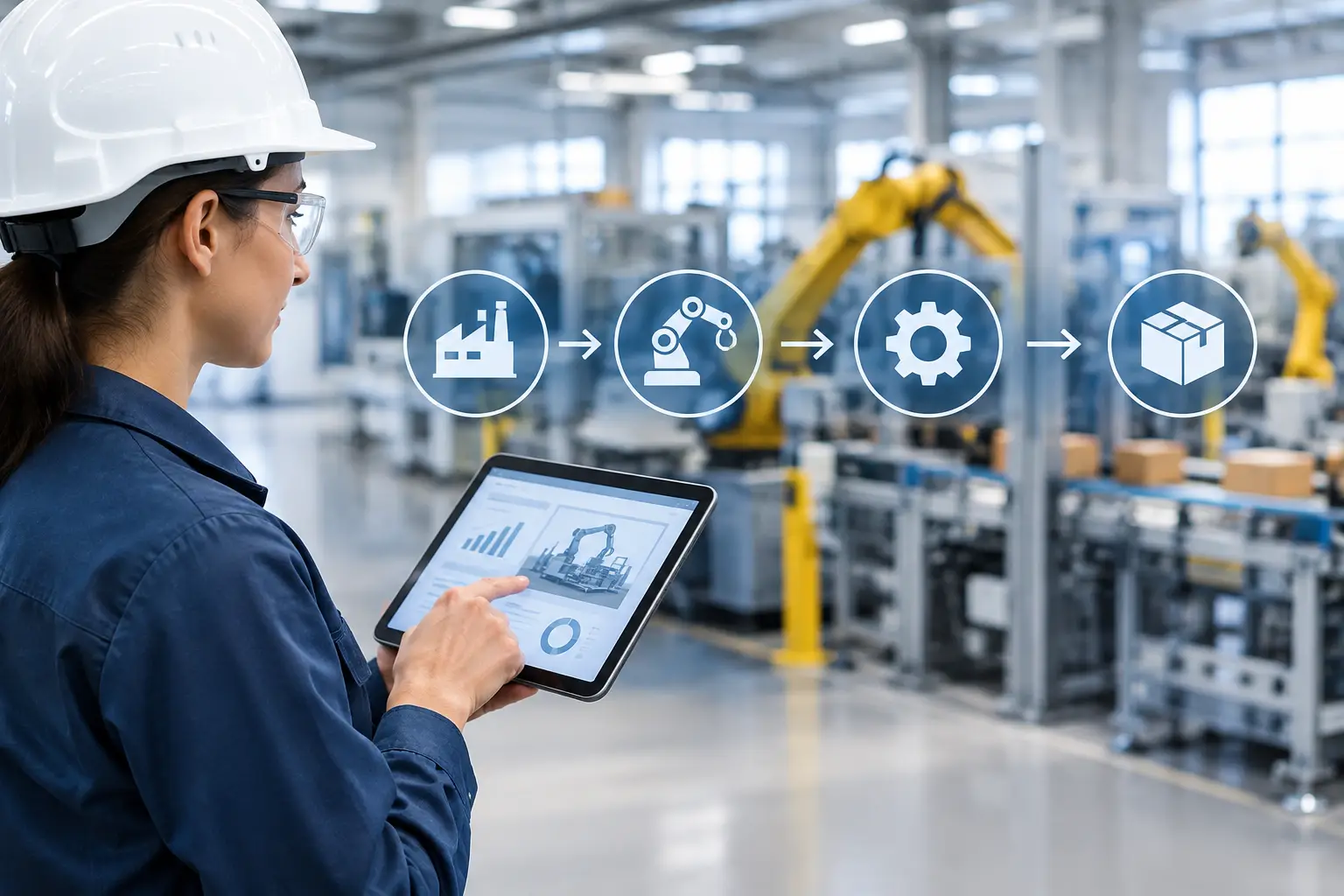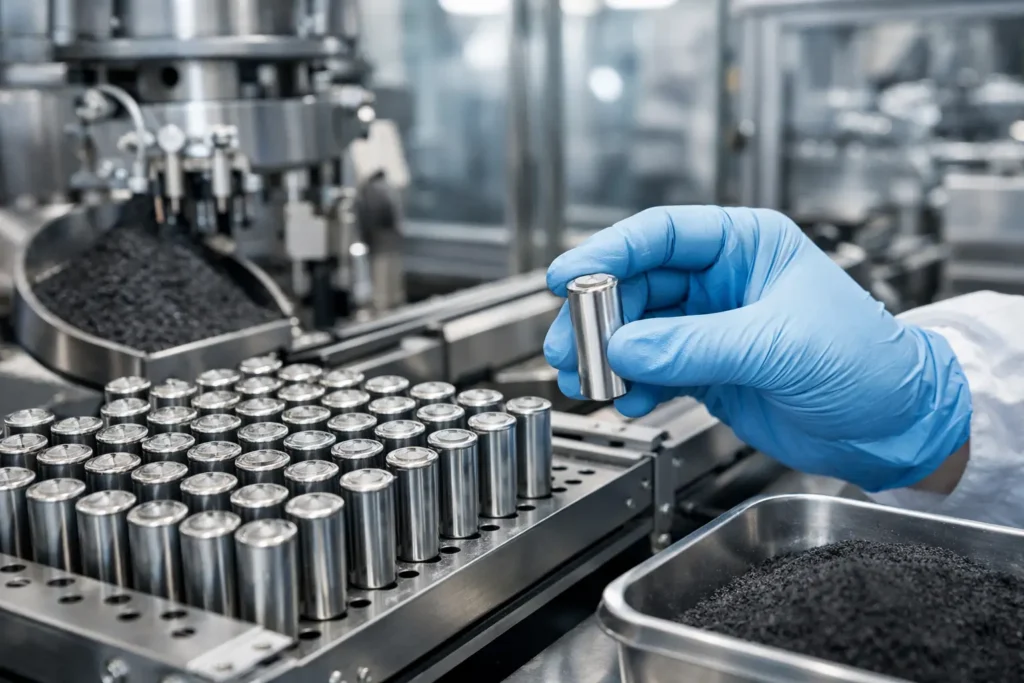
A battery plant rarely struggles because one machine cannot run. The bigger problem is that upstream and downstream systems do not behave like one process. That is why battery material processing equipment should be evaluated as an integrated production platform, not as a collection of standalone assets.
In battery manufacturing, small process deviations compound quickly. Feed variability affects milling. Milling affects particle size distribution. Particle size changes blending performance, bulk density, flow behavior, thermal response, and ultimately product consistency. If the line is assembled from disconnected technologies with separate controls philosophies, different mechanical standards, and fragmented startup support, those risks increase at the exact point where manufacturers need tighter control.
What battery material processing equipment actually needs to do
For cathode, anode, conductive additive, and precursor applications, the process objective is not just material movement. It is repeatable transformation under tightly managed conditions. The equipment line must receive raw materials, reduce size where needed, blend to target homogeneity, control dust and contamination, transfer product reliably, and support thermal or downstream packaging requirements without introducing unnecessary handling steps.
That sounds straightforward on paper. In practice, every stage creates constraints for the next one. A feeder that cannot maintain accurate delivery rates will destabilize the mill. A mill selected only for throughput may generate the wrong particle profile for mixing. A blender may achieve nominal uniformity but create segregation during discharge if transfer design is weak. Thermal processing may meet temperature targets while creating residence time variation that shows up later as performance inconsistency.
This is why serious battery material processing equipment selection starts with process interaction. The question is not whether each machine is capable in isolation. The question is whether the full line can hold process stability across expected production volumes, material changes, maintenance intervals, and expansion phases.
Core process blocks in battery material processing equipment
Most battery material production lines follow a familiar architecture, even though chemistry, throughput, and environmental controls vary by application. Raw material handling is the first control point. Powders, granules, and additives must be unloaded, conveyed, stored, and fed with high containment and predictable flow. Poor hopper design, inconsistent discharge, and uncontrolled dust generation can undermine the rest of the line before processing begins.
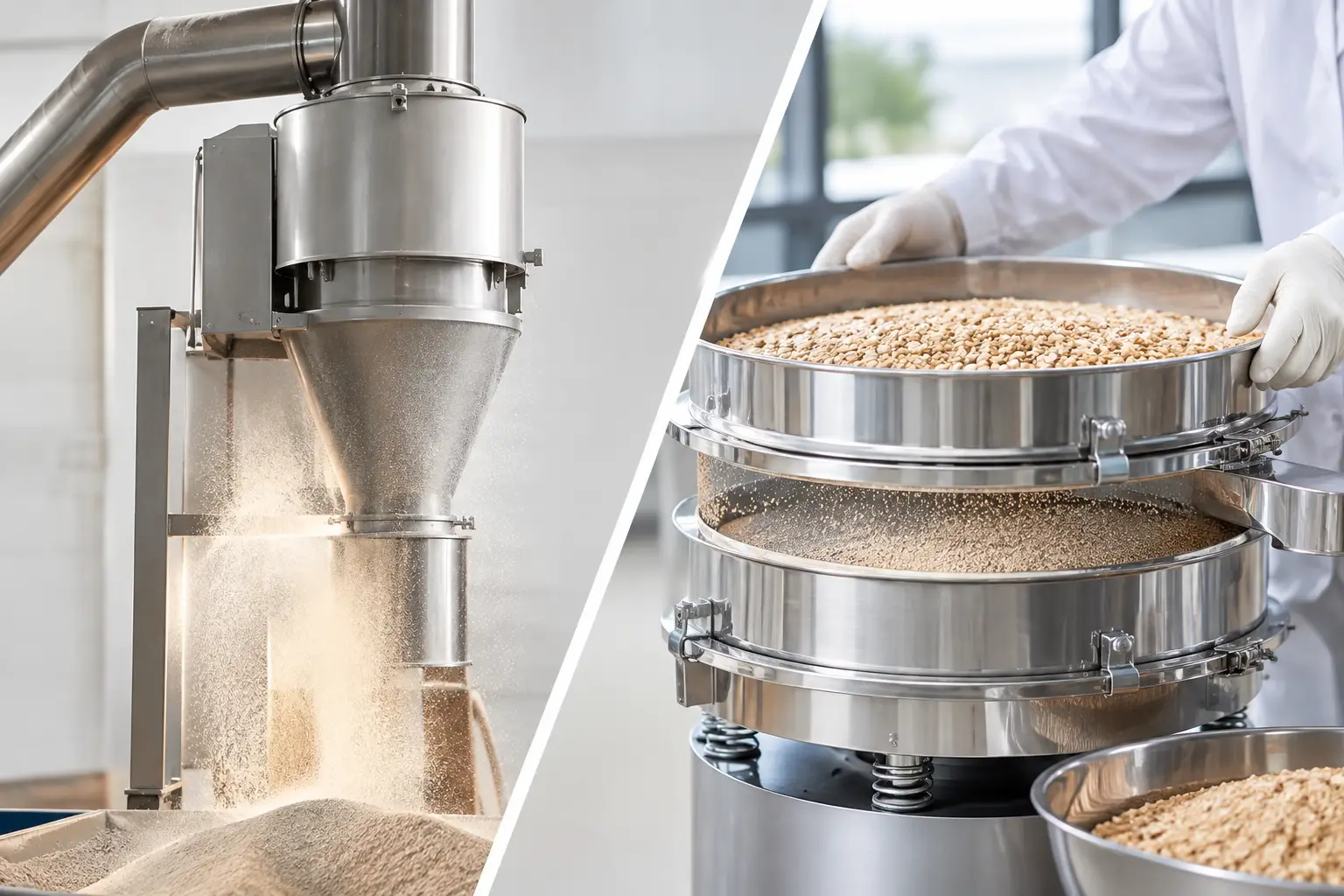
Size reduction and milling often sit at the center of performance. Whether the goal is deagglomeration, controlled particle size reduction, or final conditioning, the selected technology must align with both material behavior and downstream quality targets. Some materials are friable and easy to process. Others are abrasive, heat-sensitive, or prone to generating fines. Equipment choice depends on more than target microns. It depends on wear resistance, heat generation, cleanout requirements, and how particle morphology affects the next stage.
Mixing and blending are equally critical. Battery formulations demand high uniformity, but not every blend behaves the same way under shear. Some systems require gentle homogenization to avoid damaging material structure. Others need more aggressive dispersion to break clusters and distribute additives evenly. The right configuration depends on formulation sensitivity, batch size, validation needs, and required repeatability from lot to lot.
Bulk material transfer is often underestimated. Pneumatic or mechanical conveying has to move product without changing what was just engineered upstream. Excessive velocity, uncontrolled impact, and poor routing can alter bulk density, create segregation, or increase dusting. In battery environments, transfer design also has to account for housekeeping, containment, maintenance access, and safe integration with dust collection and plant utilities.
Thermal processing may be required for drying, conditioning, or reaction-related steps. Here, temperature is only one variable. Residence time, airflow, solids presentation, and discharge consistency all matter. A thermal unit that performs well in a standalone test can still create bottlenecks if feed presentation is unstable or downstream handling cannot absorb output variation.
Packaging and final discharge complete the line, but they should not be treated as an afterthought. If the process produces a tightly controlled material, the final packaging system must preserve that condition through filling accuracy, containment, and traceability.
The integration problem most manufacturers run into
Many production issues attributed to equipment are actually integration failures. Controls do not communicate cleanly. Mechanical interfaces require field modification. One vendor sizes for peak capacity while another designs for average flow. Utilities are not coordinated. Startup teams optimize their own machine, not the line.
In battery manufacturing, those gaps carry higher consequences because quality standards, throughput targets, and commissioning timelines are all under pressure. When the system is pieced together across multiple suppliers, accountability gets diluted. If feed instability affects milling performance, the feeder supplier points to the mill, the mill supplier points to the material, and the controls vendor points to operator settings.
A single-source systems approach reduces that exposure. One engineering standard across handling, size reduction, blending, transfer, thermal processing, and packaging creates fewer interface risks from the start. Controls architecture can be developed around line behavior instead of individual machine logic. Factory acceptance, site commissioning, and long-term support become more disciplined because the line was designed as one production system.
That approach does not eliminate every challenge. Material behavior still changes. Scale-up still requires validation. Utility constraints and site conditions still matter. But it does remove a major source of preventable risk – fragmented responsibility.
How to evaluate battery material processing equipment for scale
Scale is where many good pilot processes become difficult production systems. Equipment that performs acceptably at lower rates may not hold the same residence time profile, blend quality, or transfer stability when throughput increases. The issue is not simply bigger machines. It is whether the process intent survives scale-up.
That requires careful evaluation of feed control, material dwell time, cleaning strategy, maintenance access, and automation response. For example, a high-capacity mill may satisfy output requirements while creating maintenance intervals that interrupt production more often than expected. A larger blender may reduce batch frequency but increase discharge variability for difficult powders. A conveying system sized for future expansion may create unnecessary product degradation at current rates.
The best battery material processing equipment decisions are usually made by looking at the line in operating scenarios, not just design capacity. What happens during startup, recipe changeover, upset recovery, feeder refill, or routine inspection? How quickly can operators return the process to target conditions? Can the controls system provide enough visibility to identify drift before it becomes scrap?
For procurement and operations teams, this means equipment evaluation should include lifecycle questions as early as specification review. Spare parts strategy, wear component access, service support, and long-term controls maintainability are not secondary concerns. They directly affect uptime and total cost of ownership.
Why process accountability matters more than machine count
A battery line can contain excellent individual equipment and still underperform if there is no central process owner. Engineering accountability matters because battery manufacturing depends on repeatability across interfaces. The more vendors involved, the more opportunities there are for assumptions to go untested until installation or startup.
An integrated supplier can align equipment selection with process outcomes from the beginning. That includes matching feeders to material flow properties, sizing mills around actual particle targets, selecting blending technology based on formulation behavior, coordinating transfer with containment strategy, and linking thermal performance to upstream presentation and downstream discharge. Those decisions are interdependent. Treating them as separate purchases often creates expensive corrections later.
This is where a company like Proc-X fits naturally. For manufacturers building or modernizing battery production capacity, the value is not limited to supplying equipment categories. The value is in engineering and delivering a complete, compatible process system with one point of responsibility across design, integration, commissioning, and long-term support.
A better standard for battery material processing equipment
As battery manufacturing capacity expands, the market does not need more disconnected machinery. It needs production systems that are engineered to hold performance under real operating conditions. That means consistent material handling, predictable size reduction, controlled blending, disciplined transfer, thermal stability, and packaging integration working under one coordinated architecture.
If your line strategy starts with isolated machine selection, you may still reach production. You will just carry more commissioning risk, more interface uncertainty, and more long-term support complexity than necessary. The stronger approach is to define the process first, engineer the full system around it, and assign accountability where it belongs – across the entire line, not at the edge of each machine.
That is usually where better throughput, faster startup, and more reliable scale begin.