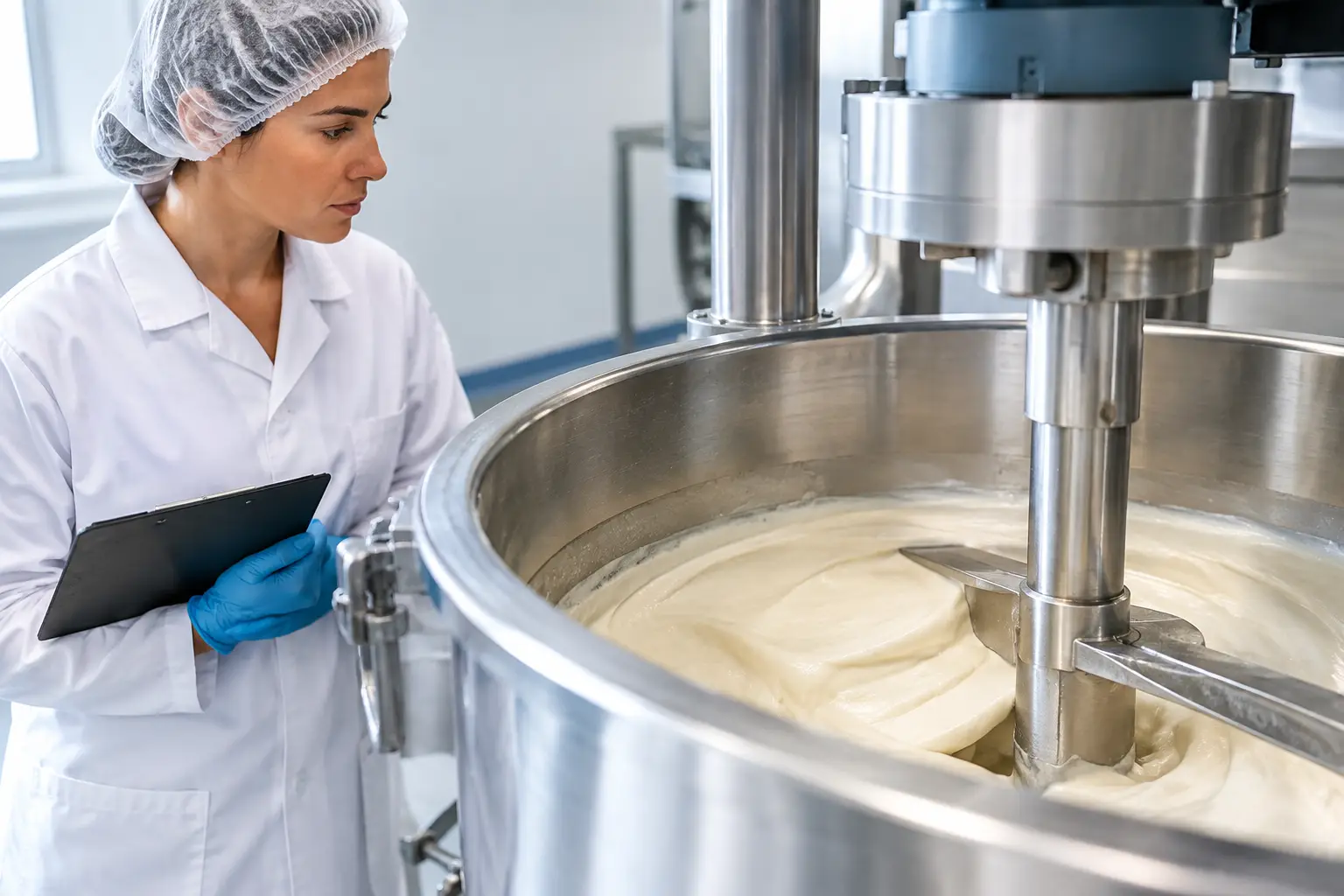
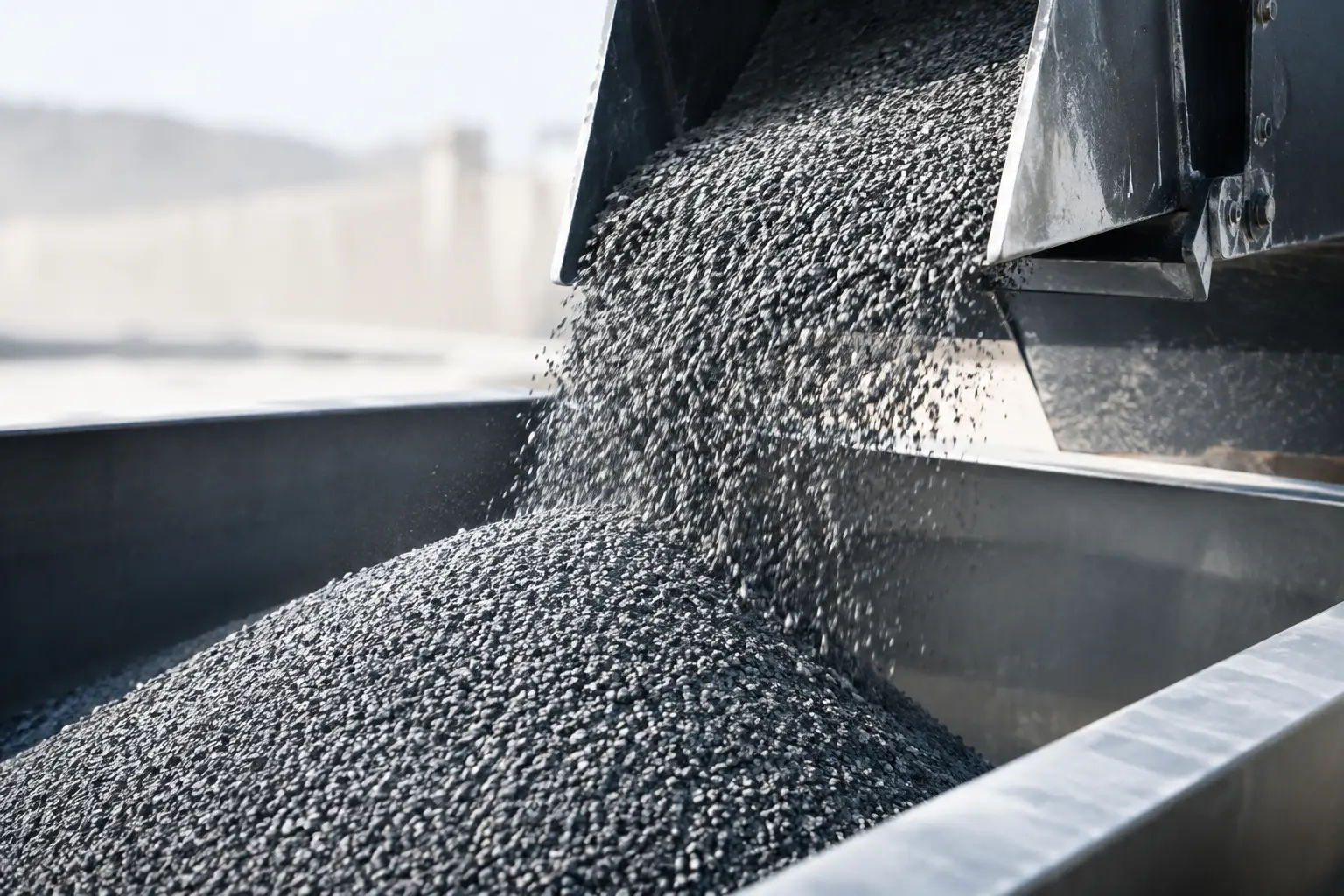
A production line can be mechanically complete, electrically commissioned, and still be difficult to support. The problem often appears during the first upset: a feeder loses accuracy, a mixer recipe will not advance, a dust collector interlock trips, or a packaging machine rejects good product. Multi vendor support risks become visible when each supplier can diagnose its own equipment but no one owns the behavior of the complete process.
For plants handling powders, liquids, pastes, slurries, or high-viscosity materials, that gap is more than an administrative inconvenience. It can extend downtime, create quality exposure, delay batch release, and turn a manageable fault into a dispute over scope. A line is not simply a collection of machines. It is a connected operating system of material flow, mechanical design, utilities, controls, safety functions, procedures, and people.
Why multi vendor support risks increase over time
Multi-supplier projects can be appropriate. A manufacturer may have an established packaging standard, a preferred automation platform, or a specialized technology requirement that justifies separate procurement. The risk is not the number of vendors by itself. The risk is unclear technical ownership at the interfaces.
At startup, interfaces are often treated as a commissioning task. In operation, they become lifecycle responsibilities. Product changes, wear, software updates, new regulatory expectations, replacement parts, and revised production targets all place pressure on the original design assumptions. If those assumptions are not documented and owned at the system level, plant personnel are left to reconstruct them during an outage.
Consider a powder processing line with bulk bag unloading, pneumatic conveying, loss-in-weight feeding, milling, blending, dust collection, and packaging. A rate instability may originate with inconsistent bulk density, poor discharge from the bag, air balance in the conveying line, feeder refill timing, a control-loop setting, or the mill’s effect on particle-size distribution. Each equipment supplier may be correct that its machine is functioning within its defined limits. That does not establish that the line can meet its intended rate, accuracy, or product-quality target.
The handoff problem is usually an interface problem
The most expensive failures tend to occur between disciplines and equipment packages. Mechanical interfaces involve elevations, transition geometry, access, cleanability, vibration transmission, and material retention. Process interfaces involve feed consistency, residence time, temperature, pressure, and allowable variability. Controls interfaces involve signals, permissives, alarms, recipes, network architecture, and fault recovery.
When these elements are divided among vendors, the plant needs more than individual equipment warranties. It needs an agreed definition of system performance and a clear party responsible for confirming it. Without that structure, troubleshooting follows the boundaries of purchase orders rather than the path of the process.
Where multi vendor support risks affect plant performance
Downtime lasts longer when diagnosis is fragmented
A plant team may open several service cases for one event. The automation supplier reviews logic. The equipment OEM reviews mechanical condition. The integrator reviews communications. The process specialist requests material samples. Meanwhile, production remains constrained.
This is not an argument against involving the right specialists. Complex faults often require them. The operational issue is who coordinates the evidence, sets the troubleshooting sequence, and makes a decision when findings overlap. A single accountable engineering partner can consolidate data from operators, maintenance, controls, and process personnel into one fault model instead of a series of isolated opinions.
Product quality can drift before a hard failure occurs
Not every support issue stops a line. Some slowly degrade its output. A change in feeder performance can alter active ingredient distribution. Excessive conveying velocity can increase attrition. An incorrect recipe change can affect mixing time or liquid addition sequence. A worn classifier can widen particle-size distribution without triggering an immediate alarm.
In regulated and quality-sensitive manufacturing, those deviations may create investigation, hold, rework, or validation consequences. Support coverage must therefore include performance trends, not only emergency response. The provider responsible for the system should understand the relationship between material properties, operating windows, equipment condition, and finished-product specifications.
Controls changes can create hidden process exposure
Controls are frequently treated as a separate package, but they determine how a process starts, stops, transitions, records data, and responds to abnormal conditions. A software modification to improve throughput may change refill behavior at a feeder. A revised interlock may affect dust collection sequencing. A replacement drive may alter torque response in a mixer or extruder.
Where several parties can alter controls, formal change management is essential. The plant needs current source files, revision history, backup procedures, access control, functional descriptions, alarm philosophy, and a defined test method. For pharmaceutical, nutraceutical, food, and other controlled applications, the required documentation may extend to validation evidence and electronic records considerations.
Safety and compliance do not stop at package boundaries
Dust hazards, pressure protection, machine guarding, thermal exposure, chemical compatibility, and cleanability are system issues. A vendor may supply compliant equipment while the completed installation still has an unresolved hazard at a transition, access point, discharge station, or control sequence.
The same applies to compliance requirements. Sanitary design, material traceability, washdown suitability, containment, emissions control, and documentation must be evaluated across the full process. Assigning responsibility package by package can leave gaps that are only discovered during startup, audit, or incident review.
How to reduce exposure before equipment is ordered
The strongest time to control support risk is during project definition, not after commissioning. Procurement documents should state the intended operating outcome: materials to be processed, capacity range, allowable variation, product-quality criteria, utilities, cleaning requirements, automation scope, and acceptance conditions. A list of equipment tags is not enough.
Define interface ownership in writing. This should address who supplies transitions, field instruments, cable and air connections, control panels, safety circuits, communications, foundations, access platforms, and documentation. It should also identify who verifies that upstream and downstream packages operate correctly together.
Four questions should be answered before award:
- Who owns system-level performance when individual machines are operating but the line misses capacity, accuracy, or quality targets?
- Who leads root-cause analysis during a production-critical failure involving mechanical, process, and controls factors?
- Who approves and tests changes that affect recipes, sequences, safety functions, or validated operation?
- Who maintains the current technical record of drawings, manuals, software revisions, spare parts, and operating limits?
These questions can reveal whether a project has genuine integration responsibility or only coordinated purchasing. The distinction matters most when schedules compress and scope boundaries become inconvenient.
Specify acceptance testing around the actual process
Factory acceptance testing and site acceptance testing should verify more than equipment rotation and basic input/output checks. Where practical, testing should reflect the product, rate, accuracy, particle-size target, mixing uniformity, temperature control, and packaging performance the plant expects to achieve.
The exact test plan depends on the application. A battery material line may prioritize containment, particle control, and traceability. A food powder line may focus on hygienic transfer, blend uniformity, and allergen changeover. A specialty chemical system may require careful attention to corrosion, vapor handling, and thermal control. What remains constant is the need to test the integrated process against the defined operating objective.
Build support around accountability, not vendor count
A single-source approach is not automatically the right answer. A plant with strong in-house engineering, mature standards, and established OEM relationships may successfully manage multiple suppliers. However, the plant should make that decision deliberately and staff the coordination responsibility accordingly.
For many capital projects, one manufacturer with system engineering responsibility reduces the number of handoffs between material handling, processing equipment, automation, and packaging. That structure creates one engineering standard and one point of accountability for the interfaces that determine day-to-day performance. Proc-X applies this systems approach by engineering specialized processing technologies into coordinated production solutions rather than treating each machine as an isolated purchase.
The practical measure is not how many names appear on the equipment list. It is whether the plant can identify one accountable path from an operating symptom to a tested corrective action. When support ownership follows the complete process, maintenance teams spend less time managing boundaries and more time restoring stable production.
Before the next expansion or replacement project is released, map the interfaces as carefully as the equipment. The most valuable support commitment is the one that remains clear at 2 a.m., when production is down and the fault belongs to more than one machine.