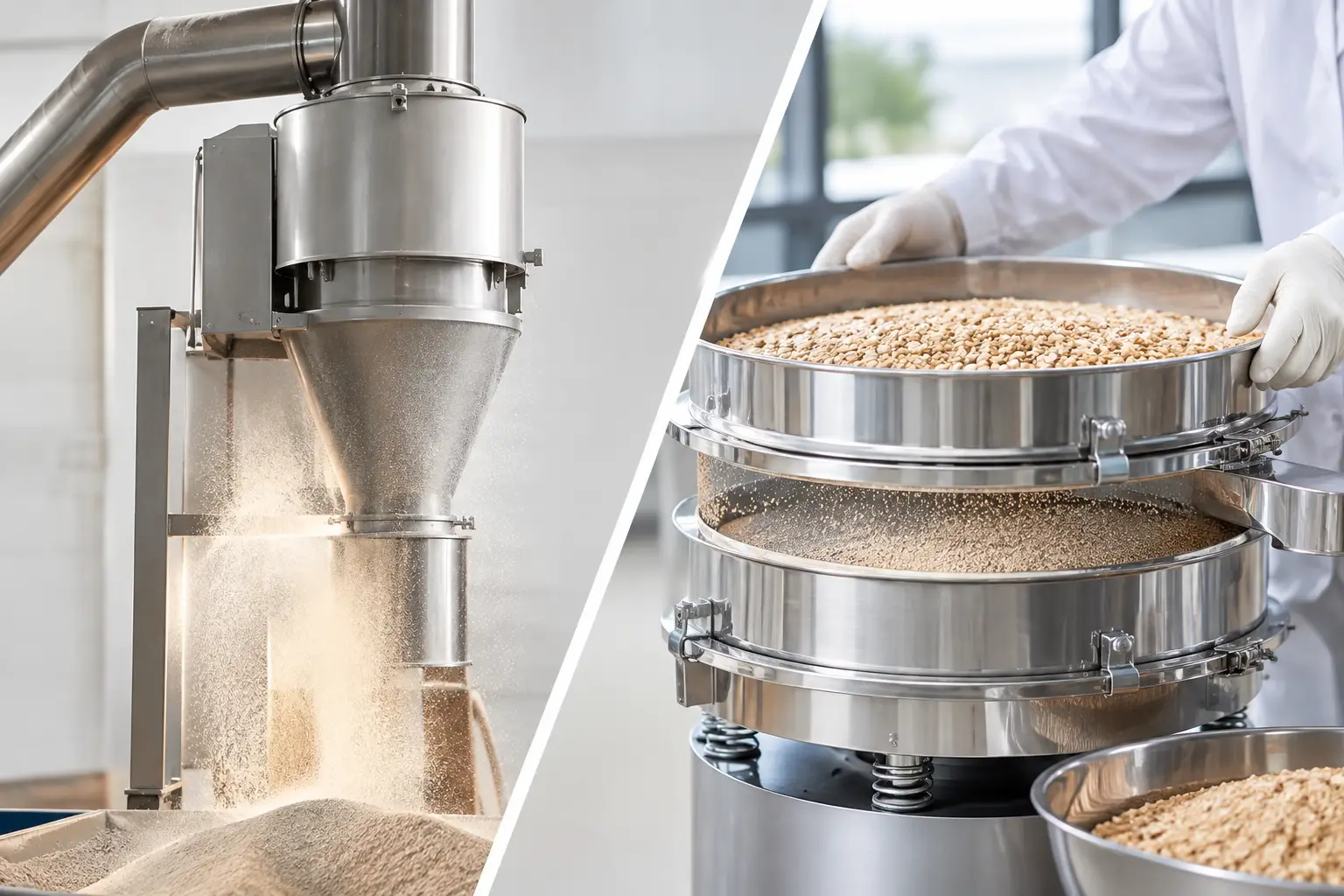
A mixer rarely fails in isolation. When blend uniformity drifts, batch times stretch, or downstream equipment starts seeing inconsistent feed, the real issue is often upstream assumptions, poor material characterization, or a line designed around components instead of a process. That is why a mixing technology handbook should do more than describe mixer types. It should help manufacturers make decisions that hold up under production pressure.
In regulated and performance-critical environments, mixing is not a standalone step. It affects feeding stability, thermal load, particle integrity, extrusion behavior, drying efficiency, packaging consistency, and validation outcomes. A well-selected mixer can improve throughput and repeatability. The wrong one can create chronic variability that no amount of operator attention will fully correct.
What a mixing technology handbook should cover
A useful mixing technology handbook starts with purpose, not equipment. The first question is not which mixer is most popular or which design has the highest nameplate capacity. It is what the process must achieve. That may mean dispersing fine actives into a carrier, homogenizing powders with different bulk densities, wetting solids without agglomeration, or building a controlled dough, slurry, paste, or compound for a downstream step.
Those goals sound straightforward until material behavior enters the picture. Powders can bridge, flood, segregate, or compact. Liquids can vary in viscosity across temperature ranges. Some ingredients shear-thin, some heat quickly under agitation, and some degrade if exposed to excess residence time. Mixing performance is always tied to how materials respond under real operating conditions.
That is why process requirements should be defined in measurable terms. Uniformity targets, allowable batch time, cleaning needs, throughput expectations, discharge requirements, and acceptable temperature rise all matter. If those criteria are vague, mixer selection becomes guesswork.
Mixing is a process decision, not a catalog decision
Industrial buyers often evaluate mixers by vessel size, motor horsepower, agitator style, or price. Those factors matter, but none of them answers the larger question of line compatibility. A mixer must fit the whole process system, including ingredient preparation, transfer methods, downstream equipment, controls, sanitation strategy, and maintenance access.
Consider a powder blending application feeding an extrusion line. A mixer that achieves acceptable uniformity but produces inconsistent bulk density may still create feed instability at the extruder. In another case, a high-intensity mixer may shorten cycle time but generate heat that changes material performance before the next unit operation. A technically acceptable mixer can still be operationally wrong if it disrupts the rest of the line.
This is where system-level engineering matters. The interface between mixing and upstream material handling, milling, extrusion, and packaging readiness should be designed as one coordinated process. When those handoffs are treated as separate vendor scopes, accountability becomes fragmented and performance problems get harder to isolate.
Key variables that determine mixer performance
Material characteristics usually decide more than the machine itself. Bulk density, particle size distribution, moisture level, flow behavior, and friability all affect how materials move through a vessel and how quickly they reach the target state. A free-flowing powder blend behaves very differently from a cohesive nutraceutical premix or a high-solids chemical paste.
Batch size also changes the equation. Many mixers perform well at one fill level and poorly at another. If a process needs flexibility for product changeovers or varying campaign sizes, turndown capability should be evaluated early. A design that works only near full capacity may create hidden constraints once production schedules shift.
Residence time, shear, and thermal input must be considered together. Faster is not always better. Some formulations require aggressive action to break agglomerates or disperse minor ingredients. Others lose functional performance when overworked. The right mixer delivers the required outcome with the lowest practical process risk.
Discharge is another common blind spot. Uniform mixing inside the vessel does not guarantee efficient emptying. If material hangs up, segregates during discharge, or leaves residue that complicates cleaning validation, the overall process suffers. In many plants, discharge reliability matters as much as mixing intensity.
Common mixer categories and where they fit
Dry powder blending often points buyers toward ribbon blenders, paddle mixers, plow mixers, or tumble-style systems. Each has a place, but none is universally best. Ribbon designs can provide effective convective mixing for many bulk solids, while paddle or plow systems may offer advantages for friable products, liquid addition, or higher-intensity applications. Tumble mixing can be effective when gentle handling is critical, though batch times and integration requirements may differ.
For wet mixing and viscous formulations, planetary mixers, high-shear systems, and specialized agitator configurations are typically evaluated based on viscosity profile, solids loading, and the level of dispersion required. The challenge is not naming the category. It is matching the mixing mechanism to the real rheology of the product across the full batch cycle.
Continuous mixing adds another layer. It can reduce footprint, support steady downstream flow, and improve overall line efficiency, but only if feed consistency and control strategy are strong enough to maintain product quality. Continuous systems reward disciplined upstream handling. They also expose weaknesses quickly.
Scale-up is where many mixing projects go off track
A process that works in a lab or pilot environment does not automatically scale in a linear way. Tip speed, energy input, fill level, residence time distribution, and heat transfer all change as equipment size increases. That is especially relevant when moving from manual or semi-manual production to a fully integrated line.
The mistake is assuming a larger mixer that looks similar will behave the same. Scale-up should be approached with defined performance criteria and a clear understanding of which variables must remain constant and which can be adjusted. In some cases, preserving blend uniformity means accepting a different batch time. In others, it requires changes to feeder accuracy, ingredient staging, or downstream buffering.
This is also where cross-functional input matters. Process engineering, operations, quality, and maintenance should all have a voice before equipment is finalized. A mixer that satisfies process development but complicates cleaning access, spare parts strategy, or operator workflow can create avoidable lifecycle costs.
Controls, integration, and accountability
A mixer is only as consistent as the system around it. Ingredient feeding accuracy, recipe control, batch traceability, sensor feedback, and automation logic all influence repeatability. In regulated sectors, the control architecture can be as important as mechanical design because it supports validation, alarm management, and data integrity.
Integrated system design reduces interface risk. When the same engineering standard carries through material preparation, size reduction, mixing, transfer, and downstream processing, there are fewer assumptions between unit operations. Mechanical fit, control logic, throughput matching, and service responsibility are aligned from the start.
That is a meaningful advantage for manufacturers that cannot afford start-up delays or unresolved vendor disputes. One manufacturer. One engineering standard. One point of accountability. For complex processing lines, that model reduces commissioning friction and makes long-term troubleshooting more direct.
How to use a mixing technology handbook during equipment selection
Use the handbook as a decision framework, not a product brochure. Start by documenting the process objective, then define the material properties that are known and the ones that still need to be tested. From there, map the mixer choice against batch size range, cleaning method, downstream dependencies, and automation requirements.
Ask harder questions early. What happens if raw material density shifts? How sensitive is the formulation to shear or heat? What discharge pattern does downstream equipment require? How much residence time variation is acceptable? If the line must support multiple SKUs, where are the real flexibility limits?
It also helps to evaluate support models, not just equipment designs. Commissioning, spare parts, controls support, and long-term optimization should be part of the selection process. The lowest equipment cost can become the highest operating cost when system responsibility is split across too many suppliers.
For manufacturers building or upgrading complete lines, this is where an integrated partner adds value beyond mixer selection alone. Proc-X approaches mixing as one unit operation within a larger engineered process, which is often the difference between isolated equipment performance and dependable line performance.
The best mixing decisions are rarely the ones that look simplest on paper. They are the ones built around material behavior, line integration, and clear accountability from design through operation. If your process has to perform every shift, under real production conditions, that is the standard the equipment should be held to.