A biochar product can meet carbon targets on paper and still fail in production if the particle size is wrong. That is why biochar milling sits at the center of commercial scale performance. The way char is reduced, classified, conveyed, and contained will directly affect bulk density, flow behavior, dust loading, downstream blending, and final product consistency.
For manufacturers moving beyond pilot volumes, milling is not a simple finishing step. It is a process decision that shapes throughput, safety, handling, and market fit. Fine biochar may be necessary for dispersion or reaction efficiency, but every reduction in particle size can also increase dust generation, lower yield in the target fraction, and place greater demands on containment and filtration.
Why biochar milling is more complex than it looks
Biochar is not a uniform material. Feedstock source, pyrolysis conditions, residual moisture, ash content, porosity, friability, and carbon structure all influence how it breaks down under mechanical force. A hardwood-derived char processed at one temperature can behave very differently from a crop-residue char made under another profile.
That variability matters because the milling method that works for one product may overgrind another, create excessive fines, or deliver poor throughput. In practice, the target is rarely just smaller particles. The target is a controlled particle size distribution that supports the intended end use while maintaining acceptable operating efficiency.
For soil amendment products, coarser material may be preferred to preserve porosity and reduce dust during field application. For composites, specialty chemicals, battery-related materials, or performance additives, a tighter and finer specification may be required to improve surface area, dispersion, or reactivity. The right answer depends on what happens next in the process, not just on what comes out of the mill.
Defining the real objective of biochar milling
Before selecting equipment, manufacturers need to define the production objective in operational terms. That means asking how the milled biochar will be stored, metered, blended, packaged, and used. A target such as 95 percent below a certain micron threshold is only part of the picture.
The more useful question is whether that specification supports stable manufacturing. If the milled product bridges in hoppers, floods feeders, segregates in blends, or creates unacceptable housekeeping and explosion risk, then the milling result is incomplete even if the lab result looks good.
This is where system thinking matters. Milling performance should be evaluated alongside feed preparation, infeed rate control, air handling, classification, dust collection, discharge design, and packaging integration. Isolated machine selection often creates avoidable problems downstream.
Particle size affects more than product appearance
In biochar processing, particle size influences flowability, packing density, mixing behavior, and application performance. Finer material generally increases surface area, which can be beneficial for adsorption and reaction-driven uses. It can also increase cohesive behavior and make powder handling less predictable.
That trade-off becomes more pronounced at commercial scale. A product that behaves well in hand samples may present very different challenges in a bulk transfer system. Pneumatic conveying rates, filter loading, and feeder accuracy can all shift once the material enters continuous operation.
Equipment selection depends on material behavior
There is no universal mill for biochar because reduction efficiency depends on brittleness, desired cut point, feed size, and acceptable heat generation. Some applications favor impact-driven reduction for throughput and simplicity. Others require tighter control with integrated classification to avoid excessive fines and maintain product consistency.
The decision should start with material testing under realistic conditions. Lab screening helps, but scale-up must account for continuous feed variation, wear rates, and dust management. Biochar can be abrasive enough to influence maintenance schedules, yet fragile enough to generate uncontrolled fines if rotor speed or residence time is not matched to the product.
In many cases, upstream pre-sizing improves overall performance. Removing oversize agglomerates before fine grinding can stabilize mill loading and reduce recirculation demands. Likewise, conditioning the feed to a controlled moisture range may improve processing, although too much moisture can create buildup and poor classification efficiency.
Classification is often as important as the mill itself
For tighter specifications, classification becomes critical. Without effective separation, the mill may either leave too much coarse material or continue grinding product that is already in spec, driving up fines generation and energy use.
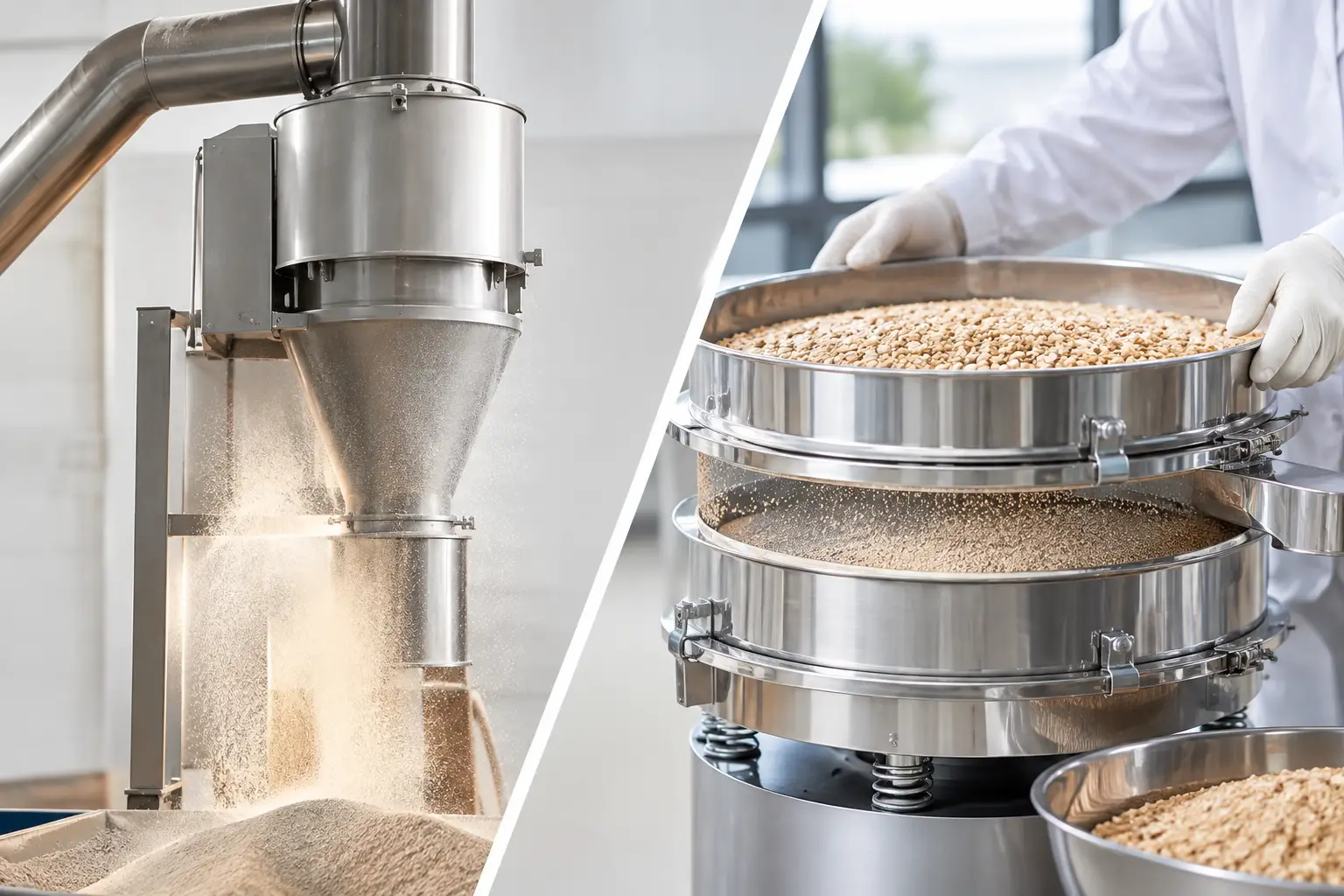
Air classification, screening, or a combination of both may be required depending on the cut point and product behavior. The practical question is not whether classification can produce a desired laboratory result. It is whether the full system can hold that result consistently at rate.
That distinction matters for procurement and plant design. A standalone mill may appear cost-effective, but if the process ultimately requires recycle loops, secondary collection, and fine fraction control, the real solution is a coordinated milling and classification system.
Dust, containment, and safety cannot be secondary issues
Biochar milling generates fine particulate. In industrial environments, that affects product recovery, worker exposure, housekeeping burden, and combustible dust risk. A line designed only around size reduction will struggle if containment, aspiration, and dust collection were treated as add-ons.
This is one of the most common gaps in fragmented projects. The mill may be properly sized, but the supporting process is not. Inadequate airflow balance, poorly designed transfer points, inconsistent feeder presentation, or undersized filtration can turn an otherwise capable machine into a chronic operating problem.
A disciplined system design addresses enclosed transfer, controlled infeed, negative pressure management where appropriate, material recovery strategy, and maintenance access. It also considers how dust control interacts with yield. If the collection system captures a significant fraction of saleable product, then the process design must account for reintegration, secondary classification, or a separate product stream.
Throughput and consistency are usually in tension
Manufacturers often want higher throughput, tighter particle size distribution, lower dust, and lower energy use at the same time. In biochar milling, those goals can conflict. Pushing rate through a mill may widen the distribution. Driving for ultra-fine output may reduce capacity and increase wear or thermal effects. Tight classification may improve product quality while lowering net yield.
That does not mean the process cannot be optimized. It means optimization requires clear priorities. If the application values precise fineness above all else, the system may need multistage reduction, recycle control, and more aggressive air handling. If the market tolerates a broader specification, a simpler line may provide better economics and easier maintenance.
Experienced manufacturers evaluate those trade-offs early because they affect capital scope, operating cost, and service model. They also affect scalability. A process that works at modest hourly rates may not translate directly to full commercial production without changes in feeding, classification, or dust collection architecture.
Integration determines whether the line performs in the real world
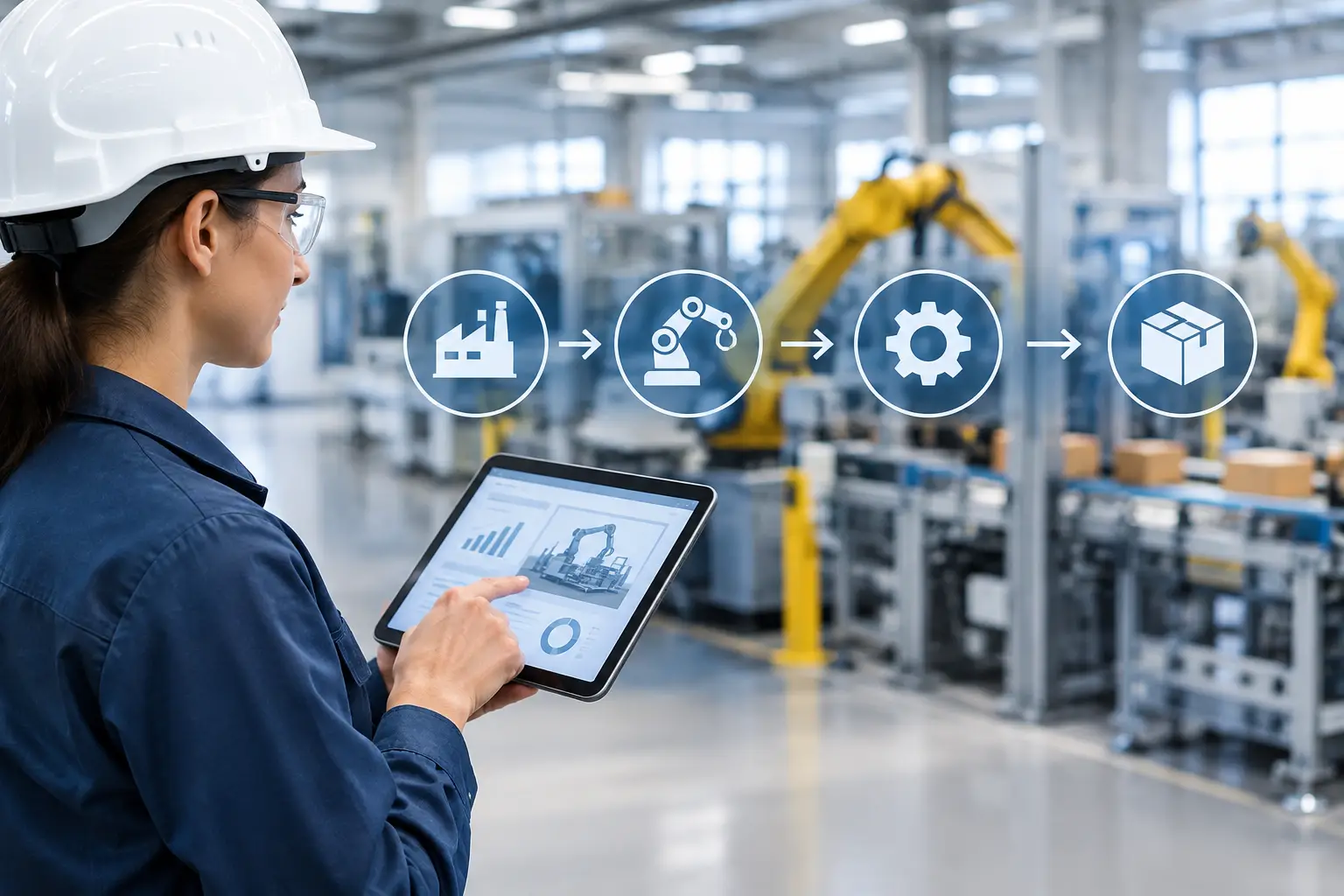
Biochar milling should be engineered as part of the full production sequence, not as an isolated machine purchase. Raw material receiving, upstream char production variability, surge capacity, metal detection, milling, screening or classification, conveying, blending, packaging, and controls all influence how stable the operation will be.
Controls integration is especially important. Rate fluctuations at the feeder can change residence time and breakage behavior. Pressure shifts in the aspiration system can alter classification performance. Packaging rates can back up the line if discharge capacity is not properly managed. These are not separate issues. They are one process.
This is where a single-source engineering approach creates real value. When one partner is responsible for the material handling, milling, classification, dust management, and controls strategy, the system can be designed around how biochar actually behaves from end to end. That reduces the accountability gaps that often appear when multiple vendors supply disconnected sections of the line.
For companies scaling advanced carbon materials, the priority is not just machine ownership. It is process ownership. Proc-X’s model aligns with that requirement because integrated responsibility matters most when material variability, safety, and product consistency are all on the table.
What strong biochar milling programs get right
The best biochar milling operations are built around testing, not assumptions. They characterize the incoming char, define the downstream product need, and validate equipment behavior under realistic production conditions. They also plan for variability rather than designing around an ideal feedstock that rarely appears in day-to-day operation.
Just as important, they treat milling as one part of a controlled process environment. That includes feed conditioning where needed, stable metering, effective classification, properly engineered dust collection, maintainable layouts, and automation that keeps the line inside a repeatable operating window.
A good milling result is not simply a fine powder. It is a product that can be made safely, moved reliably, packaged consistently, and delivered to specification at commercial scale. That standard is higher, but it is the standard that matters.
If biochar is becoming a serious product line rather than a trial batch, the milling strategy deserves the same level of engineering discipline as every other critical unit operation. That is usually the point where performance stops being theoretical and starts becoming bankable.