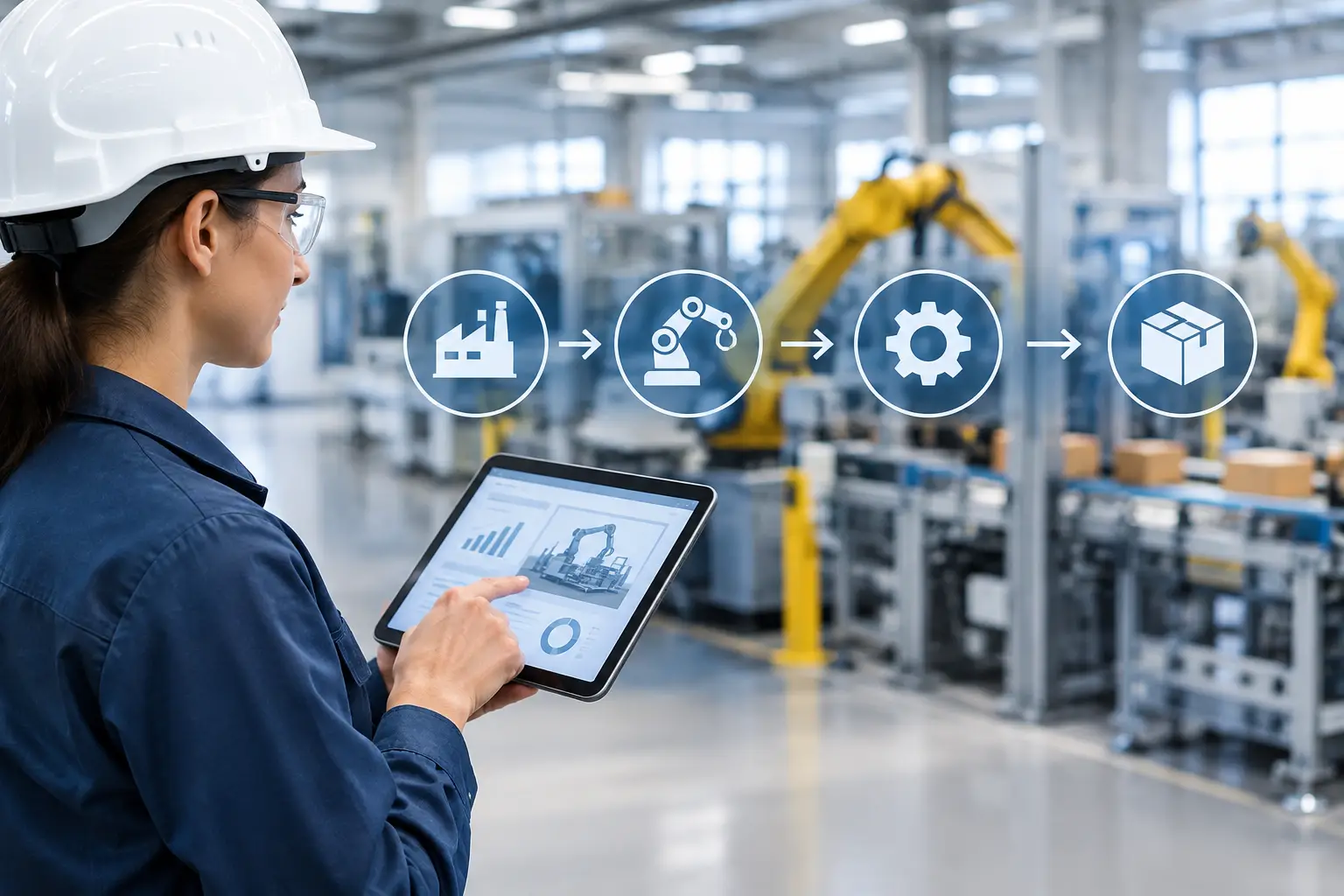
When a production line misses startup targets, the root cause is often not one machine. It is the space between machines – mismatched controls, unclear scope boundaries, inconsistent engineering assumptions, and too many vendors protecting their own portion of the project. That is exactly why choose single source manufacturing becomes a serious operational question for companies building or upgrading complex process systems.
In high-performance manufacturing environments, isolated equipment decisions rarely stay isolated. A feeder affects the mixer. The mixer affects downstream extrusion or thermal processing. Controls architecture shapes how the entire line responds under real production conditions. Packaging integration influences throughput, buffering, and labor planning. Once those dependencies are understood, the logic of a single-source model becomes much clearer.
Why choose single source manufacturing for complex lines
Single source manufacturing means one engineering partner assumes responsibility for the system as a whole, not just for individual machines. That difference matters most in lines where material behavior, process timing, automation, and compliance requirements all interact.
In a multi-vendor project, each supplier may deliver a technically sound machine. That still does not guarantee system performance. Mechanical interfaces may be workable on paper but difficult in the field. Controls may communicate, but not with the level of coordination needed for stable operation. Utility loads may be underestimated. Access for cleaning, maintenance, or validation may be compromised once equipment is installed together. The project becomes a chain of handoffs, and handoffs are where risk accumulates.
A single-source model reduces that risk by applying one engineering standard across the line. Design assumptions are coordinated earlier. Equipment is selected with process compatibility in mind. Controls architecture is built for the full system rather than retrofitted between third-party packages. Commissioning follows a unified plan instead of a sequence of vendor-specific checklists.
For manufacturers in regulated or high-throughput environments, this is not just a convenience. It is a control strategy.
One point of accountability changes project execution
The strongest argument for a single-source approach is accountability. When multiple suppliers are involved, responsibility is often fragmented. If the line underperforms, each party can point to another interface, another subsystem, or another specification. That delay has real cost. Production schedules slip, internal teams spend time coordinating disputes, and operations inherits a system that may meet component-level requirements without meeting business-level goals.
With single source manufacturing, there is one owner of system performance. Engineering, fabrication, integration, controls, installation coordination, startup, and support operate under one scope. That structure shortens decision paths and removes ambiguity during critical phases of the project.
This does not mean every project challenge disappears. Complex processing lines still require careful planning, testing, and adjustment. Material behavior can still surprise you. Throughput assumptions may still need refinement once the line is live. But when one partner is accountable for the complete system, those issues are addressed as system-level problems, not pushed across vendor boundaries.
That is a meaningful distinction for operations leaders who need answers quickly and for procurement teams that need contractual clarity.
Integration is where single source manufacturing delivers the most value
Most capital projects are judged by the performance of the full line, not by the quality of a standalone machine. Throughput, yield, consistency, uptime, cleaning efficiency, operator usability, and maintenance access all depend on integration quality.
This is where a single-source model tends to outperform a multi-vendor build. Integration starts earlier and runs deeper. Equipment sizing can be coordinated across upstream and downstream steps. Product transfer points are designed around actual process requirements. Automation logic is developed to support line-wide responsiveness. Safety systems, data visibility, and recipe management can be aligned from the beginning rather than patched together after procurement.
In practical terms, that can mean fewer field modifications, faster site acceptance, and less time spent reconciling conflicting documentation. It can also mean stronger repeatability once the system is in production, particularly in applications where process consistency is tied directly to quality or compliance.
For manufacturers scaling into new capacity, adding process complexity, or modernizing legacy lines, integration quality often matters more than incremental differences in individual equipment pricing.
The hidden cost of multi-vendor systems
A fragmented sourcing strategy can appear cost-effective early in a project. Procurement may secure favorable pricing from specialized vendors. Internal teams may prefer known suppliers in each equipment category. In some cases, that approach is justified.
But the lowest apparent equipment cost is not the same as the lowest total project cost. Multi-vendor systems often carry hidden expenses in engineering coordination, controls integration, field rework, commissioning delays, spare parts complexity, operator training, and ongoing service management. Those costs do not always show up in initial capital comparisons, but they show up later in project schedules and operating performance.
There is also a lifecycle penalty. When service support is distributed across several suppliers, maintenance teams must manage separate contacts, separate documentation standards, separate lead times, and separate warranty processes. Troubleshooting becomes slower because no single partner owns the interaction between process steps.
Single source manufacturing simplifies that structure. One manufacturer. One engineering standard. One point of accountability. That model reduces administrative friction, but more importantly, it improves the odds that the line will perform as intended over time.
Why choose single source manufacturing when scalability matters
Many production systems are not static. A line that works for current demand may need additional capacity, new formulations, tighter controls, or added packaging formats within a few years. If the original system was built from disconnected equipment platforms, expansion can become expensive and disruptive.
A single-source strategy creates a stronger foundation for future growth because system architecture is planned with the full production environment in mind. Controls can be designed for expansion. Mechanical layouts can preserve access and upgrade paths. Utility planning can reflect likely capacity additions. Documentation can stay consistent across future phases.
This matters in industries where validation, recipe consistency, and production continuity cannot be compromised during expansion. A scalable system is not just one that can fit more equipment. It is one that can absorb change without introducing avoidable instability.
For that reason, companies investing in new lines often ask not just whether a system will meet current requirements, but whether it will remain manageable as operations evolve.
Trade-offs and when a single-source model may not be the best fit
A disciplined evaluation should also acknowledge that single source manufacturing is not the right answer in every scenario. If a manufacturer needs only a standalone machine with minimal integration requirements, a specialized equipment vendor may be sufficient. If internal engineering teams have strong system integration capabilities and prefer to control every interface directly, a multi-vendor model can work.
The same is true when a process depends on highly niche technology unavailable from a single platform. In those cases, a hybrid approach may be more realistic.
The key question is not whether single sourcing is universally better. It is whether the operational risk of fragmentation is acceptable for the line being built. As process complexity, regulatory pressure, automation requirements, and uptime expectations increase, the case for unified responsibility becomes much stronger.
That is why experienced technical buyers usually evaluate sourcing models based on risk profile, not just purchase price.
What to look for in a single-source manufacturing partner
Not every supplier claiming to be single source actually delivers true system responsibility. Some assemble equipment portfolios without unified engineering or lifecycle support. Others manage procurement but still rely heavily on disconnected third parties for integration.
A credible single-source partner should be able to demonstrate coordinated engineering across material handling, processing, controls, and downstream integration. It should offer centralized project management, a clear automation strategy, structured commissioning, and support after startup. Just as important, it should understand the production realities of your industry – sanitation, containment, validation, hazardous materials, traceability, or high-throughput efficiency, depending on the application.
This is where process knowledge becomes as important as equipment capability. A supplier that understands only the machine will optimize the machine. A partner that understands the line will optimize the outcome.
For manufacturers evaluating high-value process investments, that distinction is often the difference between buying hardware and building production capacity.
Proc-X Manufacturing Group is built around that principle: complete process systems engineered under one coordinated standard, with accountability for how the full line performs in the real world.
When production risk is expensive, complexity should not be managed through more fragmentation. The better path is usually the one that makes responsibility unmistakably clear before the line ever reaches the plant floor.