A cleaning cycle that leaves one valve cavity, transfer line, or powder induction point untreated can compromise an otherwise well-engineered production line. Clean in place integration is therefore not an add-on utility package. It is a process design discipline that connects equipment geometry, piping layout, cleaning chemistry, utilities, automation, and validation requirements into one controllable system.
For manufacturers handling food, pharmaceutical, nutraceutical, cosmetic, chemical, and advanced materials products, the stakes extend beyond sanitation. A properly integrated CIP system affects product changeover time, allergen control, batch availability, water and chemical consumption, maintenance access, and the evidence available to quality teams. The right design begins with the product and process, then builds the cleaning strategy around the actual surfaces and residues that must be removed.
What Clean in Place Integration Must Cover
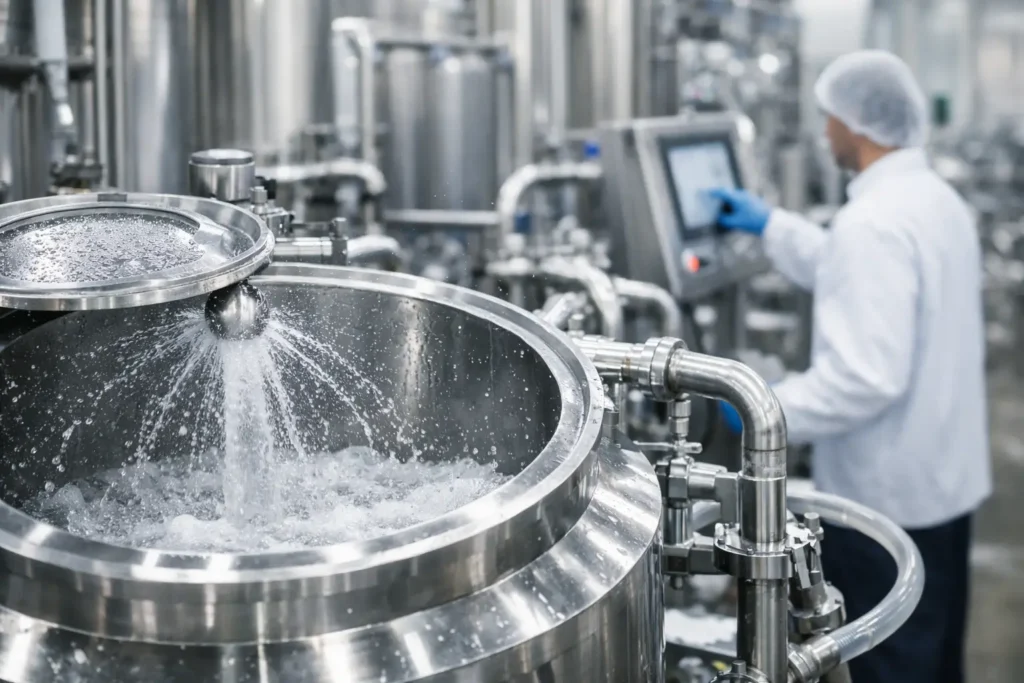
CIP is often discussed as if it begins and ends with a skid containing tanks, pumps, heaters, and dosing equipment. That skid matters, but it is only the cleaning supply source. Integration determines whether cleaning solution reaches every product-contact surface at the required temperature, concentration, velocity, and duration, then drains completely without carrying contaminants into the next batch.
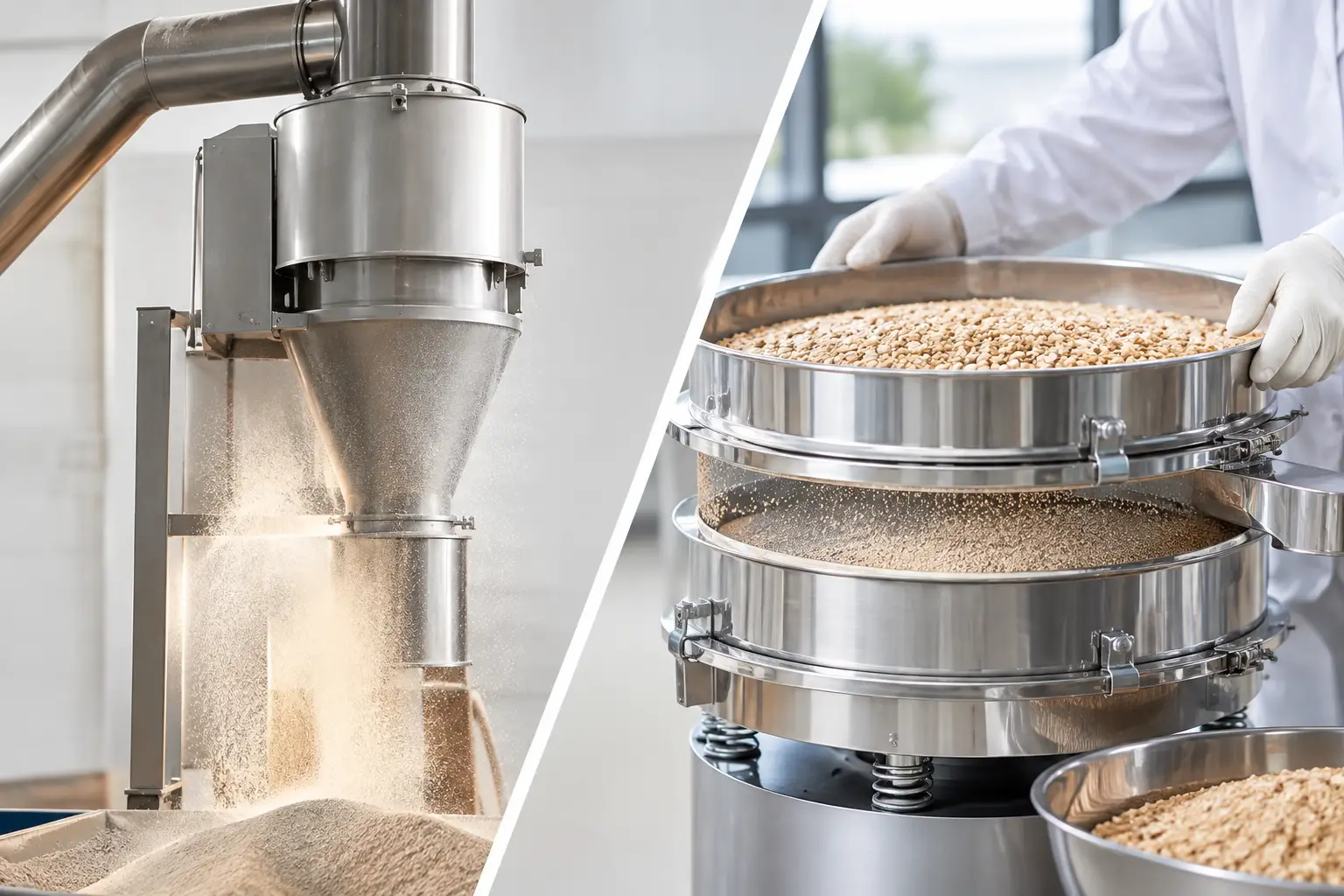
This requires coordination across the full process train: receiving and storage, weighing and dosing, conveying, mixing, milling, emulsification, thermal processing, transfer, filling, and packaging interfaces. Each stage introduces different cleaning demands. A high-shear mixer may need targeted spray coverage and controlled return flow. A pneumatic conveying line may require a dry-cleaning strategy, dedicated cleanout provisions, or a wet-cleaning sequence designed around moisture management. A viscous paste line may need higher flow, longer contact time, heated circuits, or pigging before the CIP cycle begins.
The integration point is especially critical where equipment from multiple suppliers meets. A vessel may be cleanable in isolation, while the common transfer header, valve matrix, flexible hose station, or filler connection is not. One manufacturer. One engineering standard. One point of accountability reduces the risk of these gaps being discovered during commissioning or, worse, after production begins.
Start With the Residue, Not the CIP Skid
Cleaning performance depends on the material left behind. Sugar solutions, protein films, fat-based products, fine powders, pigments, adhesive polymers, active ingredients, and abrasive mineral slurries do not respond to the same cleaning approach. The process team must understand what adheres to surfaces, what dries or hardens during downtime, what reacts with cleaning chemistry, and what can be removed mechanically before wet cleaning starts.
Material behavior also affects equipment selection and line geometry. High-viscosity products can create hold-up in piping, pumps, and valve bodies. Hygroscopic powders can form deposits when exposed to humidity or residual rinse water. Heat-sensitive ingredients may require a cleaning sequence that avoids prolonged high-temperature exposure to seals, gaskets, or sensitive downstream equipment. Where cross-contamination risk is high, dedicated circuits or physical segregation may be more practical than designing a highly complex shared CIP system.
This is where a generic design can become expensive. Oversizing the CIP skid does not correct poor drainability, inaccessible internal features, undersized return piping, or valve arrangements that permit cross-flow. Conversely, an aggressively specified cleaning program can increase water, energy, chemical, and wastewater treatment costs without improving cleaning assurance. The objective is repeatable cleaning at the lowest practical operating burden, not maximum force everywhere.
Design the Process Line for Cleanability
Cleanability should be evaluated while the process layout is still flexible. Once equipment elevations, pipe routes, access platforms, and utilities are fixed, correcting drainage and coverage issues can require major rework.
Flow Paths, Drainability, and Dead Legs
Every product and CIP path needs a defined route. Piping should drain toward intended low points, avoid unintended traps, and use appropriate slopes. Dead legs, branches, instrument connections, sample ports, and valve cavities require particular attention because they can receive insufficient circulation or retain residue after a cycle.
The required standard varies by application. A pharmaceutical process may demand highly controlled valve manifolds, documented surface finishes, and strict drainability criteria. A food process may place stronger emphasis on allergen segregation and rapid changeovers. Specialty chemical operations may prioritize compatibility with solvents, caustics, acids, or hazardous cleaning effluent. The design cannot be copied from one industry to another without reviewing the actual process risk.
Equipment Geometry and Spray Coverage
Tank dimensions, internal agitators, baffles, probes, coil assemblies, manways, filters, and discharge valves all influence cleaning coverage. Static spray devices may be suitable for some low-soil applications, while rotating spray devices or more intensive circulation may be needed for tenacious residues. Coverage studies should consider the equipment in its installed orientation, including shadow areas created by internals.
A similar review applies to mills, blenders, extruders, fillers, and conveying components. Some equipment can be fully cleaned in place; some is better served by a hybrid approach that combines automated flushing with scheduled manual inspection or disassembly. Forcing every component into a fully automated CIP philosophy may add complexity without delivering a meaningful operational benefit.
Utility and Return-System Capacity
The supply side receives much of the attention, but return capacity is equally important. Return piping, recovery tanks, drains, and wastewater systems must handle the expected flow and temperature without restricting the circuit. Inadequate return design can reduce cleaning velocity, create flooding, distort conductivity readings, and extend cycle duration.
Utilities should be sized for the actual duty cycle, including peak hot-water demand, steam or electric heating requirements, compressed air for valve actuation, and chilled-water needs where cooling or final rinsing is required. Production schedules matter here. A plant cleaning several process trains at the end of each shift may need a different CIP architecture than a facility running one long campaign with occasional changeovers.
Controls Turn Cleaning Into a Repeatable Process
Manual cleaning instructions depend heavily on operator consistency. Automated CIP controls convert the intended sequence into managed recipes with defined setpoints, permissives, alarms, and records. That does not eliminate the need for trained operators, but it reduces variation in the work that determines product release and line readiness.
A well-integrated control strategy verifies the conditions that matter: correct flow, supply and return temperature, chemical concentration, conductivity, pressure, time at condition, valve position, and tank level. It should prevent a cleaning cycle from starting if a required route is not established and flag deviations that could invalidate the result. For regulated manufacturing, electronic batch records and audit trails may be necessary. For less regulated plants, the same data can still identify recurring losses in water use, heating time, or changeover duration.
Recipe management should reflect real operating modes. A short rinse after a compatible product may be appropriate in one situation, while a validated full wash, intermediate rinse, sanitization, and final rinse is required before another product family. The control platform must make those distinctions clear and protect against selection errors. It also needs to communicate with upstream and downstream equipment so no product is introduced, discharged, or packaged while a connected circuit is in cleaning mode.
Validation and Commissioning Cannot Be Deferred
CIP performance should be proven against defined acceptance criteria before the line enters routine production. The appropriate level of qualification depends on the industry and risk profile, but the principle is consistent: demonstrate that the process reaches the intended conditions and removes the identified soils from the identified surfaces.
Commissioning should include water trials, flow and pressure verification, valve-matrix testing, drainability checks, heating performance, instrument calibration, and control interlock testing. Cleaning trials should challenge difficult areas, not only easily cleaned tank walls. Where applicable, teams may use rinse testing, swab testing, microbiological testing, residual product analysis, or other methods aligned with site procedures and regulatory expectations.
Maintainability deserves equal attention. Pumps, seals, instruments, spray devices, valves, and filters will require service. If technicians cannot safely inspect or replace them, cleaning reliability will decline over time. Access, spare-parts strategy, documentation, and preventive maintenance plans belong in the integration scope from the beginning.
A CIP System Should Support Production, Not Interrupt It
The strongest clean in place integration programs treat cleaning as a production function with measurable performance. They track cycle duration, water and chemical use, failed-cycle causes, downtime between campaigns, and repeat contamination events. Those metrics reveal whether the system is supporting capacity or becoming a hidden constraint.
For an expansion, new process line, or equipment replacement project, the most useful question is not simply, “What CIP skid do we need?” Ask which materials must be removed, which routes will be shared, how often the product changes, what evidence quality requires, and where future capacity will be added. When those answers guide the engineering work, the cleaning system becomes a controlled part of the manufacturing process rather than a late-stage compromise.