A production line can meet its throughput target and still underperform. A feeder may drift by a fraction of a percent, a powder may bridge in a hopper, or a mixer may receive ingredients in the wrong sequence. The result is often hidden until quality testing, packaging, or customer complaints expose it. Industrial process automation addresses this gap by controlling not only machine movement, but the material conditions and decisions that determine finished-product consistency.
For manufacturers processing powders, granules, liquids, pastes, slurries, or high-viscosity materials, automation is not a standalone controls purchase. It is the operating framework that connects receiving, storage, weighing, transfer, processing, inspection, and packaging into a controlled production system. When it is engineered around the material and the process objective, automation reduces variation without creating an inflexible line that operators cannot run or maintain.
Industrial Process Automation Starts With the Process
The most effective automation projects begin before a controls platform or hardware specification is selected. They begin with the material. Bulk density, flowability, particle-size distribution, moisture content, temperature sensitivity, abrasiveness, and tendency to segregate all affect how a material should be stored, conveyed, weighed, mixed, and verified.
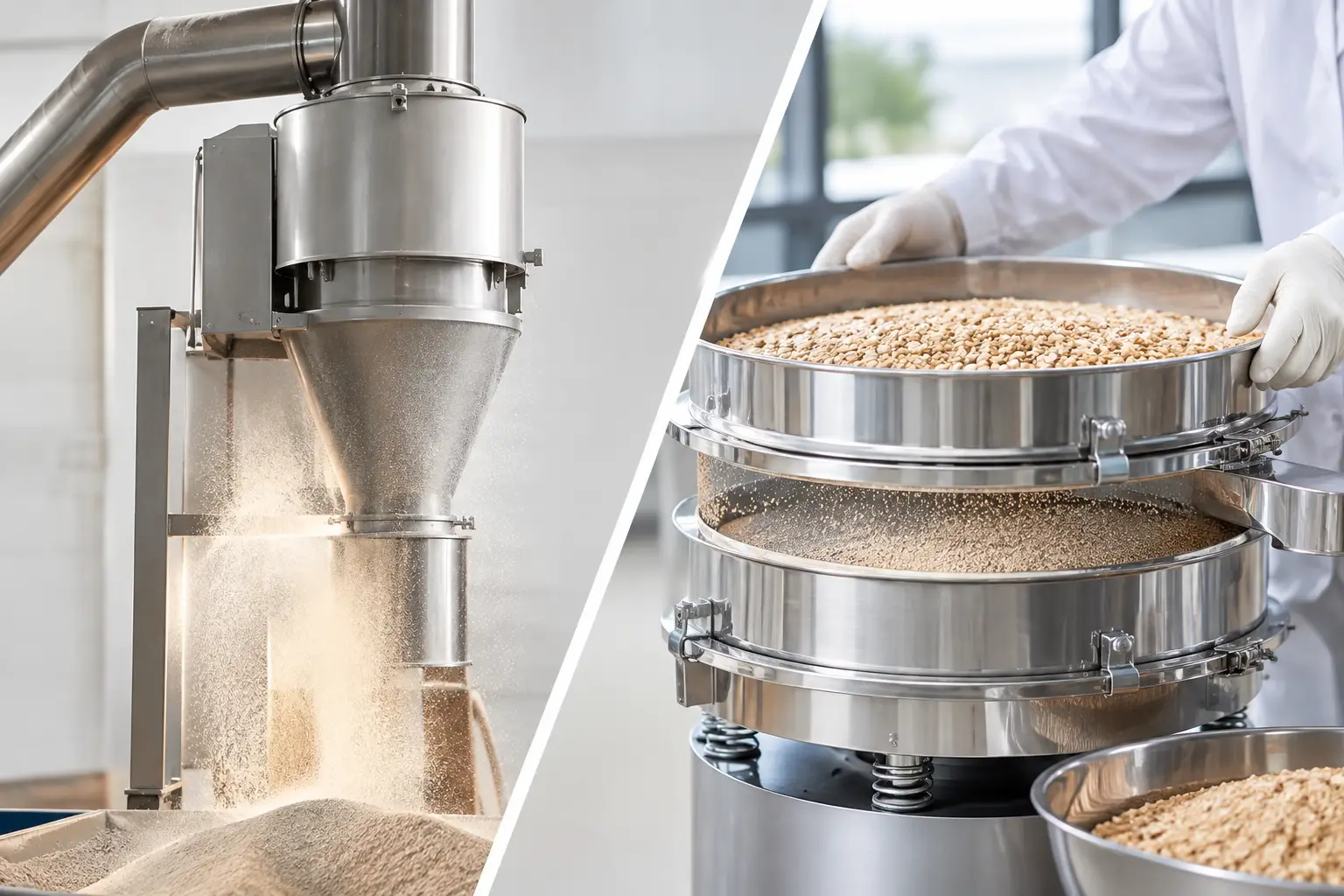
Consider a batch system for a nutritional powder. Accurate loss-in-weight feeders alone do not guarantee a compliant batch. The controls strategy must account for refill cycles, feeder calibration, dust collection behavior, ingredient lot traceability, material discharge confirmation, mixing time, and the order in which minor and major ingredients enter the vessel. If a cohesive ingredient forms agglomerates or a friable ingredient degrades during transfer, the automation sequence must work with the equipment design to manage that risk.
The same principle applies to liquid and high-viscosity processing. A recipe may require staged additions, controlled shear, temperature limits, vacuum deaeration, and a defined hold period before filling. Automating valves without confirming line clearance, actual flow, vessel level, and process temperature can simply automate inconsistency faster.
That is why a useful automation specification defines the production outcome first: target rate, acceptable tolerance, product-quality requirements, cleaning expectations, traceability needs, and operating constraints. Equipment selection and controls design then follow from those requirements.
Where Automation Creates Measurable Control
Automation delivers value when it removes avoidable sources of variation and gives operations teams evidence that each batch or continuous run stayed within defined limits. The highest-impact opportunities are usually found at the handoffs between unit operations, where material behavior and operator decisions intersect.
Automated weighing and dosing improve repeatability by managing ingredient identity, setpoint control, refill logic, and tolerance checks. The system can prevent a batch from advancing when an ingredient is out of tolerance, missing, or selected from an unauthorized source. For regulated applications, it can also capture the records required to demonstrate what was added, when, and by whom.
In material transfer, automation coordinates conveying routes, source and destination availability, dust collection, air supply, and level control. This matters because a transfer failure can affect more than production rate. An overfilled receiver, an empty feeder, or an unconfirmed diversion path can compromise batch integrity, increase cleanup requirements, and create avoidable safety exposure.
Within mixing, milling, homogenization, extrusion, drying, and thermal treatment, controls enforce repeatable process conditions. They manage time, speed, temperature, pressure, vacuum level, feed rate, and interlocks based on the specific technology. The objective is not to eliminate operator judgment. It is to ensure that critical parameters cannot be missed, altered without authorization, or left undocumented.
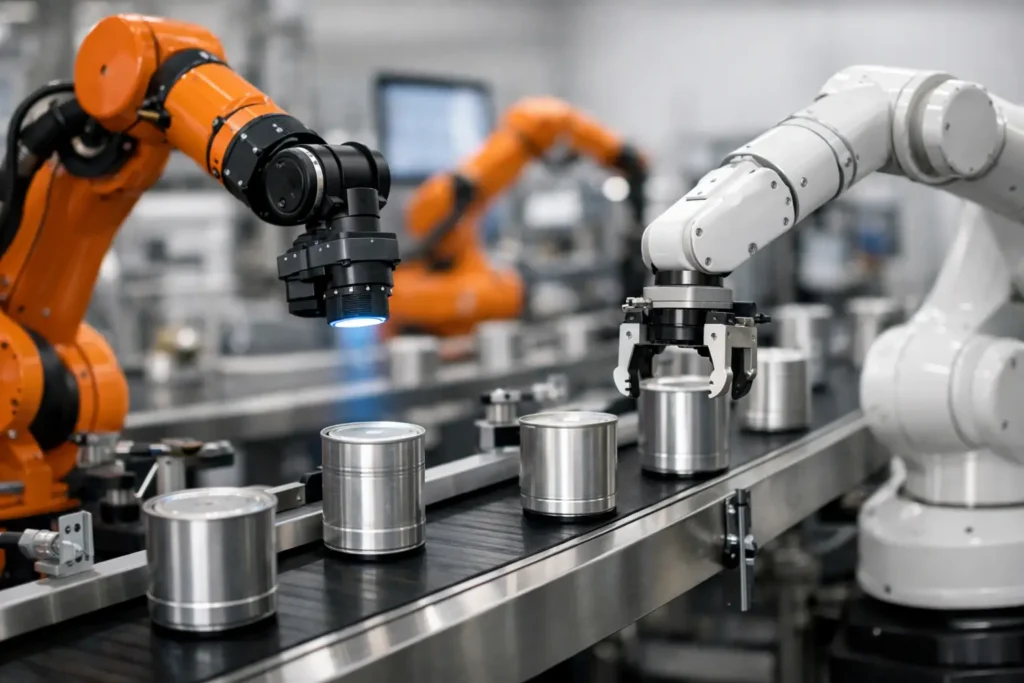
At the end of the line, automation can connect filling, checkweighing, inspection, labeling, and case handling to upstream batch information. This reduces the risk that a correctly produced product receives the wrong label, fill weight, or lot record. It also makes a deviation easier to contain because the affected material, packaging window, and downstream inventory can be identified quickly.
A Controls Architecture Must Fit the Plant
A well-designed system separates the functions that require fast, deterministic machine control from the functions that manage recipes, reporting, and enterprise information. That distinction is particularly important in plants with a mix of legacy equipment, new processing assets, and existing plant standards.
At the equipment level, programmable logic controllers, drives, instruments, safety devices, and local operator interfaces control the physical process. At the supervisory level, recipe execution, batch records, alarm management, user access, and production reporting provide operational context. Plant systems may then exchange selected data with manufacturing execution, quality, warehouse, or enterprise platforms.
The integration should be deliberate. Sending every available signal to every system creates noise, maintenance burden, and cybersecurity exposure. Sending too little information leaves supervisors and quality teams dependent on manual records. The right scope depends on the application. A high-volume food ingredient line may prioritize rate, yield, allergen control, and sanitation status. A pharmaceutical or specialty chemical process may require formal electronic records, audit trails, controlled access, and validated logic.
Alarm design deserves the same discipline. An alarm should identify an abnormal condition that requires action, not announce every ordinary transition. If operators receive constant nuisance alarms, critical warnings lose meaning. Clear priorities, actionable messages, and rationalized setpoints help operators resolve issues before they become lost production or quality deviations.
The Trade-Off: Flexibility Versus Control
Manufacturers often want a line that can run more products, accept more ingredients, and accommodate future growth. That flexibility is valuable, but it must be designed into the system rather than assumed. Every additional recipe, transfer route, vessel, and manual exception adds controls complexity.
A highly standardized line can be easier to validate, train, and maintain. A flexible multi-product line may require more sophisticated recipe management, physical segregation, cleaning verification, and permissions. Neither approach is inherently better. The correct choice depends on product mix, changeover frequency, compliance requirements, expected capacity growth, and the cost of a production error.
This is where application-specific engineering matters. A system designed for free-flowing mineral powders will not necessarily manage sticky food ingredients, heat-sensitive nutraceutical blends, abrasive battery materials, or solvent-based chemical formulations with the same equipment arrangement or control logic. The automation design must reflect actual operating behavior, including upset conditions, not only ideal process diagrams.
Designing for Operators, Maintenance, and Change
A controls project succeeds only if the people who operate and support it can use it confidently. Operator interfaces should present the current process state, next required action, active permissives, and relevant alarms without forcing users to search across multiple screens. Recipes should be structured so that authorized users can make controlled changes while preserving the approved process boundaries.
Maintenance teams need practical diagnostics. A failed level sensor, blocked filter, feeder deviation, or communication loss should be visible in a way that supports fast troubleshooting. Standardized devices, documented panel layouts, spare-parts strategy, and clear control narratives reduce the time required to return equipment to service.
Factory acceptance testing and site acceptance testing should verify more than basic motor starts and stops. The team should challenge recipes, interlocks, material routing, fault recovery, alarm response, reports, and operator permissions against real operating scenarios. For validated environments, testing also needs to demonstrate that the system performs according to defined user requirements and maintains the required records.
Commissioning is not the final engineering activity. Initial production data often reveals where material behavior differs from assumptions. A feeder may need revised refill settings. A pneumatic transfer may require a different sequence to protect particle integrity. A mixing cycle may need adjustment once full-scale heat generation is observed. A project structure that keeps process, mechanical, electrical, and controls disciplines aligned makes these refinements faster and more controlled.
Build Automation Around Accountability
Industrial process automation is most valuable when a manufacturer can trace a quality outcome back to a controlled process, rather than a collection of disconnected machines and manual workarounds. That requires coordinated responsibility for equipment compatibility, process logic, safety, data, and startup performance.
Proc-X approaches automation as part of the complete processing system, from ingredient handling and dosing through material transformation, filling, and end-of-line integration. One manufacturer. One engineering standard. One point of accountability.
The next productive step is not to ask which controls platform to buy. It is to identify where variation enters the process, what evidence is needed to control it, and how the production line must perform when materials, schedules, and operating conditions change.