A production line rarely fails because one machine cannot perform its assigned task. It fails at the handoffs: a feeder that cannot maintain a stable supply to the mixer, a transfer system that changes particle-size distribution, controls that cannot distinguish a normal delay from a process upset, or packaging equipment that limits the entire line’s output. The best practices for line integration begin by treating the line as one operating system, not a sequence of equipment purchases.
For manufacturers processing powders, granules, liquids, pastes, slurries, or high-viscosity materials, that distinction is consequential. Line integration affects product consistency, throughput, sanitation, operator safety, traceability, maintenance access, and the ability to expand capacity later. The engineering decisions made before equipment is released for fabrication usually determine whether a line becomes a controlled production asset or a collection of compromises.
Start With the Process, Not the Equipment List
A line should be defined by its required process outcome: what enters the system, what transformations occur, and what product condition must exist at the discharge point. Equipment selection follows that definition. Starting with a preferred mixer, mill, conveyor, or filler may be reasonable when a proven asset must remain in service, but it should not replace process design.
Establish a design basis that specifies the target production rate, batch size or continuous rate, operating schedule, required changeover frequency, yield expectations, and finished-product specifications. Define normal operating conditions as well as credible extremes. A line that performs only with ideal raw materials, a single recipe, and uninterrupted operator attention is not production-ready.
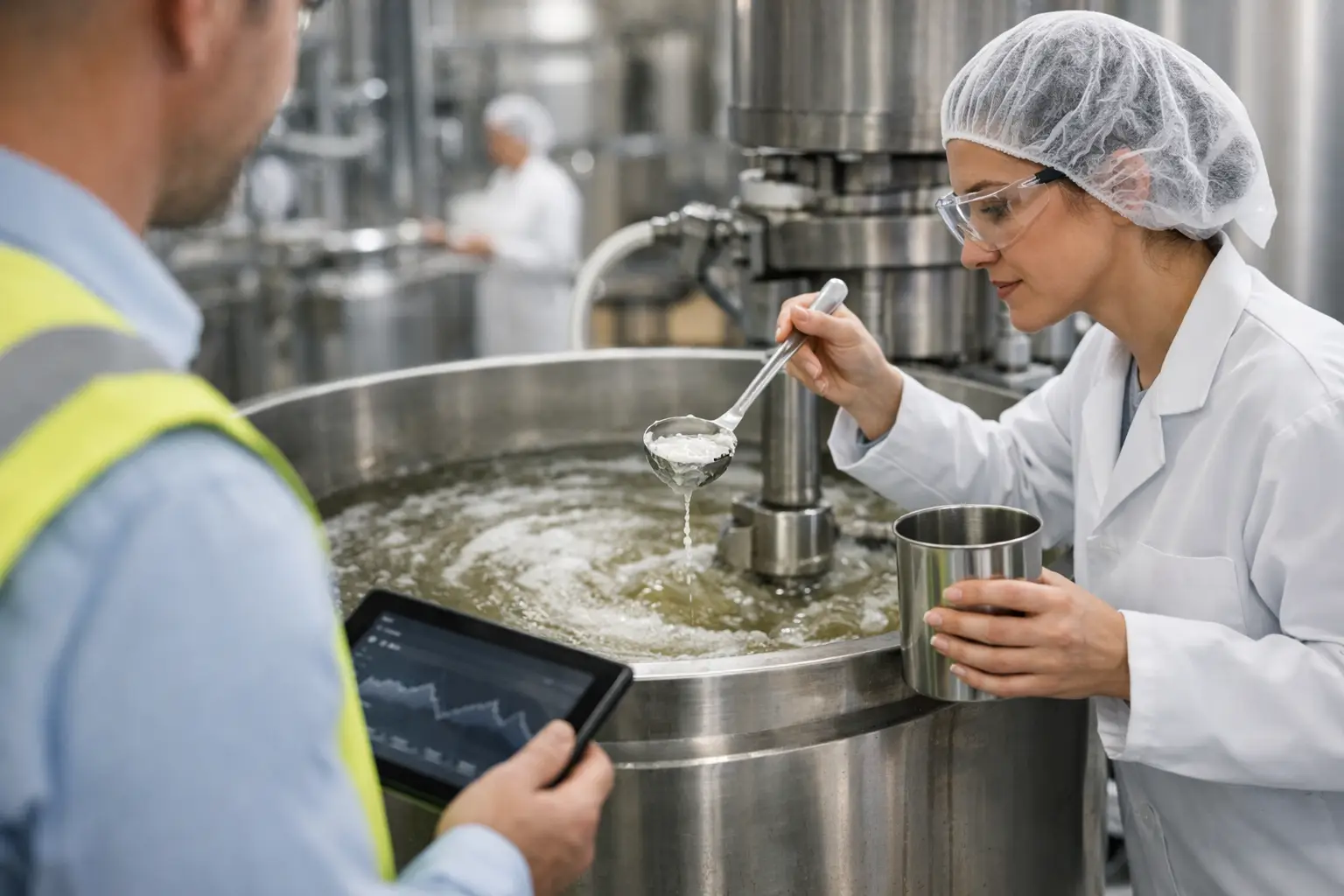
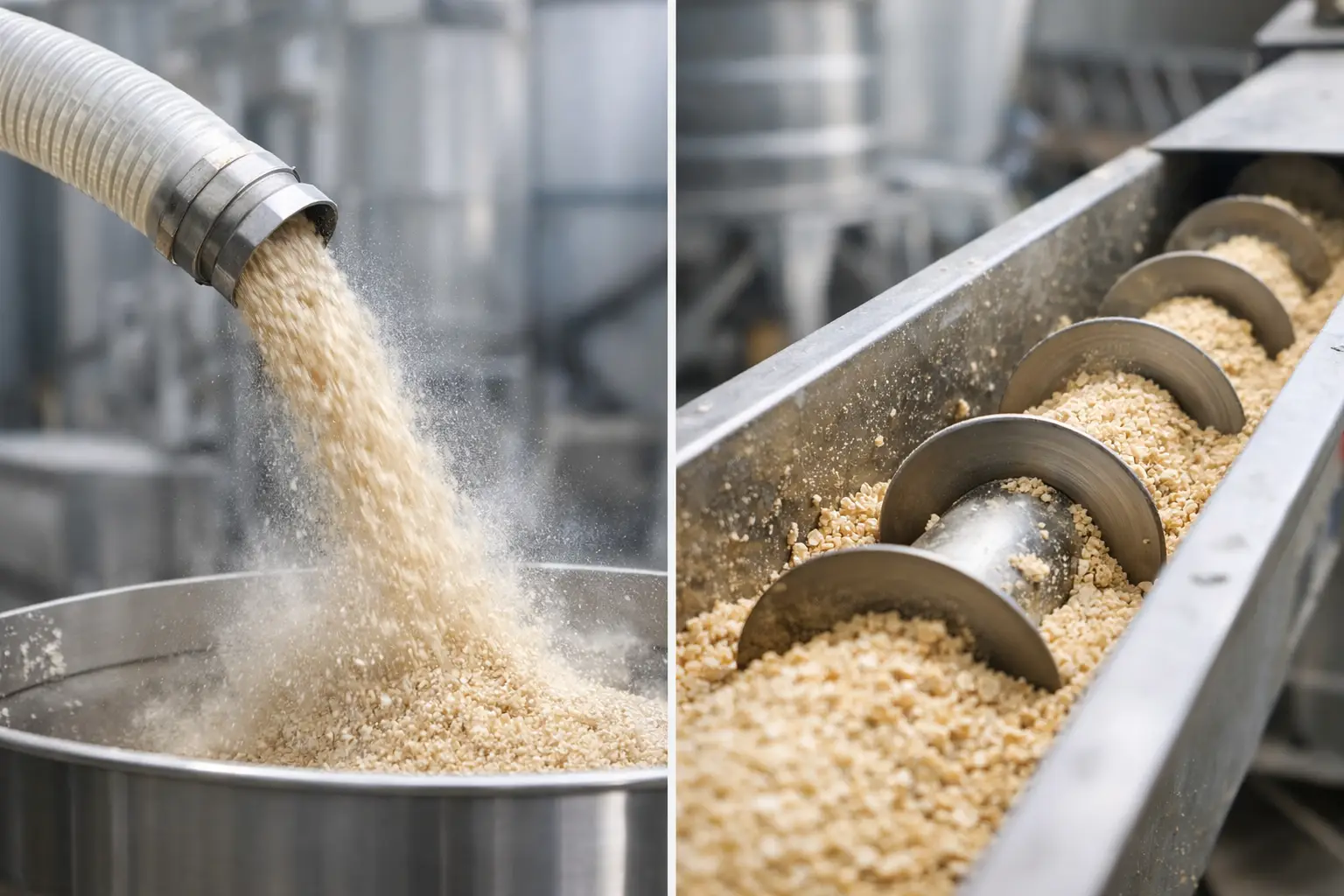
Material characterization belongs at the center of this work. Bulk density, particle-size distribution, moisture, temperature, flowability, cohesiveness, abrasiveness, friability, electrostatic behavior, and heat sensitivity can all change the appropriate equipment configuration. A powder that flows acceptably from a supersack may bridge in a smaller day bin. A pneumatic transfer method that protects one granular product may create fines or segregation in another. The line must be engineered around actual material behavior, preferably confirmed through representative testing.
Define the Bottleneck Before Designing Capacity
Nameplate capacities do not add up to line capacity. A 2,000-pound-per-hour mill feeding a 2,000-pound-per-hour blender does not guarantee a 2,000-pound-per-hour line. Equipment availability, fill and discharge times, cleaning intervals, buffer capacity, material transfer rates, inspection steps, and packaging cycle times all affect the realized output.
Develop a line balance that tracks material through every stage, including accumulation and dwell time. Identify the true constraint under expected operating conditions. In batch processes, this may be the longest cycle rather than the machine with the lowest stated rate. In continuous processes, it may be a feeder’s turndown range, a dryer’s residence-time requirement, or downstream packaging performance.
Designing around the bottleneck does not always mean buying the largest machine. Sometimes the best decision is to add controlled buffering, parallelize a noncritical operation, or reduce avoidable downtime through better cleanout and access. The right choice depends on the product, the production schedule, and the cost of lost output.
Size Buffers for Control, Not Convenience
Intermediate storage can decouple operations and prevent small disturbances from stopping the line. It can also create inventory exposure, segregation, product aging, or cleaning burden. A buffer hopper, surge bin, or holding tank should have a defined purpose: absorbing a packaging interruption, maintaining a continuous feed, allowing quality release, or separating incompatible cycle times.
The buffer’s geometry and discharge design matter as much as its volume. Mass-flow behavior may be necessary for cohesive powders or when first-in, first-out inventory control is required. For free-flowing materials, a simpler configuration may be sufficient. Avoid treating surge capacity as a substitute for unstable upstream processing.
Engineer the Interfaces Between Unit Operations
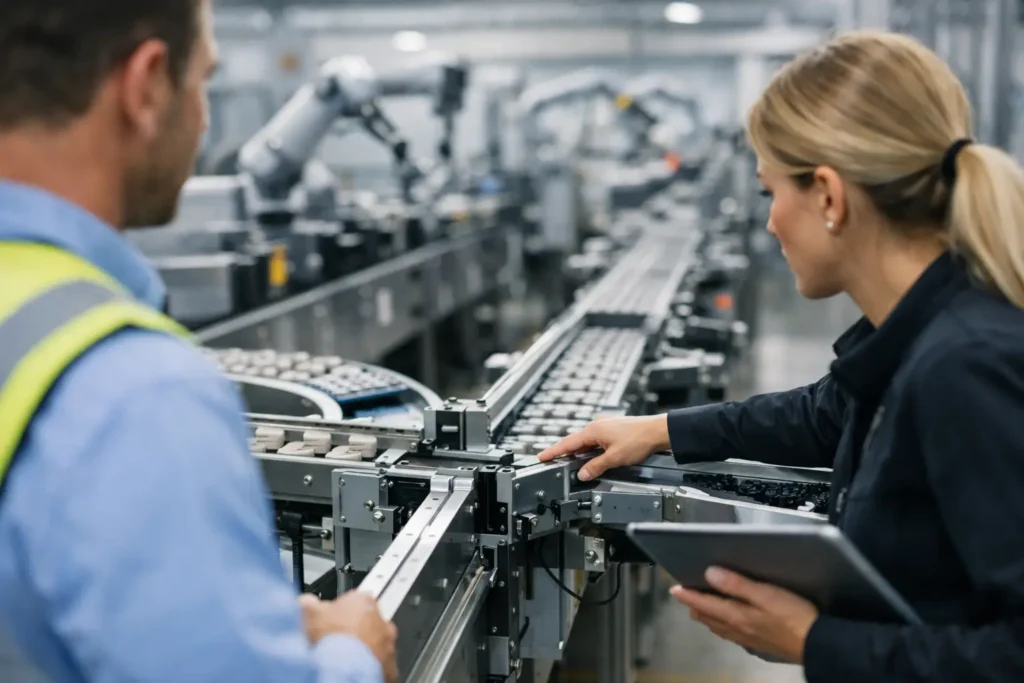
The most valuable line integration work often occurs in the interfaces. These include mechanical connections, transfer paths, utility requirements, control signals, access platforms, containment boundaries, and cleaning methods. Each interface should have a documented owner and an agreed design standard.
Mechanical compatibility extends beyond flange sizes. Confirm elevations, support loads, vibration isolation, thermal expansion, clearances for maintenance, and the removal path for wear parts. A mill may fit below a hopper on a layout drawing yet be impossible to service once ductwork, guarding, and structural steel are installed.
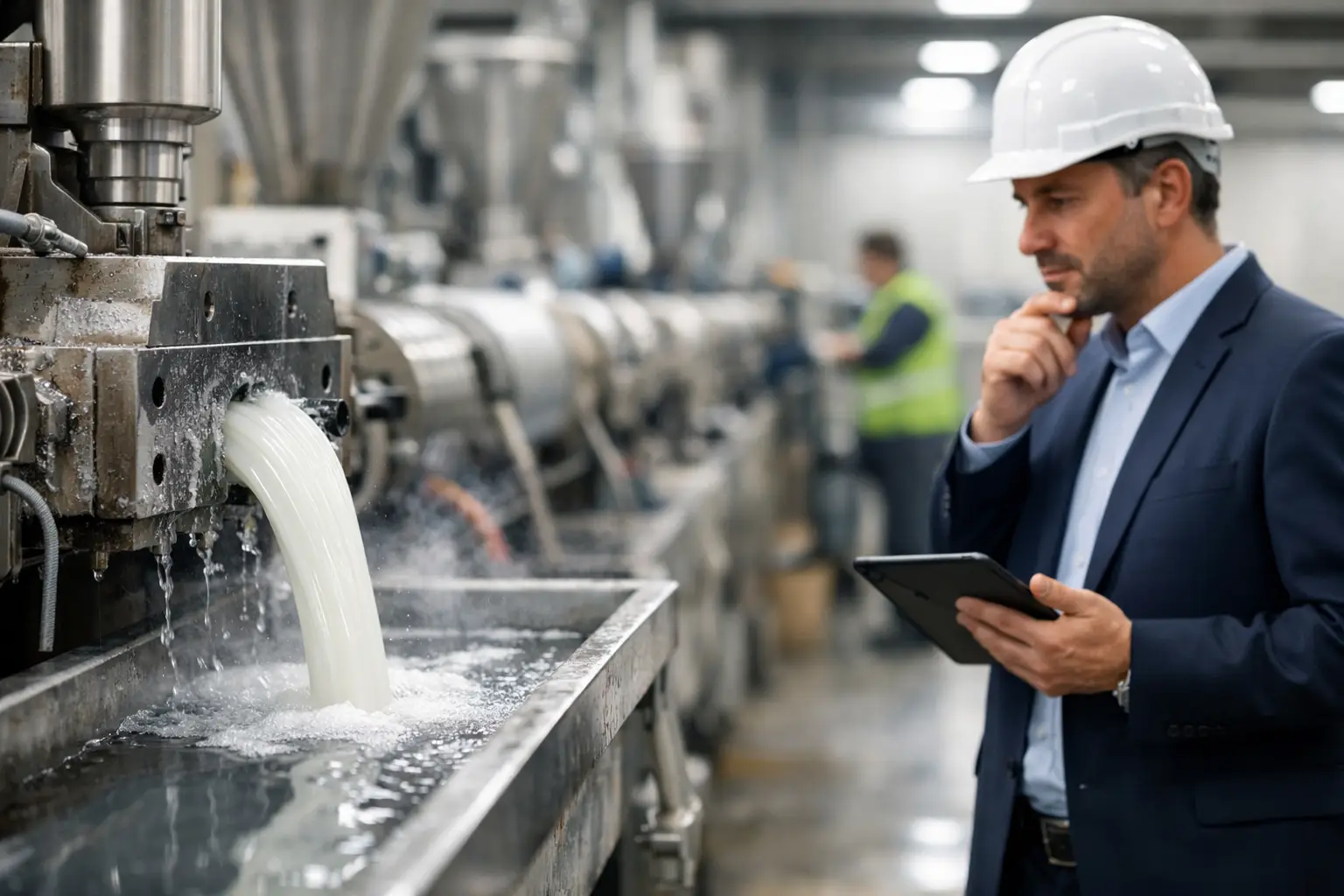
Transfer systems require equal discipline. Consider how material leaves the upstream machine, enters the transfer device, moves through the route, and discharges into the next operation. Elbows, valve selection, pipe routing, air velocity, and receiving-vessel venting can affect degradation, buildup, demixing, and throughput. For liquids and pastes, line diameter, pump selection, dead legs, shear exposure, temperature control, and clean-in-place coverage must align with the formulation and sanitation strategy.
Build Controls Around Operating Decisions
Controls integration should be designed from the operator’s decisions and the process risks, not from a list of input-output points. A unified control philosophy defines how the line starts, stops, pauses, recovers from faults, manages recipe changes, handles material lot tracking, and protects equipment during abnormal conditions.
At minimum, the automation architecture should establish clear equipment states, permissives, interlocks, alarms, and fault recovery sequences. Operators need to know whether a downstream stop is caused by a safety condition, a material shortage, a communication issue, or an equipment fault. Maintenance teams need diagnostic information that leads them to the source of the problem rather than a vague line-stop alarm.
Recipe and batch records deserve early attention in food, pharmaceutical, nutraceutical, chemical, and specialty-material operations. The system must preserve the intended sequence, ingredient identity, actual quantities, process parameters, exceptions, and user actions at the level required by the application. Where validation or regulated electronic records apply, controls design, documentation, and testing must be planned as one program.
Design for Manual Operation Without Creating Risk
Automated lines still require manual intervention for startup, cleaning, maintenance, sampling, and upset recovery. Those tasks should be intentional parts of the design. Provide safe access to sampling points, realistic locations for operator controls, and procedures that prevent accidental material addition, cross-contamination, or equipment damage.
Manual bypasses can be useful during commissioning or maintenance, but uncontrolled bypasses weaken both safety and product control. Define when they are allowed, who can enable them, how they are indicated, and how the line returns to its validated operating state.
Treat Safety, Containment, and Sanitation as Core Design Inputs
Safety and compliance cannot be bolted on after layout approval. Dust hazards, combustible-dust requirements, pressure relief, explosion isolation, chemical exposure, ergonomics, noise, machine guarding, and lockout access influence equipment arrangement from the beginning.
Containment requirements should be tied to the material hazard and the exposure pathway. The objective may be protecting personnel, preventing cross-contamination, controlling environmental emissions, or preserving valuable product. Effective containment often requires coordinated design across charging stations, transfer connections, dust collection, weighing, sampling, and cleaning activities.
For hygienic applications, specify the cleaning approach before selecting detailed equipment geometry. Dry cleaning, washdown, clean-in-place, and clean-out-of-place methods create different requirements for surface finish, drainage, accessibility, gasket design, and validation. Higher sanitary standards may increase capital cost and changeover time. They may also reduce long-term quality risk enough to justify the investment.
Validate Performance Through a Staged Commissioning Plan
Factory acceptance testing confirms that individual equipment and controls perform against an agreed scope. It does not prove that the installed line will meet production targets with real materials. Site acceptance testing, commissioning, and performance qualification should therefore be planned in stages.
Begin with mechanical completion and utility verification. Then test controls, safety functions, and dry operation. Introduce representative materials to confirm transfer behavior, feeding stability, process timing, yield, product quality, and cleanup performance. Use defined acceptance criteria rather than relying on a general impression that the line is running well.
Documenting deviations during startup is not administrative overhead. It identifies recurring design gaps, operator-training needs, spare-parts requirements, and changes needed before full-rate production. A disciplined closeout process converts commissioning lessons into a more reliable operating standard.
Maintain One Point of Accountability
Complex lines involve equipment suppliers, fabricators, electricians, controls specialists, contractors, and internal stakeholders. Without clear responsibility, interface problems are often discovered late and assigned to someone else. One coordinated engineering structure reduces that risk by managing the process design, equipment selection, layout, controls, testing, and documentation against the same performance objective.
Proc-X approaches integrated processing systems with that principle in mind: one manufacturer, one engineering standard, and one point of accountability across the line. The practical value is not fewer conversations. It is faster resolution when material behavior, equipment performance, controls logic, and site conditions intersect.
The strongest integrated lines are not those with the most automation or the largest equipment footprint. They are the lines whose material flow, operating procedures, controls, safety measures, and maintenance needs were designed to work together under real production conditions. That is where dependable output is built.