A line can hit its average output target and still underperform if throughput drifts minute to minute. That is the real issue behind what affects extrusion throughput consistency: not just how much material an extruder can process, but how predictably it can do it under normal operating conditions.
For manufacturers running regulated, high-value, or tightly specified products, inconsistent throughput is rarely an isolated extrusion problem. It usually shows up as a broader process control issue that reaches upstream into raw material preparation and downstream into cooling, cutting, drying, conveying, and packaging. When output fluctuates, residence time changes, melt pressure moves, product dimensions drift, and operators start compensating manually. Once that pattern begins, line stability becomes difficult to recover.
What affects extrusion throughput consistency most
Throughput consistency is controlled by how steadily material enters the process, how predictably energy is transferred through the extruder, and how well the full line responds to normal variation. In practice, the most influential variables are feed uniformity, bulk density variation, material temperature and moisture, screw and barrel configuration, drive stability, die resistance, and the coordination of controls across the integrated system.
That list matters because the extruder does not create consistency on its own. It converts whatever the upstream process delivers. If ingredient loading surges, particle size distribution widens, or refill timing causes feeder disturbances, the screw sees a different load. The result can be subtle at first – small changes in motor demand, pressure, or amperage – but those changes often become visible in product quality before they are recognized as throughput instability.
Feed system stability sets the baseline
In most operations, the feed system establishes the first limit on consistent output. Loss-in-weight feeders, volumetric feeders, surge hoppers, refill design, and material flow behavior all influence how evenly mass enters the extruder. A well-designed extruder cannot compensate for poor feeding over the long term.
This is especially true with materials that bridge, rathole, segregate, or flood inconsistently. Powders with poor flowability, blends with large differences in particle size or density, and hygroscopic materials can all create cyclic feed behavior. Operators may see output swings that look like extruder instability when the root cause is actually at the hopper or feeder discharge.
Refill events are another frequent source of inconsistency. If refill sequencing is poorly controlled, the feeder may experience temporary compaction changes, head pressure variation, or interruptions that create a repeating throughput pattern. In integrated production systems, feeder selection, refill control logic, hopper geometry, and material conditioning should be engineered as part of the line, not treated as separate decisions.
Raw material variability matters more than many teams expect
Even when feeder performance is acceptable, the incoming material itself may not be consistent enough to support stable throughput. Bulk density shifts, moisture variation, particle size changes, fat or oil content, regrind percentage, and ingredient temperature all affect how the material fills the screw and responds to shear.
Two batches with the same nominal formulation can process very differently if one batch is warmer, finer, or slightly wetter. That difference changes screw fill, torque demand, and pressure generation. In food, chemicals, pharmaceuticals, and advanced materials, these variations can be amplified when multiple upstream unit operations are involved.
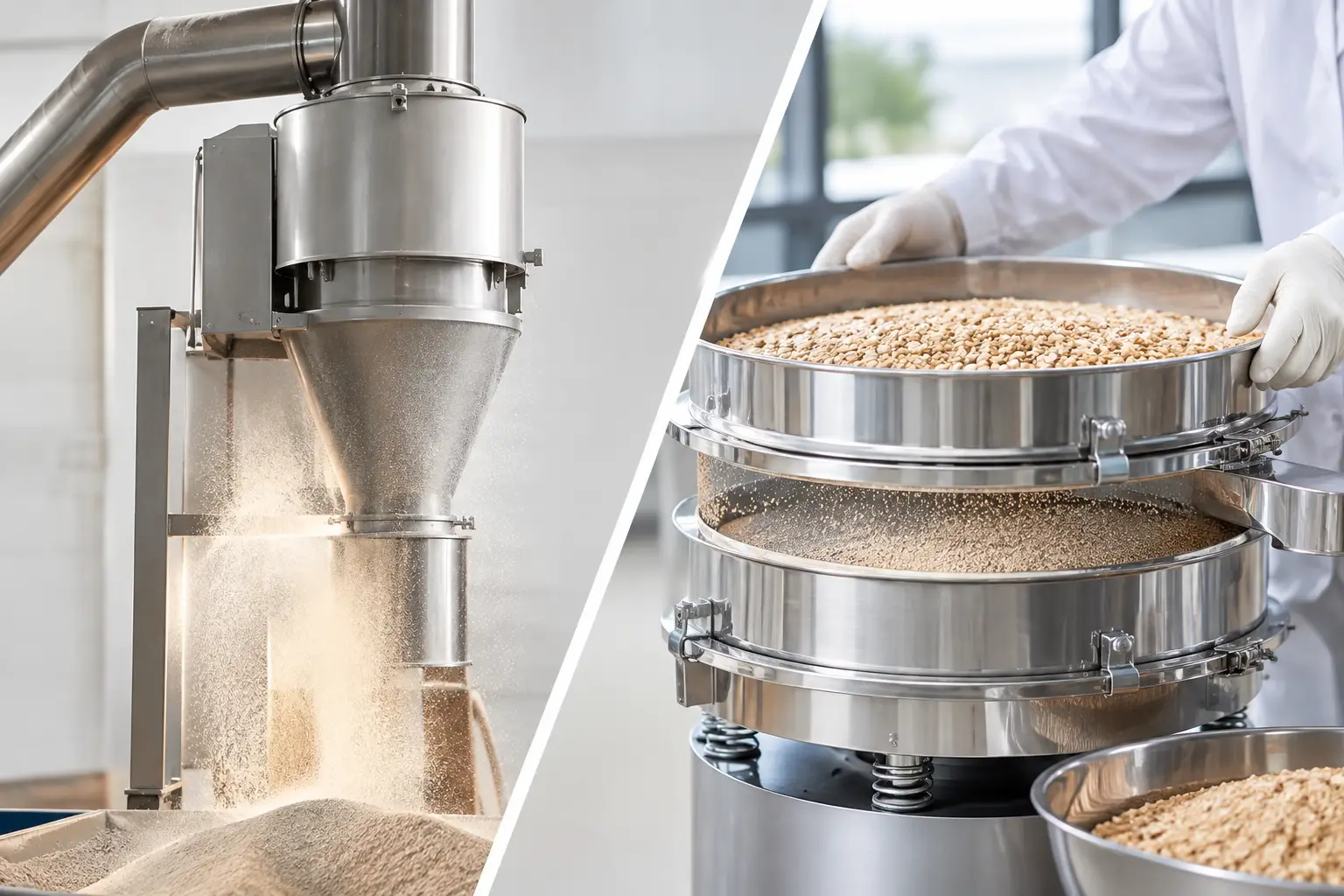
The practical point is simple: throughput consistency starts before extrusion. Raw material handling, storage conditions, milling, screening, and blending all influence the stability of the feed entering the barrel.
Screw design and barrel configuration determine process tolerance
Screw geometry has a direct impact on how sensitive an extruder is to normal variation. Channel depth, compression ratio, mixing section design, venting configuration, length-to-diameter ratio, and screw speed range all influence whether the machine runs with a wide stable window or a narrow one.
A screw designed for maximum output on a narrow material set may be less forgiving when feed conditions change. A more conservative design may produce lower peak throughput but better consistency across a broader operating range. That trade-off matters when manufacturers prioritize repeatability over headline capacity.
Barrel zoning also plays a role. If the process relies on a very specific thermal profile to maintain stable viscosity, minor disturbances can move the line out of its optimal range. By contrast, a screw and barrel design matched to the application can absorb normal variation with fewer operator interventions. This is one reason extrusion system design should be based on actual product and process behavior rather than equipment in isolation.
Thermal control affects what happens inside the barrel
Extrusion is a balance of mechanical energy and heat transfer. If barrel temperatures fluctuate, cooling response lags, or heating zones are poorly tuned, the material will not melt or condition at a consistent rate. That changes viscosity, pressure, and output stability.
Heat transfer issues are often misdiagnosed because the problem may not begin in the barrel heaters themselves. Inadequate coolant flow, fouled thermal surfaces, sensor placement errors, control loop tuning, or ambient conditions can all affect thermal consistency. Some materials are also highly sensitive to small temperature changes, especially where moisture, expansion, or devolatilization are involved.
The key issue is not just whether the extruder reaches setpoint. It is whether the system can hold a stable thermal condition as load changes. A line that looks stable at one production rate may become erratic after a recipe change or a modest increase in throughput because the thermal system no longer has sufficient control margin.
Pressure stability at the die is a downstream indicator
Die pressure is one of the clearest indicators of throughput consistency because it reflects the combined effect of feed rate, material condition, screw performance, and downstream resistance. If pressure trends up and down in a repeating pattern, the line is telling you something important.
Sometimes the cause is upstream feed instability. Sometimes it is die buildup, inconsistent temperature, worn screw elements, or a downstream puller or cutter influencing flow. In other cases, the issue comes from trying to run too close to the process limit. The line may achieve target output for short periods, but it cannot maintain that rate without pressure cycling.
Consistent throughput requires a process window with margin. If the system is engineered and operated at the edge of its capacity, minor disturbances will show up immediately in die pressure and product variation.
Controls architecture often separates stable lines from reactive ones
When teams ask what affects extrusion throughput consistency, controls should be part of the answer early, not late. Stable extrusion depends on how well feeders, drives, temperature zones, auxiliaries, and downstream equipment communicate and respond together.
Fragmented controls create fragmented behavior. If the feeder runs on one logic platform, the extruder drive on another, and downstream handling responds with delay or limited feedback, the line becomes operator-dependent. Manual corrections may keep production moving, but they also introduce variability.
Integrated controls architecture allows coordinated response. Feed rates can track line demand, alarms can identify the source of instability faster, and trend data can show whether throughput changes originate in feeding, thermal control, screw load, or downstream restriction. This is where a fully engineered line has a measurable advantage over a collection of individually selected machines.
Mechanical condition and maintenance discipline still matter
Even well-designed extrusion systems lose consistency when wear is ignored. Screw and barrel wear changes fill characteristics and pressure generation. Feeder screws wear. Seals leak. Load cells drift. Temperature sensors age. Gearboxes and drives can introduce subtle speed instability long before failure occurs.
These are not dramatic breakdown events. More often, they create a gradual reduction in process repeatability that operators work around until the line has effectively normalized inconsistency. Preventive maintenance, calibration, and condition monitoring protect throughput consistency because they preserve the assumptions built into the original process design.
Why upstream and downstream integration matters
Extruders do not operate in isolation, and neither does throughput. If blending is inconsistent, the extruder sees it. If drying or cooling capacity is undersized, operators may slow the line to protect product quality. If cutting, conveying, or packaging cannot absorb normal output variation, the extrusion process may be forced into stop-start behavior that destroys consistency.
This is where system accountability becomes operationally significant. A line built from disconnected equipment suppliers may function during startup, yet still carry hidden coordination problems that appear later as throughput instability. By contrast, when the full process is engineered as one system – from material handling through extrusion and packaging integration – line dynamics can be addressed at the design stage instead of after commissioning.
For manufacturers scaling production or modernizing legacy lines, that distinction matters. Throughput consistency is not just an extruder KPI. It is a system performance outcome shaped by equipment compatibility, controls integration, process development, and lifecycle support.
Improving throughput consistency without chasing one variable
The fastest way to misdiagnose extrusion instability is to focus on one setting at a time without looking at the line as a whole. Raising screw speed may recover short-term output while masking feed limitations. Increasing barrel temperatures may soften a pressure problem while creating product variation elsewhere. Restricting the die may stabilize shape while increasing energy load and wear.
A better approach is structured evaluation. Confirm actual mass flow stability at the feeder. Review material variability and refill events. Trend screw speed, motor load, barrel temperatures, melt pressure, and downstream rate changes together. Then assess whether the process window is inherently narrow because of screw design, die design, or system integration limits.
That is where experienced process engineering makes a practical difference. The goal is not simply to push more output. It is to build a line that produces at target rate with repeatable behavior, predictable quality, and enough operating margin to stay stable when real-world conditions shift.
Consistent throughput is usually the result of disciplined system design rather than operator correction. When the full production line is engineered to work as one coordinated process, consistency stops being a daily fight and starts becoming a built-in characteristic of the operation.