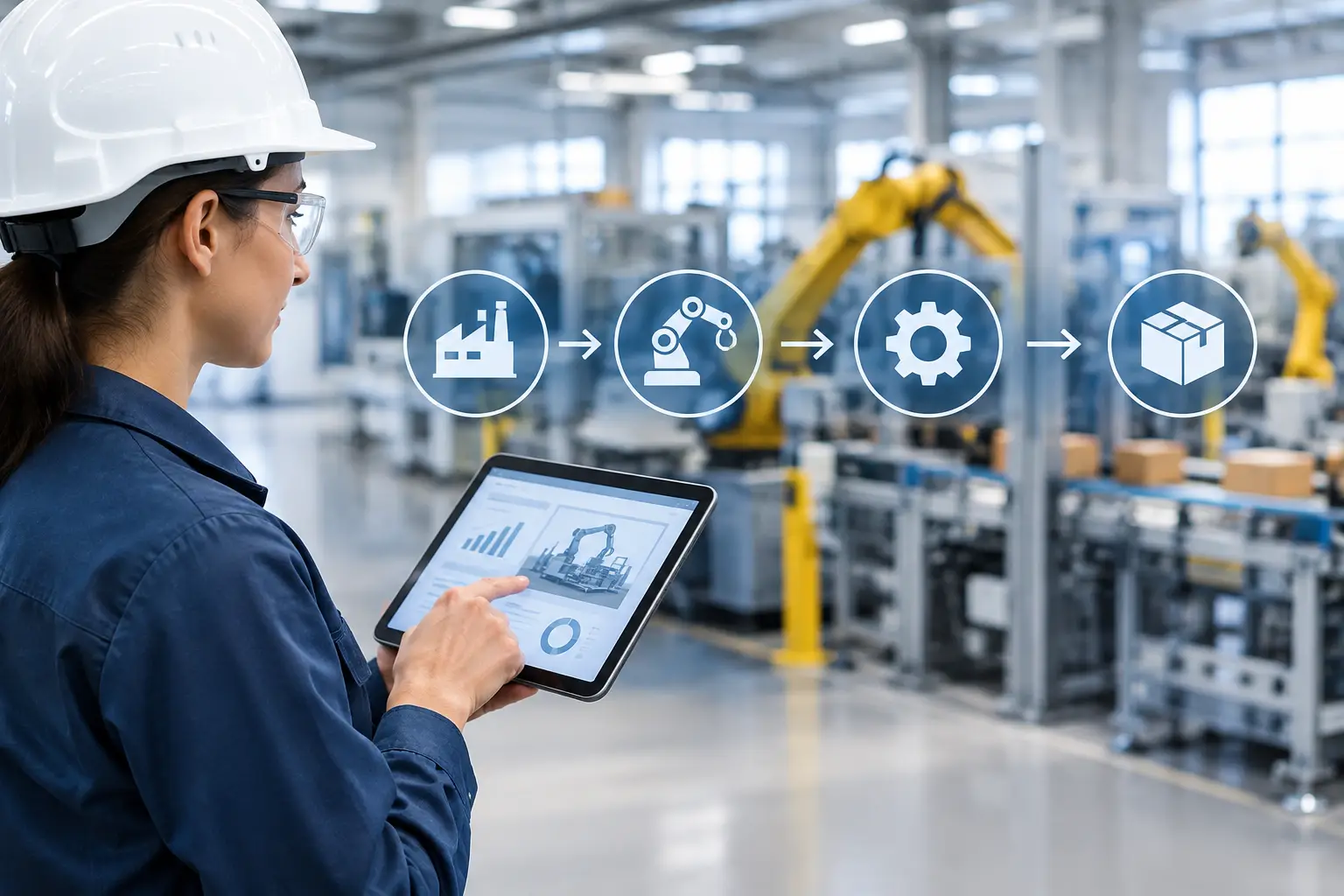
A production line rarely fails on paper. It fails at the handoff points – where one machine supplier stops, another starts, and no one owns the result. That is why the question of single source vs integrator matters so much in complex manufacturing environments.
On the surface, both models can appear similar. In both cases, a manufacturer may receive a complete line, coordinated installation, and a single project team during execution. But the underlying responsibility model is very different. For operations leaders, process engineers, and procurement teams, that difference shows up later in commissioning, performance stability, service response, controls compatibility, and the speed of solving problems when production is on the line.
Single source vs integrator: the real distinction
An integrator typically assembles a system from equipment built by multiple independent vendors. The integrator may manage layout, controls integration, and project coordination, but the core machinery often comes from separate manufacturers with separate design standards, software philosophies, support structures, and warranty terms.
A single-source manufacturer takes a different position. Instead of coordinating a group of disconnected vendors, it engineers and delivers the process system under one organization, one engineering standard, and one accountability structure. That usually means tighter alignment across material handling, size reduction, mixing, thermal processing, transfer systems, packaging interfaces, and controls architecture.
This is not just a commercial distinction. It affects how the line behaves as a system. In regulated and performance-driven environments, system behavior matters more than the nameplate of any individual machine.
Where integrators add value – and where the model can strain
A capable integrator can be the right fit in certain situations. If a manufacturer already has preferred machine suppliers, legacy platforms that must remain in place, or a highly customized process requiring niche equipment from multiple specialist OEMs, an integrator may provide the coordination needed to bring those elements together.
That flexibility is the model’s main advantage. It allows buyers to select best-fit components from different sources and package them into one project.
The trade-off is that integration risk does not disappear just because someone is coordinating the project. It is still present in the interfaces between machines, controls, utilities, data structures, and mechanical design assumptions. When upstream and downstream equipment were not developed under the same engineering discipline, even small mismatches can create larger production issues.
A feeder may deliver material variability that the mixer was not tuned to handle. A thermal system may operate within its own specification but still disrupt downstream packaging efficiency. A controls integrator may successfully connect the line, yet operators still face inconsistent alarms, uneven HMI logic, or fragmented diagnostics. None of these issues look major in a proposal package. They become major when throughput, quality, and startup schedules are under pressure.
Why single-source systems reduce operational risk
The strongest case for a single-source approach is not convenience. It is control.
When one manufacturer is responsible for the complete engineered system, the line is designed as an interdependent process platform rather than a collection of machines. Mechanical interfaces, controls architecture, product flow, automation logic, service access, and process performance can be aligned from the beginning.
That changes project execution in practical ways. Design reviews are more coherent because the equipment teams are not protecting separate scopes. Controls decisions are made with the full line in mind. Factory testing can evaluate system interaction rather than only isolated machine function. Commissioning moves faster because the handoff points are internal, not contractual boundaries between vendors.
Just as important, troubleshooting becomes clearer. If the line underperforms, there is no debate about whether the issue started in feeding, mixing, transfer, thermal treatment, or controls communication. One organization owns the diagnosis and the corrective path.
For manufacturers in food, nutraceuticals, pharmaceuticals, chemicals, advanced materials, and battery production, that clarity is not a nice extra. It can determine how quickly a facility reaches validated output and stable commercial operation.
Single source vs integrator in controls and automation
The controls layer is where many multi-vendor projects reveal their weaknesses.
An integrator can connect different machine packages into a functioning automation environment, but connected does not always mean coherent. Alarm structures, recipes, historian tags, batch logic, user access, and maintenance diagnostics may all behave differently across vendor platforms. Operators notice it immediately. Engineers notice it during every changeover, service event, and line optimization effort.
In a single-source system, controls architecture can be standardized across the process line. That consistency improves operator training, reduces commissioning friction, and simplifies future expansion. It also strengthens data integrity and process visibility, which matters when traceability, compliance, and performance monitoring are critical.
This is one of the least visible differences during procurement and one of the most important differences after startup.
Accountability is the deciding factor
Many capital projects are evaluated heavily on equipment price and initial scope coverage. Those are necessary factors, but they are not enough for a line that must perform under real production conditions.
The better question is simple: who owns the outcome?
In an integrator-led model, responsibility can become layered. The integrator may own overall coordination, but individual OEMs own machine design, software, service parts, and sometimes final performance interpretations. If a problem spans multiple assets, resolution may depend on cooperation across companies with different priorities and response timelines.
In a single-source model, accountability is structurally simpler. One manufacturer owns engineering coordination, equipment compatibility, controls alignment, commissioning support, and ongoing service responsibility. That does not guarantee perfection. Complex systems always involve tuning, adaptation, and process learning. But it does eliminate the most common source of delay in problem resolution: fragmented ownership.
For procurement teams, this also affects commercial clarity. Warranty coverage, spare parts planning, documentation standards, training, and aftermarket support are easier to manage when they come through one accountable source.
When a single-source partner is the better strategic fit
If a project involves multiple core process steps, demanding throughput targets, strict quality requirements, or future line expansion, a single-source partner is often the lower-risk choice. The more interdependent the process, the more valuable unified engineering becomes.
This is especially true when manufacturers are building a greenfield facility, replacing a patchwork line, or standardizing production across sites. In these cases, consistency matters as much as equipment capability. Engineering commonality, control standardization, and lifecycle support create long-term gains that are difficult to achieve in a multi-vendor structure.
It is also the stronger model when internal teams want fewer coordination burdens. Most manufacturers do not need another layer of vendor management. They need a partner that can assume full responsibility for system performance and support the line long after mechanical completion.
That is the practical advantage of a company built around total system responsibility, as Proc-X is. The value is not simply delivering more equipment under one name. The value is engineering the entire production platform to function as one process system from concept through lifecycle support.
The right choice depends on the complexity you need to control
Single source vs integrator is not a theoretical sourcing debate. It is a decision about how much interface risk your organization is prepared to carry.
If the line is simple, the preferred equipment stack is already fixed, and internal technical resources are strong enough to manage the gaps, an integrator may be appropriate. But when process steps are tightly linked, uptime carries high financial consequences, and production consistency is non-negotiable, unified responsibility tends to outperform coordinated responsibility.
The best manufacturing systems are not judged by how many vendors were involved. They are judged by how reliably they start, how consistently they run, and how quickly problems are solved when conditions change. That is where the sourcing model stops being a procurement detail and becomes an operational decision.