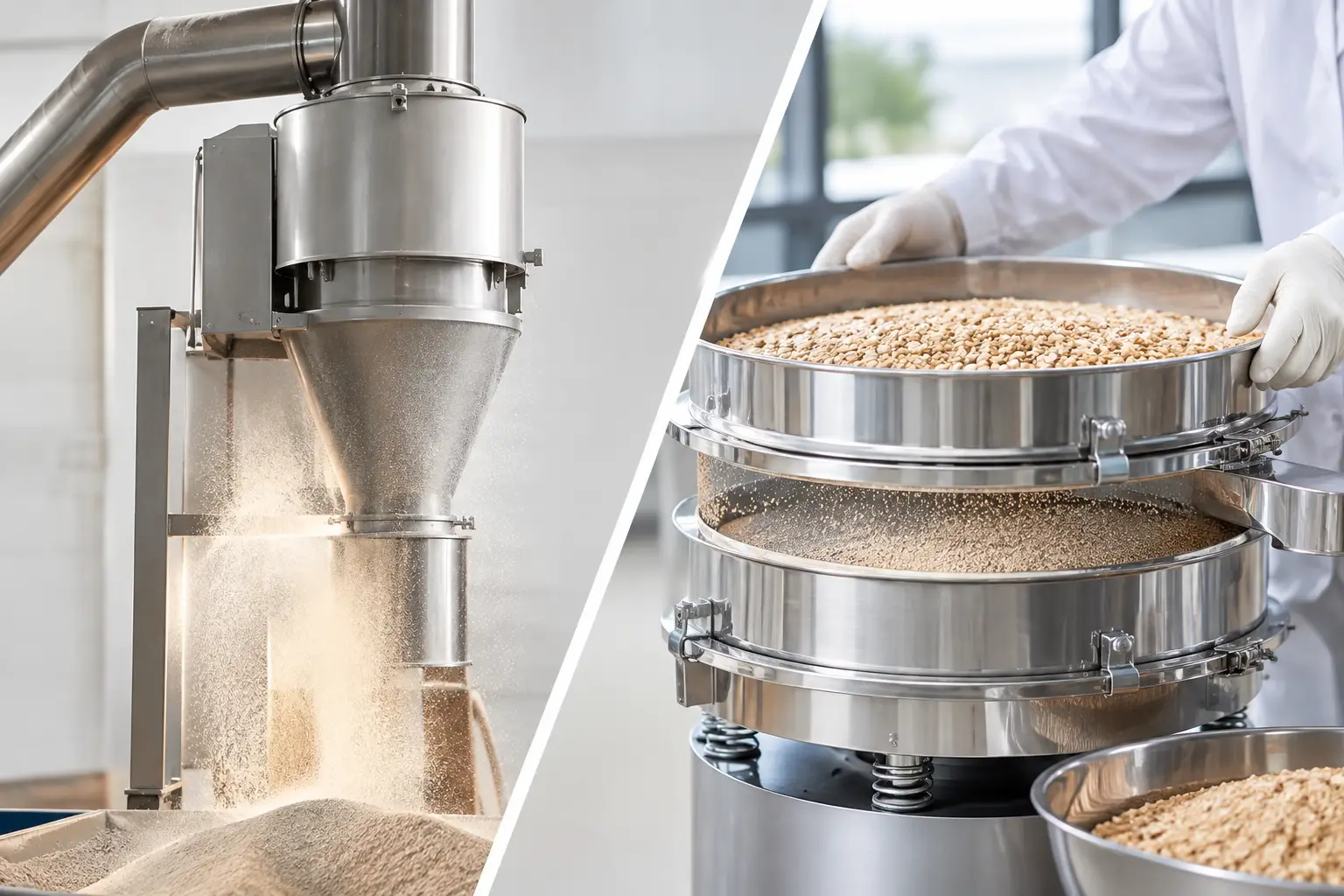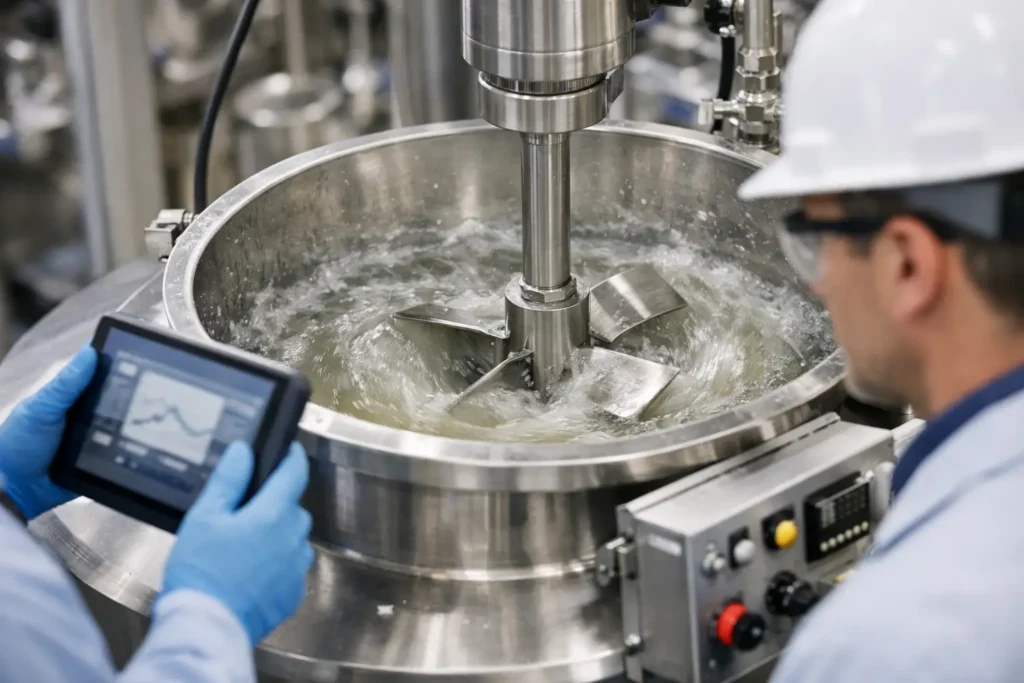
A blend that looks uniform at discharge can still fail in downstream processing. That is the operational reality behind most mixing problems. In industrial manufacturing, mixing techniques are not just about combining ingredients. They determine batch consistency, reaction performance, flow behavior, thermal response, cleanability, and whether the rest of the line operates as designed.
For process engineers and operations teams, the real question is not which mixer is best in general. It is which mixing approach delivers the required result for a specific material system, at the target throughput, under actual plant conditions. That distinction matters because the wrong mixing strategy rarely creates a single visible failure. More often, it shows up as variable density, poor dispersion, ingredient segregation, wet clumps, long cycle times, rework, or unstable extrusion and packaging performance downstream.
Why mixing techniques matter beyond the mixer
Mixing sits at the center of process performance because it affects far more than homogeneity. In powder handling systems, an inadequate blend can lead to inconsistent feeder behavior, uneven thermal treatment, and dose variability. In wet processing, poor shear control can change viscosity, destabilize emulsions, or damage sensitive solids. In reactive systems, incomplete distribution of minor ingredients can compromise yield and safety.
This is why mixing should be evaluated as part of the full production system, not as a standalone machine purchase. Material enters the mixer with a specific particle size distribution, moisture level, bulk density, and temperature. It leaves with characteristics that influence conveying, holding, extrusion, drying, and packaging. When those interfaces are ignored, plants often end up compensating for upstream and downstream issues with longer mix times, tighter operator intervention, or unnecessary process complexity.
Common mixing techniques in industrial processing
The term mixing covers multiple process objectives. Some applications require gentle blending to preserve particle integrity. Others require high shear to break agglomerates, coat particles, disperse liquids, or accelerate mass transfer. The right selection depends on what must change in the material, not just what equipment is available.
Convective blending for bulk solids
Convective mixing moves material from one region of the vessel to another through mechanical agitation. Ribbon blenders, paddle mixers, plow mixers, and tumble systems typically fall into this category. These designs are commonly used for dry powders, granules, flakes, and low-viscosity formulations where the goal is bulk movement and distribution.
This approach works well when ingredient properties are reasonably compatible and segregation risk is controlled. It becomes less effective when large differences in particle size, density, or shape make uniformity difficult to maintain. In those cases, the mixer may produce an acceptable blend initially but lose homogeneity during discharge or transfer.
Shear-based mixing for dispersion and deagglomeration
Some materials need more than bulk movement. They require mechanical energy to break soft agglomerates, distribute binders, wet powders, or create stable dispersions. High-shear mixers, rotor-stator systems, and intensive plow mixers with choppers are often selected when the process must actively change the structure of the material.
The trade-off is that more energy is not always better. Excessive shear can generate heat, alter particle morphology, or damage active ingredients and functional additives. For regulated industries, this is especially important because product quality may depend on staying within a narrow processing window.
Diffusive mixing for fine equalization
Diffusive mixing relies on small-scale particle movement and random redistribution. It usually occurs alongside convective action rather than replacing it. This mechanism helps refine blend uniformity, particularly for low-dose ingredients, but it is sensitive to material characteristics and mixer fill level.
It also takes time. If the formulation is prone to segregation, extending the cycle does not always improve results. At a certain point, additional mixing can begin to reverse the benefit by promoting separation.
Matching technique to material behavior
The most reliable mixer selection process starts with the material, not the equipment catalog. Powders, pastes, slurries, and granules each respond differently to applied energy. Even within the same product family, small changes in moisture or particle size can shift the preferred mixing mechanism.
Cohesive powders often need enough shear to break lumps and expose fresh surface area, but too much energy can compact material and reduce flowability. Fragile particles may require low-impact blending to prevent fines generation. Liquid addition introduces another layer of complexity because droplet size, spray pattern, and distribution rate can determine whether the result is uniform coating or localized over-wetting.
Viscosity matters as well. In highly filled or non-Newtonian systems, apparent viscosity changes during mixing, which affects torque demand, residence time, and temperature rise. This is one reason scale-up often fails when it relies on batch size alone. A mixer that performs well in pilot trials may behave differently at production scale if tip speed, power input, fill ratio, or discharge geometry are not preserved.
Process variables that shape mixing performance
Mixing results are driven by more than equipment type. Operating parameters define whether a sound design performs consistently in production.
Mix time is the most obvious variable, but it should be treated carefully. Longer cycles can improve uniformity in some formulations and worsen segregation in others. Agitator speed changes circulation patterns, shear intensity, and power draw. Fill level affects how material moves through the vessel and whether dead zones develop. Ingredient addition sequence can influence agglomeration, dusting, wetting efficiency, and minor component distribution.
Temperature also deserves close attention. Some formulations become more workable as temperature rises. Others lose stability, degrade actives, or change viscosity in ways that reduce mixing efficiency. In thermal-sensitive applications, jacket design, energy input, and batch residence time must be evaluated together.
For many operations, the most overlooked variable is discharge. A mixer can achieve target uniformity inside the vessel and still deliver inconsistency at the outlet if discharge is not mass-flow oriented or if transfer equipment causes separation immediately after blending.
Mixing techniques and line integration
This is where capital projects often become unnecessarily risky. Teams specify a mixer based on lab performance, then connect it to upstream handling and downstream processing that were designed independently. The result is a line that works in sections but not as a coordinated system.
Effective mixing techniques must align with feeding accuracy, raw material handling, milling conditions, transfer methods, and the requirements of extrusion, drying, or packaging. If incoming material is poorly conditioned, the mixer absorbs that variability. If downstream equipment requires tight bulk density or moisture consistency, the mixer must be engineered around those targets from the start.
For manufacturers scaling capacity or consolidating vendors, this system view matters as much as the mixer itself. One accountable engineering standard across material handling, mixing, controls, and downstream processing reduces compatibility gaps and shortens the path to stable production.
Where mixing projects commonly go wrong
The most common mistake is selecting equipment by tradition rather than process demand. A plant may continue using the same mixing style because it has always done so, even when formulations, throughput, and quality requirements have changed. That approach usually creates hidden costs in cycle time, operator workarounds, and inconsistent product performance.
Another issue is underestimating ingredient variability. Supplier changes, seasonal moisture shifts, and particle size drift can move a process outside its original design envelope. A robust production system does not assume perfect raw materials. It accounts for normal variation and maintains control under real operating conditions.
Finally, many projects treat testing as a purchasing formality instead of a process development step. Meaningful trials should examine blend uniformity, discharge behavior, cleanability, scale-up factors, and how the mixed material performs in the next stage of production. The mixer should be validated in context, not in isolation.
A more reliable way to evaluate mixing techniques
For technical buyers, the strongest evaluation framework is straightforward. Define the material behavior. Define the required product outcome. Then assess which mixing technique can deliver that outcome consistently within the full production line.
That means asking practical questions. Does the process need blending, dispersion, coating, densification, or deagglomeration? What level of shear is beneficial, and where does it become harmful? How sensitive is the formulation to time, temperature, and order of addition? What happens during discharge, transfer, and scale-up?
In complex manufacturing environments, those answers are rarely solved by equipment alone. They are solved through coordinated process engineering, testing, controls integration, and accountability across the system. That is why manufacturers in regulated and high-performance sectors increasingly evaluate mixing as part of an integrated platform rather than a stand-alone asset.
At Proc-X, that systems perspective is central to how process lines are engineered. The objective is not simply to install a mixer that runs. It is to deliver a production environment where mixing supports throughput, quality, downstream stability, and long-term operational control.
The best mixing decision is usually the one that makes the rest of the process easier to control. When the blend behaves predictably, every stage after it has a better chance of doing the same.