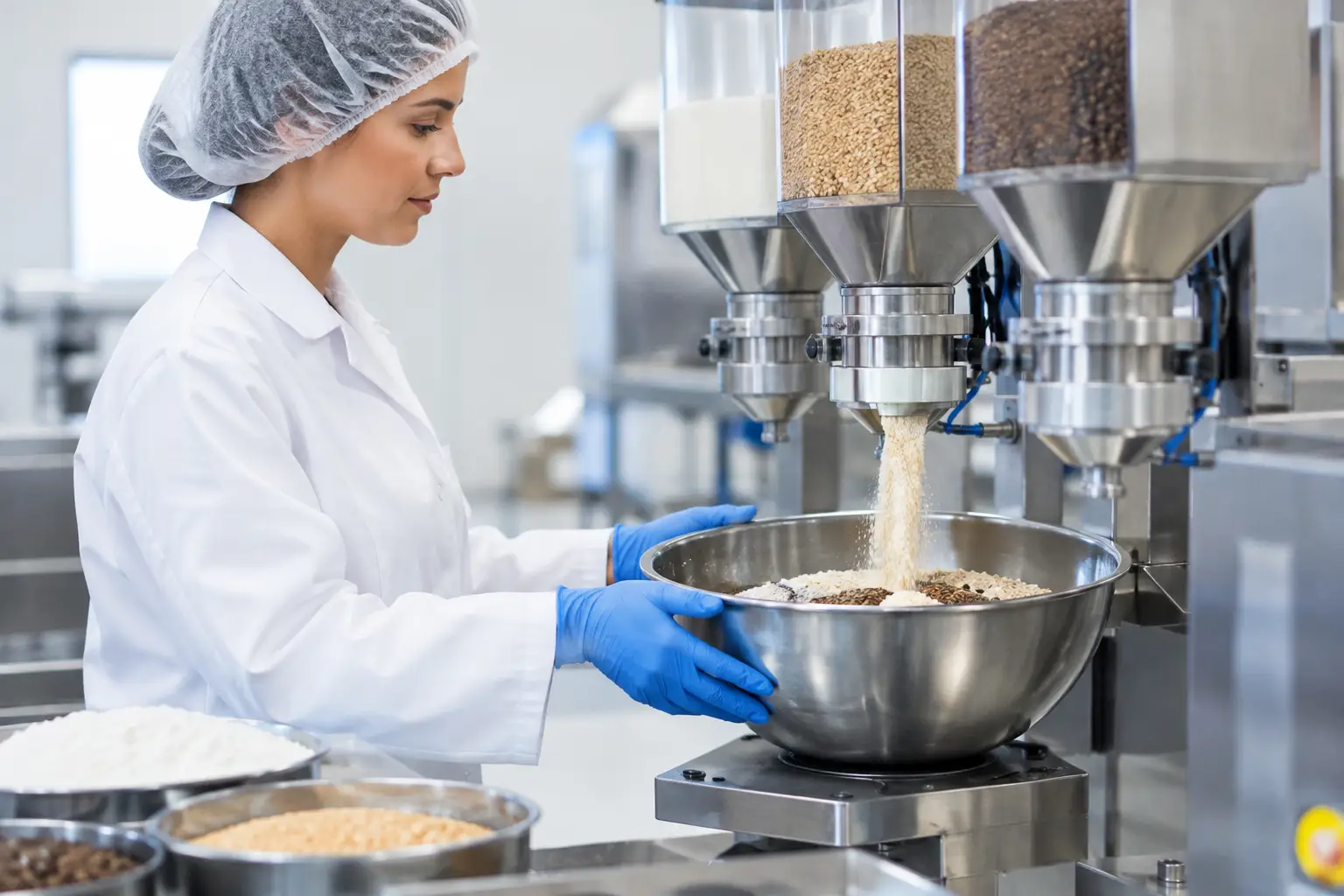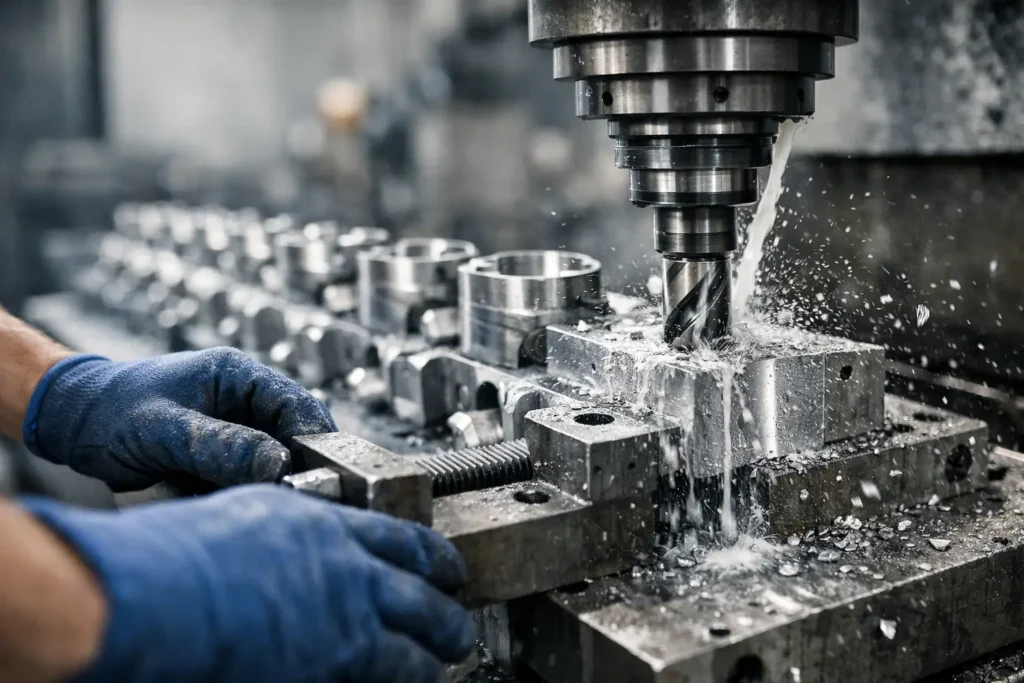
A mill can meet a particle-size target during a short trial and still fail to deliver a stable commercial process. The difference is usually not a single setting. Effective milling process optimization aligns material behavior, machine mechanics, upstream feed conditions, downstream separation, controls, and cleaning requirements around a defined product outcome.
For manufacturers working with powders, granules, agglomerates, and heat-sensitive materials, the objective is not simply to make particles smaller. It is to produce the required particle-size distribution consistently, at the required rate, without creating excess fines, damaging the product, accelerating wear, or introducing avoidable downtime. That requires treating milling as part of a production system rather than an isolated unit operation.
Start With the Product Specification, Not the Mill
Optimization begins by defining what the finished material must do. A nominal top size alone is rarely sufficient. The specification may also need to establish the acceptable fines fraction, distribution width, bulk density, flowability, moisture range, temperature limit, morphology, dissolution behavior, blend performance, or downstream compaction response.
These requirements vary by application. A pharmaceutical intermediate may need controlled PSD to support blend uniformity and tablet compression. A battery material may require narrow classification limits to support electrode performance. In food and nutraceutical production, excessive fines can affect dust control, flavor distribution, filling accuracy, and consumer perception. For industrial minerals, the central concern may be throughput and wear life rather than a highly narrow distribution.
The target must therefore be measurable and tied to the next process step. If a material feeds into blending, conveying, extrusion, coating, filling, or a reaction vessel, that downstream operation should help determine the milling objective. A product that passes a sieve but bridges in a hopper or segregates in packaging has not been fully optimized.
Define the operating window
A capable process operates within a validated or documented window, not at one idealized point. Establish acceptable ranges for feed rate, rotor or screen speed, air volume where applicable, classifier setting, mill temperature, and product moisture. Those ranges should be based on data from representative production conditions, including expected raw-material variation.
This distinction matters because many milling problems appear only when incoming lots change. A slight increase in moisture can reduce flowability, increase screen blinding, and raise mill load. A shift in bulk density can change feeder calibration and residence time. Without an operating window and meaningful process monitoring, operators are left to correct symptoms after product quality has already moved.
Characterize the Material Before Selecting Adjustments
Material properties determine which milling forces are effective and which risks must be controlled. Hard, brittle crystals respond differently than fibrous botanicals, waxy polymers, cohesive powders, or ductile metals. The same machine configuration will not produce the same result across those materials.
Key characteristics include hardness, friability, abrasiveness, initial PSD, moisture content, thermal sensitivity, bulk density, electrostatic behavior, and tendency to agglomerate. For some products, the effect of ambient humidity or ingredient temperature is significant enough to warrant controlled conditioning before milling.
Particle breakage mechanisms also matter. Impact milling is often appropriate for brittle materials and high production rates. Attrition can provide finer reduction but may generate more heat or broad distributions depending on the application. Cutting is often preferable for fibrous or elastic materials. Air classification can separate fines and control the final cut point, but it adds dependence on airflow stability, material density, and system cleanliness.
The correct choice is application-specific. Increasing speed may improve reduction for one material while producing heat, smearing, or excess fines in another. Smaller screen openings can tighten top size, but they can also restrict capacity and raise the likelihood of blockage. Optimization is the disciplined management of these trade-offs.
Stabilize Feed Conditions First
An inconsistent feed is one of the most common causes of unstable milling performance. When feed rate surges or starves, the mill sees changing residence time, impact frequency, motor load, and temperature. The resulting PSD variation is then mistakenly attributed to the mill itself.
Reliable feeding begins with hopper and bin design that matches the powder’s flow properties. Mass-flow geometry, agitation, vibration, conditioning, or controlled discharge devices may be needed for cohesive materials. Gravimetric feeding is often preferable where throughput consistency and traceability are critical, particularly when the process is sensitive to relatively small changes in feed rate.
The upstream system must also protect the mill from foreign material and oversized lumps. Screens, magnets, lump breakers, and metal detection are not peripheral details. They reduce damage risk, prevent unexpected load events, and create a more predictable feed stream.
For integrated lines, the feeder, mill, classifier, dust collector, conveying equipment, and receiving vessel should be evaluated together. A restriction downstream can alter airflow or backpressure. A poorly matched conveyor can cause segregation or particle degradation after milling. One machine may be operating correctly while the system is not.
Set Milling Variables With Cause-and-Effect Discipline
Once the material and feed are stable, process variables can be adjusted methodically. The core variables typically include feed rate, rotor speed, tool configuration, screen or grate size, classifier speed, airflow, and product temperature. Changes should be made through planned trials with defined responses, not by adjusting several settings simultaneously.
A structured trial plan should measure PSD at multiple points in the distribution, production rate, mill power, product temperature, yield, dust collection performance, and retained material. It should also capture qualitative observations such as buildup, odor, color change, vibration, and screen condition. These signals often reveal failure modes before they appear in final test results.
For example, higher rotor speed may reduce median particle size while increasing fines and heat. Raising feed rate can improve throughput until material begins to short-circuit through the mill or overload the classifier. Increasing airflow may improve transport and reduce residence time, but it can also shift the separation behavior of an air-classified system. The best operating point depends on which performance measure has the highest value for the product and business case.
Control temperature as a quality variable
Temperature is frequently treated as a secondary measurement until it becomes a failure. That approach is costly for heat-sensitive products, low-melting materials, flavors, nutraceuticals, polymers, and materials subject to oxidation or phase changes.
Temperature control may require conditioned inlet air, cryogenic assistance, reduced residence time, a different milling principle, or changes to the feed strategy. It may also require limiting recirculation of warm material. The appropriate solution depends on the heat load, product sensitivity, available utilities, and required production rate.
Design for Classification, Collection, and Containment
A milling system does not end at the discharge. Classification determines what particles remain in the final product, while collection affects yield, housekeeping, operator exposure, and cross-contamination risk.
Where a tight PSD is required, classifier selection and control deserve the same attention as the mill. Air classifiers, screens, and other separation methods each have practical limits. Very narrow cuts may reduce yield or capacity. Recirculation can improve control but adds material handling, residence time, and potential degradation. The economics should be evaluated alongside the quality target.
Dust collection must be sized for the actual air volumes, material loading, and filtration characteristics of the process. Inadequate collection can destabilize pneumatic transport, raise emissions risk, and leave valuable product in filters or ductwork. For hazardous, potent, combustible, or highly regulated materials, containment and dust-explosion protection must be part of the original system design, not a later modification.
Use Data to Keep the Process in Control
Optimization has limited value if the process cannot sustain its settings across shifts, campaigns, and raw-material lots. Controls should provide operators with clear, actionable information: feeder rate, mill amperage, rotor speed, airflow, differential pressure, temperature, classifier setting, and alarms tied to meaningful process limits.
Trend data can identify gradual screen blinding, bearing wear, feeder drift, filter loading, or changing raw-material behavior. This supports condition-based maintenance and reduces the likelihood that a quality event becomes the first indication of equipment degradation.
For regulated applications, the same data supports batch records, validation protocols, change control, and investigation of deviations. For high-volume industrial operations, it supports capacity planning, yield improvement, and labor reduction. The instrumentation may differ, but the operating principle is the same: measure the variables that influence the product, then use those measurements to maintain control.
Optimize for Lifecycle Performance
The lowest-cost mill configuration is not always the lowest-cost process. Screens, hammers, pins, rotors, liners, classifier components, and filters all have wear patterns that affect both product quality and maintenance cost. Abrasive materials may justify hardened or specialized contact surfaces even when the initial capital cost is higher.
Cleanability also affects real production capacity. If a system requires long disassembly, difficult access, or excessive manual cleaning between products, its theoretical throughput will not reflect its actual annual output. Hygienic design, access points, clean-in-place capability where appropriate, and change-part management should be evaluated early.
Proc-X approaches these decisions from the full processing line outward: material receipt, feeding, milling, classification, transfer, collection, controls, and downstream packaging or further processing. That scope creates one engineering standard across the interfaces where many performance losses occur.
The most productive next step is to review actual operating data against the required product specification, then identify where variation first enters the system. In many cases, the path to better milling is not a more aggressive mill setting. It is a better-controlled process around the mill.