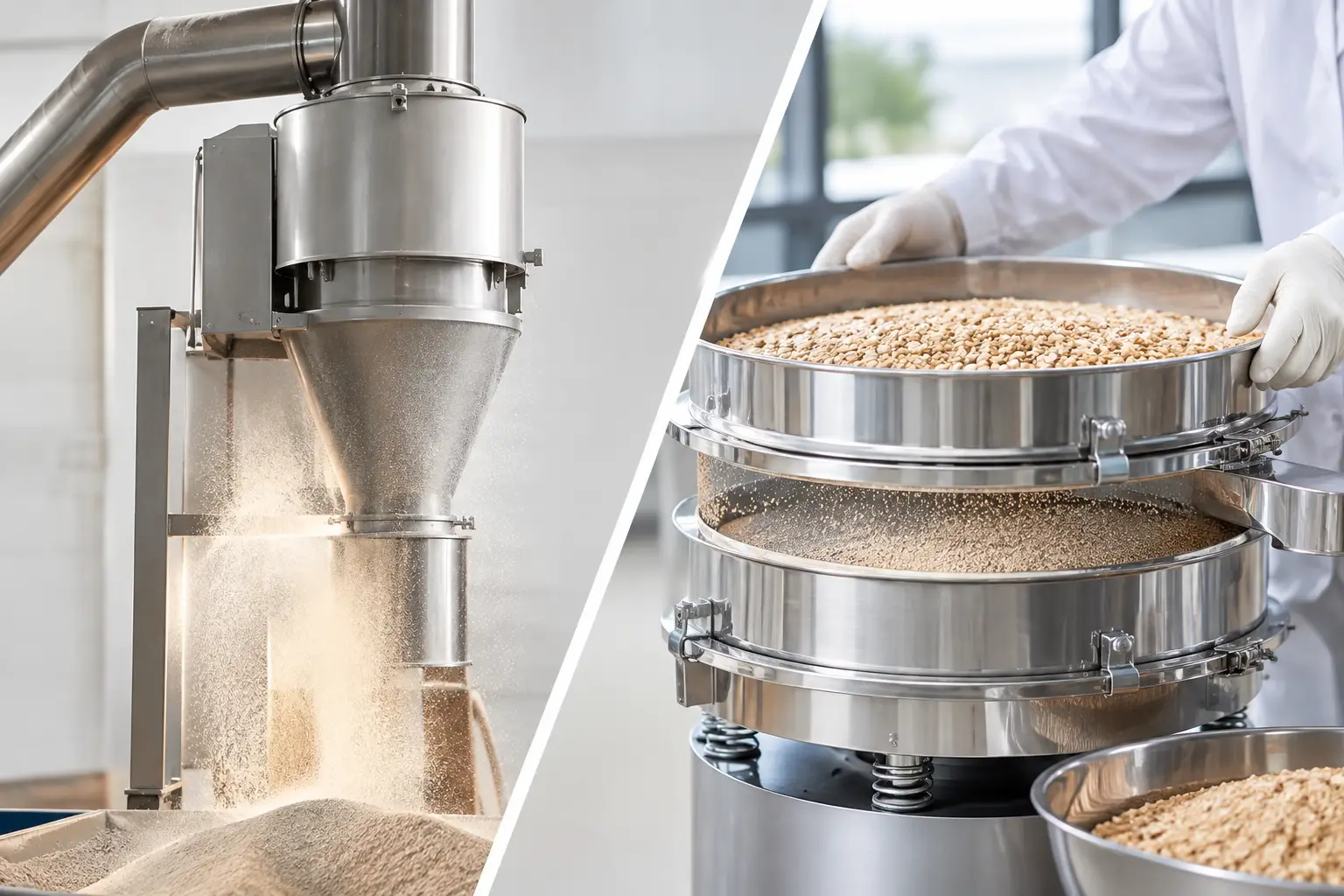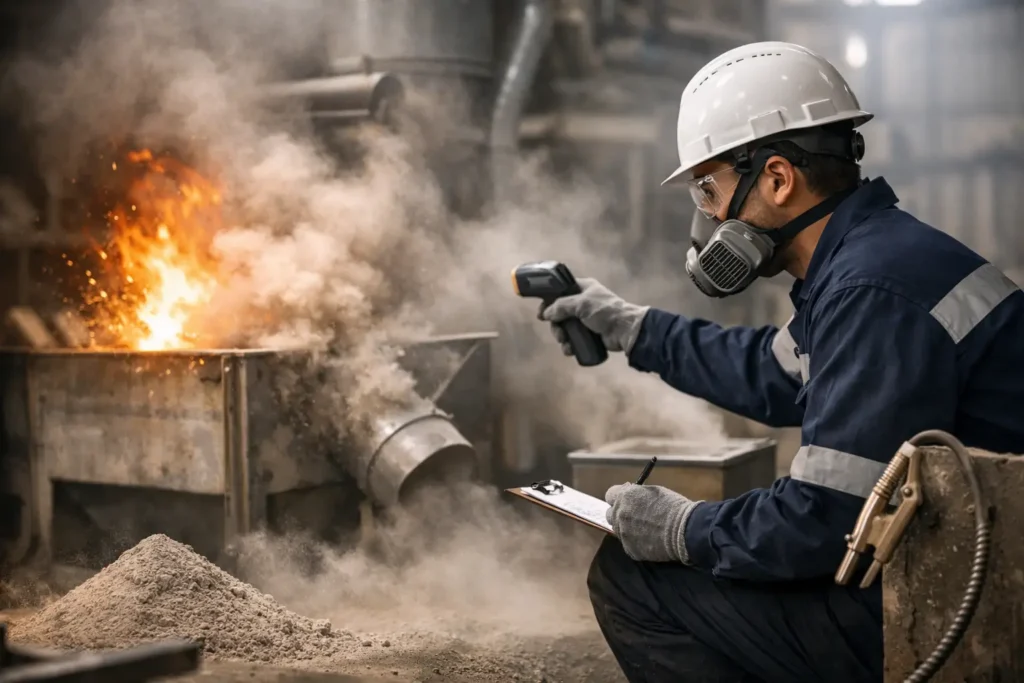
A small release at a transfer point can become a plant-wide exposure when fine material settles on beams, cable trays, equipment tops, and inaccessible ledges. The best ways to reduce dust explosion risk begin with controlling that release at its source, then designing the entire process around the actual behavior of the material. Housekeeping matters, but it cannot compensate for an inadequately engineered powder-handling system.
Combustible dust risk is not limited to one industry or one material class. Food ingredients, pharmaceutical actives, nutraceutical blends, resins, metals, carbon-based materials, agricultural products, and industrial minerals can create hazardous conditions when particles are sufficiently fine, dry, dispersed, and exposed to an effective ignition source. The right controls depend on the material, the process, the building, and the consequences of a credible event.
Start With Material and Dust Hazard Data
A process cannot be designed responsibly around assumptions such as “this powder has always been handled safely” or “the supplier says it is nonhazardous.” A material can be safe in bulk form and hazardous when it is milled, dried, pneumatically conveyed, screened, or discharged from a blender. Changes in particle-size distribution, moisture, formulation, and contamination can also change the dust hazard.
Characterize the material under representative process conditions. Depending on the application, relevant data may include particle-size distribution, moisture content, minimum ignition energy, minimum explosible concentration, minimum ignition temperature, maximum pressure, pressure rise rate, and dust explosibility class. Kst and Pmax values are central inputs for evaluating explosion protection and isolation strategies, but they should not be treated as permanent values for every lot or formulation.
This work should also account for dust generated downstream. A coarse incoming ingredient may create fine, more readily dispersed material after milling, mixing, conveying, or packaging. For manufacturers running multiple products on shared equipment, the controlling hazard may be the most severe credible dust, not the average product.
The Best Ways to Reduce Dust Explosion Risk in Process Design
1. Prevent dust from becoming airborne
The most effective risk reduction occurs before dust reaches the work area or the dust collector. Enclose transfer points, use properly designed loading and discharge interfaces, and maintain negative pressure where practical. Feeders, flexible connections, bag dump stations, bins, sifters, mills, blenders, and packaging equipment should be treated as connected parts of one containment strategy rather than independent machines.
Poorly designed interfaces are a common weakness. A high-performance collector cannot correct an open bag dump station, an oversized chute drop, or a conveyor transition that leaks each time a system cycles. Controlled transfer velocity, reduced drop height, sealed connections, and effective capture hoods reduce the amount of dust that must be collected and the amount available to accumulate.
2. Design dust collection for the real process
Dust collection is an engineered safety function, not an accessory selected only by airflow. The collector must capture the expected contaminant at each source while maintaining transport velocity, manageable pressure loss, suitable filtration performance, and service access. Duct routing, branch balance, hood geometry, fan selection, and filter cleaning all affect whether the system captures dust consistently.
Collection equipment also needs a protection strategy appropriate to its location, the dust data, and the building arrangement. Depending on the application, this may involve explosion venting to a safe area, flameless venting, suppression, explosion isolation, or a combination of measures. A collector located indoors may require a very different solution from one installed outdoors with a clear vent discharge path.
Returning filtered air to the building is not a simple energy decision. It requires careful evaluation of the hazard, filtration reliability, applicable requirements, and the consequences of an internal collector event. The objective is not merely to move dust out of sight. It is to manage where it goes, how it is contained, and how an event is prevented from propagating.
3. Control ignition sources at each operating state
An ignition source assessment should consider normal operation, startup, shutdown, cleaning, maintenance, upset conditions, and equipment failure. Mechanical friction, overheated bearings, misaligned belts, tramp metal, electrical faults, static discharge, welding, hot work, and hot surfaces can all become relevant depending on the process.
Mechanical reliability has a direct safety role. Condition monitoring on rotating equipment, bearing temperature monitoring where justified, belt alignment, preventive maintenance, and timely replacement of worn components reduce the likelihood that a mechanical issue becomes an ignition event. Mills, dryers, classifiers, conveyors, and high-speed mixers deserve particular attention because they can combine heat, friction, and fine dust generation.
Static control also needs to be applied as a system. Bonding and grounding conductive equipment is fundamental, but it does not eliminate every electrostatic hazard. Nonconductive liners, flexible hoses, filter media, containers, footwear, and material flow characteristics can affect charge generation and dissipation. The appropriate control depends on the material’s ignition sensitivity and the configuration of the operation.
4. Limit dust accumulations with designed-in cleanability
Dust layers can support a secondary explosion if an initial event dislodges them into the air. That is why structural members, utility runs, equipment tops, and concealed horizontal surfaces deserve as much attention as floor cleaning. A cleaning program that focuses only on visible areas can leave the most consequential accumulations in place.
Design decisions can make this problem easier or harder to manage for the life of the facility. Favor accessible surfaces, minimize unnecessary ledges, provide safe access for inspection and cleaning, and avoid locating dust-generating equipment where it contaminates elevated building features. Vacuum cleaning systems rated for the hazard are generally preferable to dry sweeping or using compressed air, which can create a dispersed dust cloud.
Housekeeping frequencies should be based on actual accumulation rates, not a calendar alone. A plant handling one stable, low-fines product may need a different program than a multiproduct facility with frequent changeovers and variable dust loading.
5. Protect and isolate credible explosion scenarios
Prevention measures reduce probability, but protection measures address the possibility that prevention fails. Equipment handling combustible dust may require explosion venting, suppression, containment, or other protection methods selected from validated hazard data and process constraints. The choice is not interchangeable. Venting may be practical outdoors but unsuitable indoors; suppression can be appropriate where venting is impractical but brings maintenance and inspection obligations.
Isolation is equally critical. Without it, pressure and flame can travel through ducts, conveyors, and connected process equipment to other parts of the line. Isolation options may include mechanical devices, chemical barriers, rotary valves when properly designed and validated for the duty, or specialized discharge arrangements. Each approach must be evaluated for the actual pressure, material flow, leakage tolerance, and maintenance condition.
6. Manage process changes before they create new hazards
Dust explosion controls can become outdated quietly. A higher-speed mill, a different supplier, a dryer temperature increase, a new automated packaging line, or a production-rate expansion may change dust generation, conveying conditions, or protection requirements. Even a process improvement intended to reduce waste can create a finer particle fraction or raise the concentration of dust in a collector.
A formal management-of-change process keeps engineering, operations, maintenance, quality, and EHS aligned. Review material data, process flow, operating parameters, control logic, equipment connections, and protection devices before implementation. The review should result in clear decisions, accountable owners, and updated operating procedures rather than an informal approval in a project meeting.
7. Build interlocks and controls around safe operation
Automation can reduce exposure when it is designed to prevent unsafe sequences. Examples include preventing equipment startup when a dust collector is not proven to be operating, alarming abnormal differential pressure, monitoring fan status, verifying isolation device readiness, and stopping feed when downstream handling equipment trips.
The control philosophy should distinguish between an advisory alarm and a condition that requires an interlock or controlled shutdown. That decision depends on the severity and speed of the hazard. Operators also need practical visibility: clear status indication, understandable alarms, and procedures that explain what to do when equipment does not reach its required operating condition.
8. Train for the work people actually perform
Written procedures have limited value if employees do not recognize how their daily activities affect dust risk. Operators need to understand where releases occur, why bypassing a collector alarm is unacceptable, and when a visible dust layer signals a process issue. Maintenance teams need controls for opening equipment, breaking duct connections, clearing blockages, and performing hot work near dust-handling systems.
Training should be specific to the equipment and material in the plant. A generic presentation on combustible dust will not address the decisions made during a bag change, a filter replacement, a sanitation task, or a production upset. Regular drills, shift-level observations, and feedback from operators can reveal gaps that an annual classroom session misses.
9. Treat the line as one engineered system
The strongest control programs connect material testing, process containment, dust collection, ignition control, explosion protection, automation, maintenance, and operating discipline. Isolated upgrades can help, but they can also shift risk downstream. For example, increasing collection airflow without reviewing hood design and duct transport can create operational instability; installing a new mill without reviewing the collector and isolation path can exceed the assumptions behind existing protection.
For new lines and plant modifications, a coordinated engineering review provides a clearer basis for decisions. Proc-X approaches powder and bulk-material processing as an integrated production system, where equipment compatibility, controls, containment, and lifecycle service must support the same operating objective.
A safer dust-handling operation is built through disciplined decisions made before equipment is installed and reinforced every day it runs. Begin with representative material data, follow the dust through every transfer and connection, and make every safeguard verifiable in operation. That is how risk reduction becomes part of process performance rather than a separate compliance exercise.