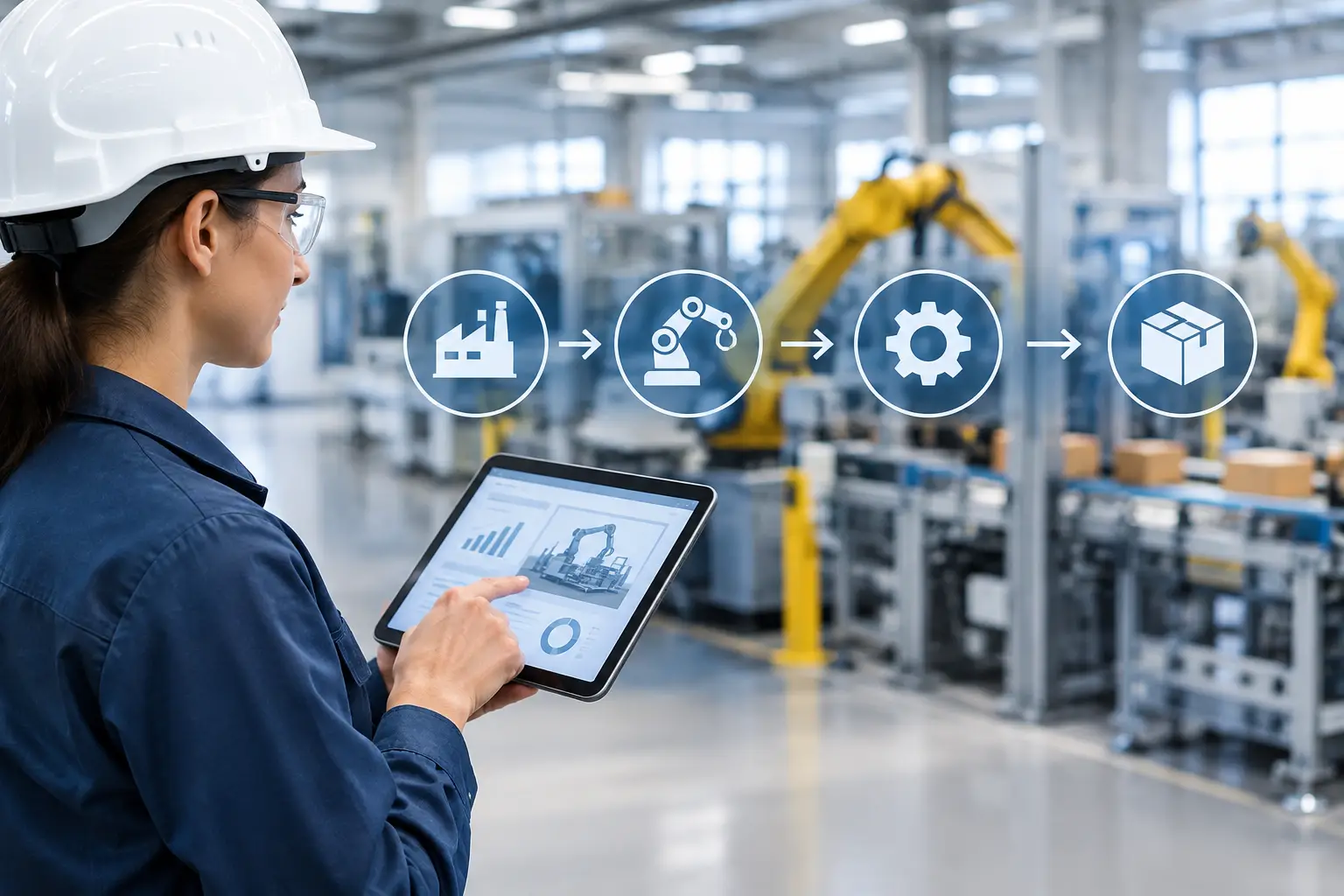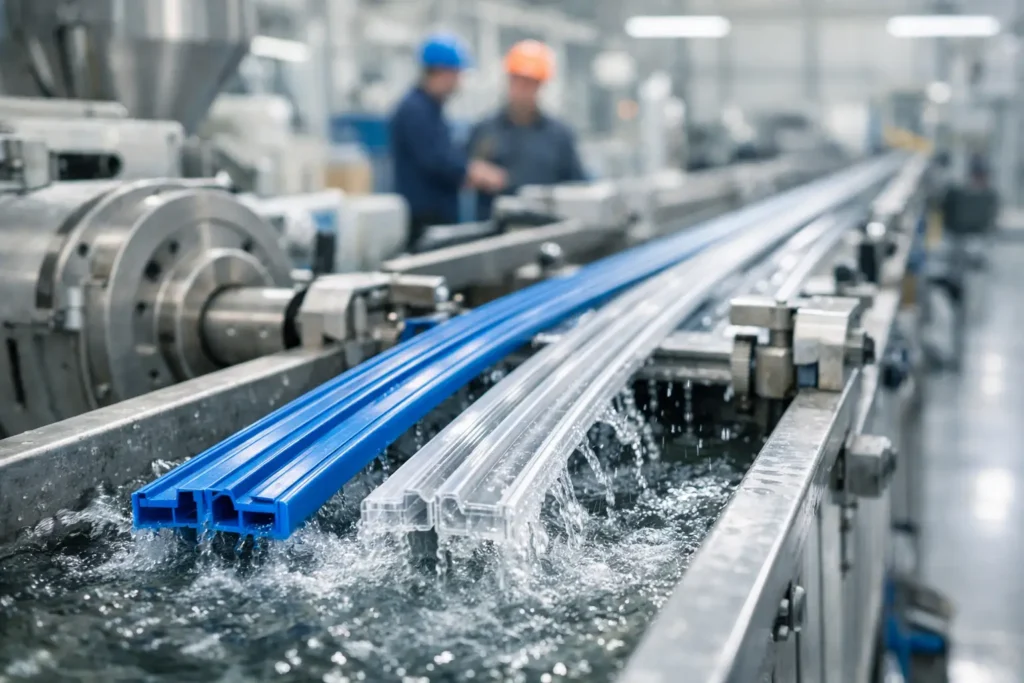
A line that looks complete on a layout drawing can still fail on the plant floor. The usual problem is not the extruder itself. It is what happens before, after, and around it. Extrusion line integration determines whether raw material feed, controls, thermal management, transfer systems, downstream equipment, and operator interface perform as one coordinated process or as a collection of individual assets.
For manufacturers running high-value materials, regulated products, or tight production windows, that distinction has real cost. A line assembled from disconnected equipment suppliers often reaches startup with hidden mismatches in capacity, controls logic, mechanical interfaces, data handling, and service responsibility. Those issues tend to surface during commissioning, ramp-up, or the first period of sustained production, when corrections are most expensive.
What extrusion line integration actually means
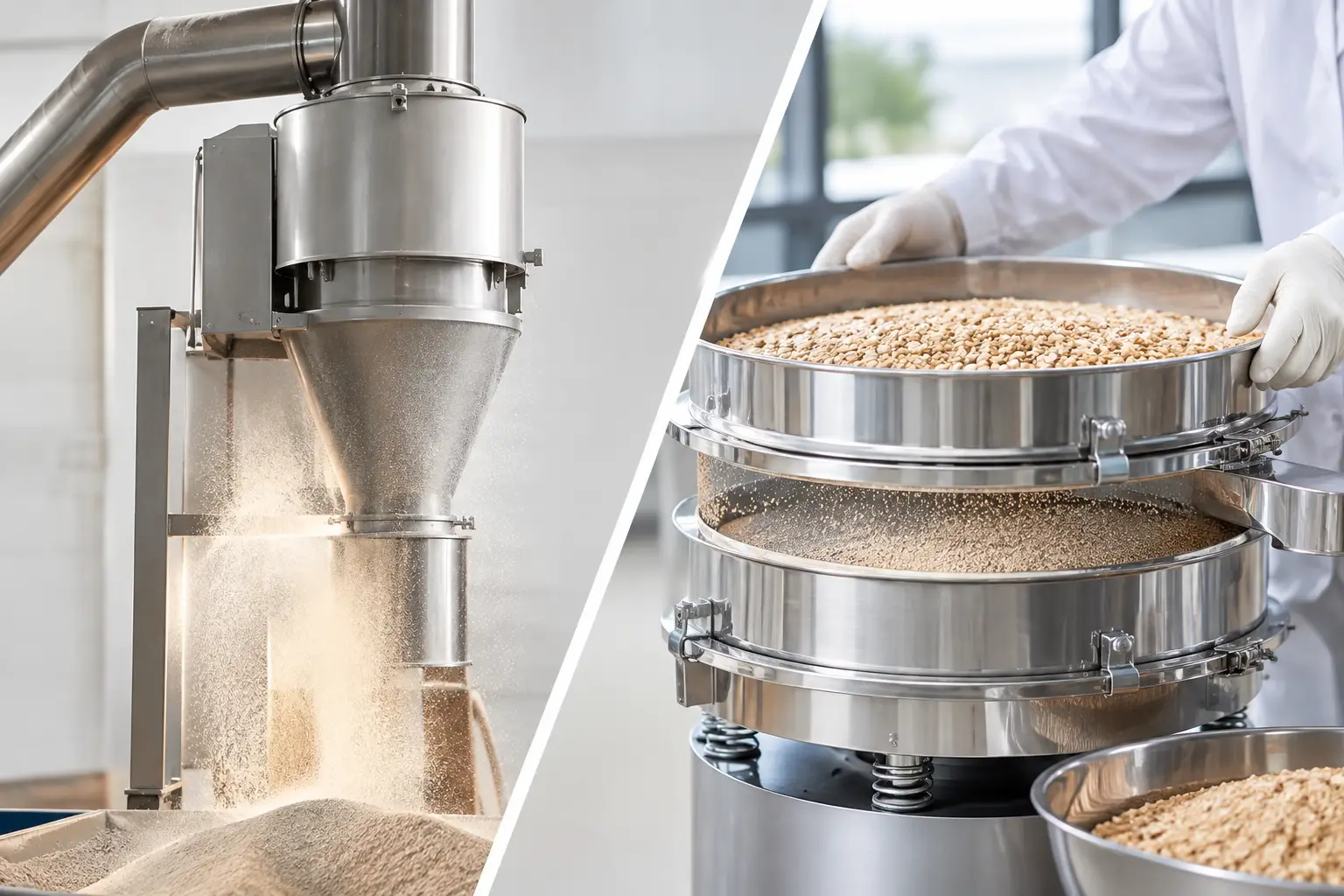
Extrusion line integration is the engineering and execution discipline of designing the full production line as one system rather than treating the extruder as the center and everything else as accessories. That includes upstream material handling, dosing, blending, feeding, and size reduction when required. It also includes downstream conveying, cooling, cutting, pelletizing, drying, thermal processing, packaging, and plant-wide controls.
Just as important, integration covers less visible layers of the project. Controls architecture, safety systems, utilities planning, line balancing, recipe management, data collection, and commissioning strategy all shape line performance. A mechanically connected line is not necessarily an integrated one. True integration means each subsystem is engineered to the same production objective, with clear performance assumptions and shared accountability.
In practice, the strongest integrated lines are developed around the process, not around a shopping list of machines. Throughput targets, material characteristics, product tolerances, cleaning requirements, validation needs, and future expansion plans should drive equipment selection and controls strategy from the start.
Where fragmented lines create risk
Many extrusion projects become more complex than expected because each supplier optimizes its own equipment scope. Feed systems are sized based on one assumption, the extrusion platform on another, and downstream handling on a third. On paper, every machine may meet specification. In operation, the line struggles because the full process was never engineered as a single production environment.
That gap appears in familiar ways. Bulk density variation affects feeder accuracy. Inconsistent upstream conditioning changes torque behavior at the extruder. Downstream equipment cannot maintain pace during normal process variation. Utilities are undersized for actual thermal load. Controls cannot coordinate upset handling across the line. Operators end up bridging the system manually, which reduces repeatability and increases labor dependency.
The commercial risk is just as significant. When startup delays occur on a multi-vendor line, responsibility becomes diffuse. One supplier points to material variability, another to line conditions, another to controls handshakes. The plant inherits the integration burden. For operations leaders and procurement teams, that is not simply a project inconvenience. It is a direct threat to schedule, output, validation, and return on capital.
The engineering priorities behind effective extrusion line integration
A well-integrated extrusion system starts with line balance. That sounds straightforward, but it requires more than matching nameplate capacities. The actual process window matters. Materials do not behave consistently across all conditions, and downstream equipment rarely performs at theoretical maximum under every product format. Engineering the line around realistic operating ranges produces a system that can run predictably rather than occasionally hitting peak output.
Controls architecture is the next priority. Shared controls philosophy across the line reduces startup friction and improves long-term operability. The objective is not just communication between machines. It is coordinated response. If the feeder rate changes, if melt pressure moves outside tolerance, or if downstream accumulation reaches a limit, the full line should react according to defined process logic. That requires common standards in automation design, alarm handling, recipe structure, and data visibility.
Mechanical and utility interfaces also deserve more attention than they often receive. Poorly coordinated transition points between material transfer, extrusion, cooling, and discharge systems can introduce restriction, contamination risk, excessive wear, or maintenance difficulty. The same is true for heat transfer media, compressed air, dust collection, and electrical distribution. These are not secondary details. In demanding environments, they often determine whether the line remains stable over time.
Extrusion line integration and lifecycle performance
The value of extrusion line integration is most visible after commissioning. A fragmented line may be made to run, but sustaining performance across shifts, products, and maintenance cycles is another challenge. Integrated systems are typically easier to troubleshoot because design intent is consistent across equipment categories. Operators see a common interface. Maintenance teams work within coordinated documentation and parts strategy. Process engineers can trace line behavior through shared control and data structures.
That consistency matters even more in regulated or quality-sensitive applications. When recipe control, material traceability, thermal history, and downstream handling must stay within defined limits, isolated equipment performance is not enough. The system must preserve process control from intake through final discharge or packaging. Integration reduces the number of uncontrolled handoff points where variability can enter the line.
Scalability is another lifecycle issue. Many manufacturers initially size an extrusion system for current demand and then discover that expansion creates bottlenecks outside the extruder. An upstream blending system, transfer loop, pellet handling stage, or final packaging section can become the limiting factor. Integrated engineering makes future capacity planning more credible because expansion is considered at the system level rather than equipment by equipment.
Why one point of accountability changes project outcomes
The strongest case for an integrated approach is not technical elegance. It is accountability. Complex lines perform better when one engineering organization is responsible for the interfaces, assumptions, and final operating result.
That single-source model reduces ambiguity during design and execution. It aligns process development with mechanical design, automation, installation, and commissioning. It also shortens problem resolution after startup because the same organization understands the line as a complete system. Instead of coordinating debates across multiple vendors, the manufacturer works with one accountable partner responsible for the total production platform.
For industrial operations with limited tolerance for delay, this is a material advantage. Procurement simplification matters, but the larger gain is risk reduction. Capital projects move faster when engineering standards, controls philosophy, documentation, FAT strategy, and field startup planning are coordinated from the beginning. Proc-X Manufacturing Group is built around that principle – one manufacturer, one engineering standard, one point of accountability across the complete processing line.
When custom integration is necessary
Not every extrusion project requires the same level of customization. Some products can run effectively on a relatively standardized platform with minor adaptation. Others demand a much more tailored system because the material, environment, or compliance requirement leaves little room for compromise.
Battery materials, specialty chemicals, defense-related compounds, nutraceutical formulations, and high-value engineered products often fall into this second category. Material sensitivity, dust control, traceability, containment, sanitation, and thermal precision can all affect line design. In those cases, extrusion line integration must account for more than throughput. It must also support safety, quality assurance, cleanability, and repeatable process control under real operating conditions.
This is where experienced system engineering matters most. A line can be technically functional and still be wrong for the application if it creates difficult cleaning procedures, unstable feeding, poor accessibility, excessive operator intervention, or limited data visibility. The best integrated solutions are designed for production reality, not just acceptance testing.
What buyers should evaluate before committing to a line
When assessing an extrusion project, buyers should look beyond machine specifications and ask how the full system will be engineered, controlled, tested, and supported. The critical question is whether the supplier owns the interfaces or merely coordinates them.
A serious integration partner should be able to define line balance assumptions, controls strategy, utility requirements, startup methodology, and downstream implications of product changes. It should also be clear who is responsible for validation support, training, spare parts planning, and post-commissioning optimization. If those answers are split across multiple parties, integration risk remains with the manufacturer.
There is no universal line architecture that fits every product or market. Some operations need flexibility across formulations. Others need maximum uptime on a narrow product range. Some need aggressive automation. Others require a design that supports frequent cleaning and controlled changeovers. The right answer depends on production goals, regulatory context, and long-term capacity plans. But in every case, treating the extrusion system as one coordinated process leads to better decisions than buying isolated equipment and hoping the line works itself out.
The more demanding the application, the less room there is for fragmented responsibility. When extrusion is tied to yield, product quality, compliance, and delivery commitments, integration stops being a project feature and becomes an operating requirement. The smartest time to solve that problem is before equipment is ordered, when the full line can still be engineered to perform as one.