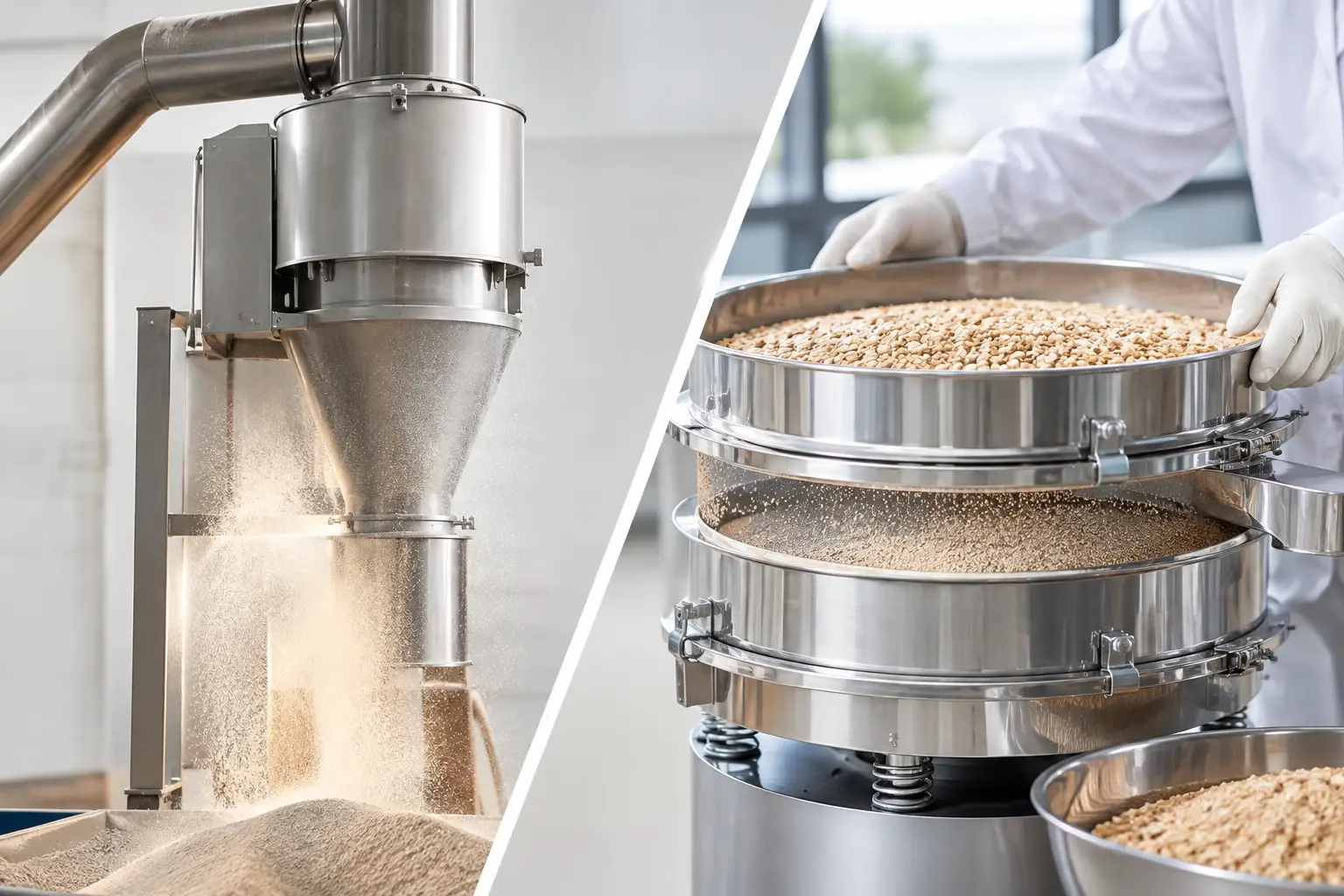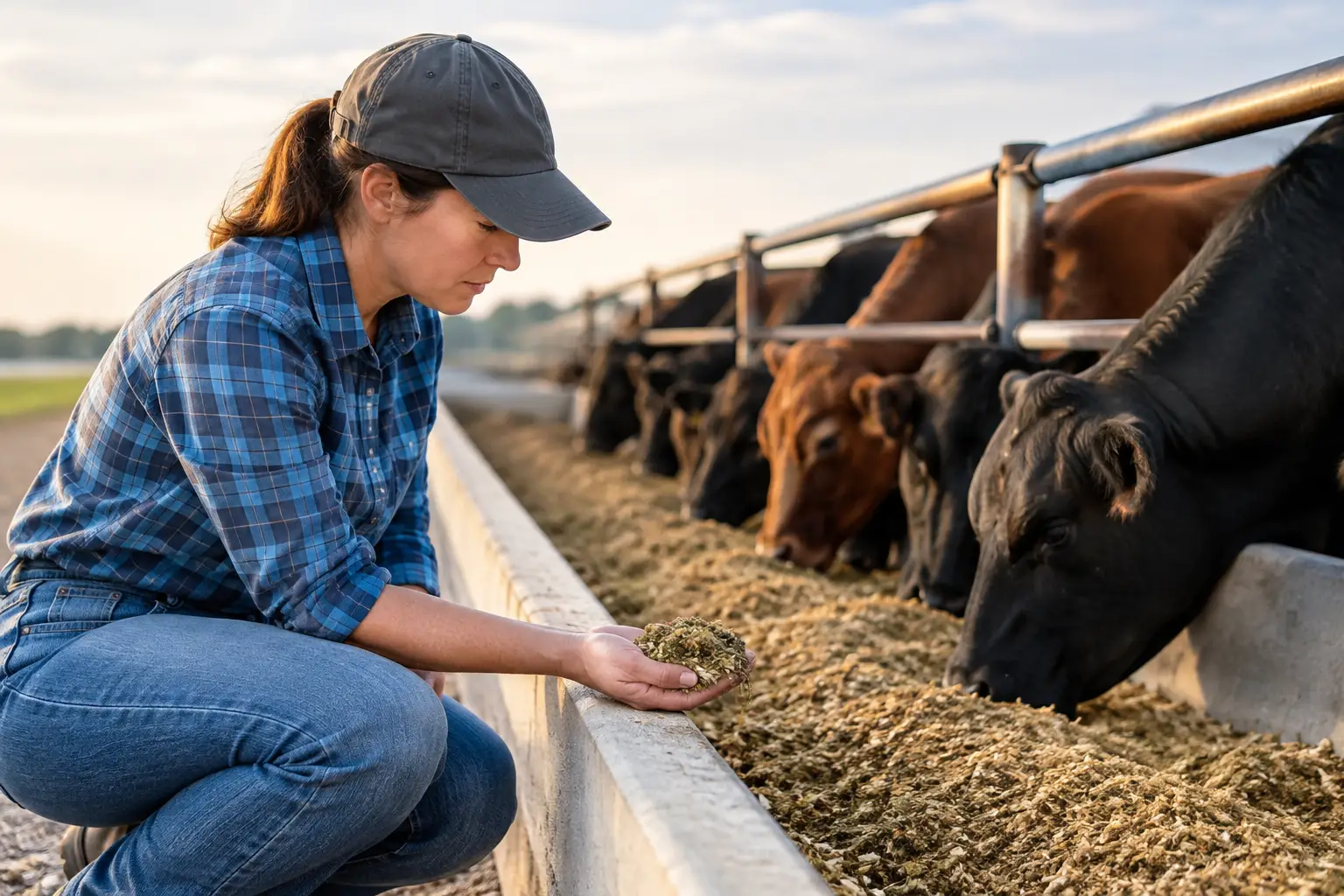
A process automation roadmap should not begin with a PLC upgrade, a new HMI, or a list of equipment to connect. It should begin with the product. A powder that bridges in a hopper, a heat-sensitive slurry, a cohesive nutraceutical blend, or an abrasive mineral compound will each place different demands on material handling, control logic, instrumentation, cleaning, and validation.
For manufacturers, automation is not a standalone project. It is an operating model for achieving repeatable output at the required rate, quality level, and cost. The roadmap must connect process behavior to equipment selection, controls architecture, production data, and the people responsible for running and maintaining the line.
Start With the Process, Not the Controls Platform
The fastest way to create an underperforming automation project is to automate an unstable manual process. If flowability changes batch to batch, if operators make undocumented adjustments to reach a target viscosity, or if transfer losses are not measured, control software will only make those problems harder to diagnose.
Document the current process from raw-material receipt through finished-product packaging. This should include each transfer point, hold step, addition sequence, mixing phase, thermal event, inspection point, and operator intervention. The objective is not simply to draw a process flow diagram. It is to identify where variation enters the system and where that variation affects yield, throughput, quality, safety, or compliance.
Material characterization belongs at the center of this work. Bulk density, particle-size distribution, moisture content, temperature sensitivity, cohesiveness, abrasiveness, and friability influence the design of feeders, conveyors, mixers, dust collection, and discharge equipment. A controls strategy that assumes consistent mass flow cannot compensate for poor feeder selection or a vessel geometry that prevents complete discharge.
For liquid, paste, and high-viscosity applications, the same principle applies. Pump behavior, shear exposure, temperature control, deaeration requirements, cleanability, and residence time must be understood before defining automation sequences. The control system should reflect proven process conditions, not attempt to invent them during production.
Define the Business Case in Measurable Terms
A useful roadmap translates automation goals into operating measures. General objectives such as improving efficiency or reducing labor are directionally correct, but they do not provide an engineering basis for project decisions. Define the production and quality outcomes the system must deliver.
Typical measures include batch-cycle time, pounds or kilograms produced per hour, dosing accuracy, blend uniformity, overall equipment effectiveness, first-pass yield, changeover duration, cleaning time, scrap rate, energy use, and unplanned downtime. In regulated environments, data integrity, electronic records, recipe control, audit readiness, and validation effort may be equally important measures.
Trade-offs should be addressed early. A fully automated clean-in-place sequence can reduce manual exposure and improve repeatability, but it may require additional utility capacity, valve matrices, verification instrumentation, and longer capital lead times. A high-accuracy loss-in-weight feeder may improve formulation control, but the return depends on ingredient cost, batch size, material behavior, and the value of tighter tolerances.
The right level of automation depends on the process risk and the business case. Some operations benefit from full recipe-driven execution. Others require a controlled semi-automatic approach that preserves informed operator decisions while capturing critical data and enforcing permissives.
Build the Process Automation Roadmap in Phases
A process automation roadmap is most effective when it organizes decisions into staged investments rather than treating every improvement as a single capital event. Each phase should have a defined operating objective, technical scope, budget range, ownership model, and acceptance criteria.
Phase 1: Stabilize and Instrument Critical Operations
The first phase focuses on the conditions that determine process consistency. Correct mechanical issues, establish reliable material flow, and add instrumentation where the process is currently blind. This may include load cells, level detection, pressure and temperature transmitters, flow measurement, motor load monitoring, vibration monitoring, or humidity control.
Instrumentation should be selected for its role in a control decision. Adding sensors without defining alarm limits, interlocks, data ownership, and maintenance requirements creates more signals, not more control. Every critical measurement should answer a practical question: What will the system or operator do differently when this value changes?
Phase 2: Standardize Sequences and Recipes
Once the process is stable, standardize how production runs. Develop batch recipes, permissive logic, alarm philosophy, material-addition sequences, setpoint management, and exception handling. This stage reduces dependence on tribal knowledge and makes results more repeatable across shifts, plants, and product families.
Recipe design must match the actual process. A formula is more than an ingredient list. It should manage material identity, target quantity, addition order, mixing speed, processing time, temperature limits, hold conditions, quality checks, and authorized adjustments. For multi-product facilities, recipes must also account for allergen control, product segregation, cleaning verification, and changeover requirements.
Phase 3: Integrate Equipment and Production Data
The next step is to connect individual machines into a coordinated production system. Feeders, mixers, mills, extruders, transfer systems, packaging equipment, dust collectors, and utilities should exchange the signals necessary to operate as one line. Interlocks should protect product quality and equipment condition, not merely prevent a motor from starting at the wrong time.
Data architecture matters here. Production data should move from the source of the event to the people and systems that need it, whether that includes the supervisory control layer, historian, manufacturing execution system, enterprise resource planning platform, laboratory system, or maintenance platform. The goal is traceability and decision support, not data collection for its own sake.
A practical approach distinguishes between high-value process data and low-value noise. Batch weight, feeder performance, mixing time, temperature profile, alarm events, energy use, downtime reason, and final quality results can reveal where production performance is changing. Thousands of uncontextualized tags will not.
Phase 4: Optimize With Operating Evidence
Optimization should follow sustained operation, not precede it. Once the system has generated reliable production data, teams can compare actual cycle times, identify recurring interruptions, refine alarm limits, and test process improvements under controlled conditions.
This phase can support advanced functions such as predictive maintenance, model-based control, automated quality checks, or production scheduling. Those tools are valuable when the underlying equipment, measurements, and data structure are dependable. They are less valuable when basic material flow and recipe discipline remain unresolved.
Establish One Engineering Standard Across the Line
Automation projects often lose performance at the interfaces: between process equipment and controls, between mechanical design and sanitation, between a new production cell and existing plant utilities, or between a line supplier and the team responsible for commissioning.
A coordinated engineering standard reduces those gaps. It defines controls hardware, network architecture, electrical documentation, safety circuits, naming conventions, alarm management, spare-parts strategy, cybersecurity responsibilities, and the boundaries between vendor and plant scope. It also establishes how factory acceptance testing, site acceptance testing, commissioning, operator training, and documentation will be managed.
For regulated industries, the roadmap should identify validation requirements from the start. Design qualification, installation qualification, operational qualification, and performance qualification cannot be bolted on after controls are programmed. Requirements for audit trails, user access, electronic signatures, calibration, and document control should shape the system design before procurement begins.
Design for Operators, Maintenance, and Change
An automated line succeeds only if it remains operable at 2:00 a.m. during a real production upset. Operators need clear status information, actionable alarms, guided recovery steps, and authority levels that reflect their responsibilities. Maintenance teams need accessible devices, accurate drawings, diagnostic tools, critical spares, and a realistic preventive-maintenance plan.
Training should use actual production scenarios: a feeder running out of material, a dust collector fault, an out-of-tolerance weighment, a mixer temperature deviation, or a packaging machine downstream stop. The goal is not to teach screens. It is to build confidence in how the system behaves and how the team should respond.
Change management also deserves formal control. Recipe edits, software revisions, instrumentation replacement, and equipment modifications can affect product quality and process safety. A disciplined management-of-change process protects the value of the original automation investment as the operation evolves.
Put Accountability Into the Project Structure
A roadmap must define who owns decisions across process design, equipment supply, controls integration, validation, commissioning, and lifecycle support. Fragmented responsibility can create delays when equipment and controls are supplied under separate assumptions.
Proc-X approaches complex processing projects as integrated manufacturing systems, with application-specific engineering based on the material, the required finished-product quality, and the operating environment. One coordinated project structure creates clearer accountability from equipment design through startup.
The most productive next step is to select one process constraint that materially limits quality, capacity, safety, or labor efficiency, then define the measurements and control actions needed to improve it. A roadmap built from real production constraints gives each automation decision a clear purpose and a standard for success.