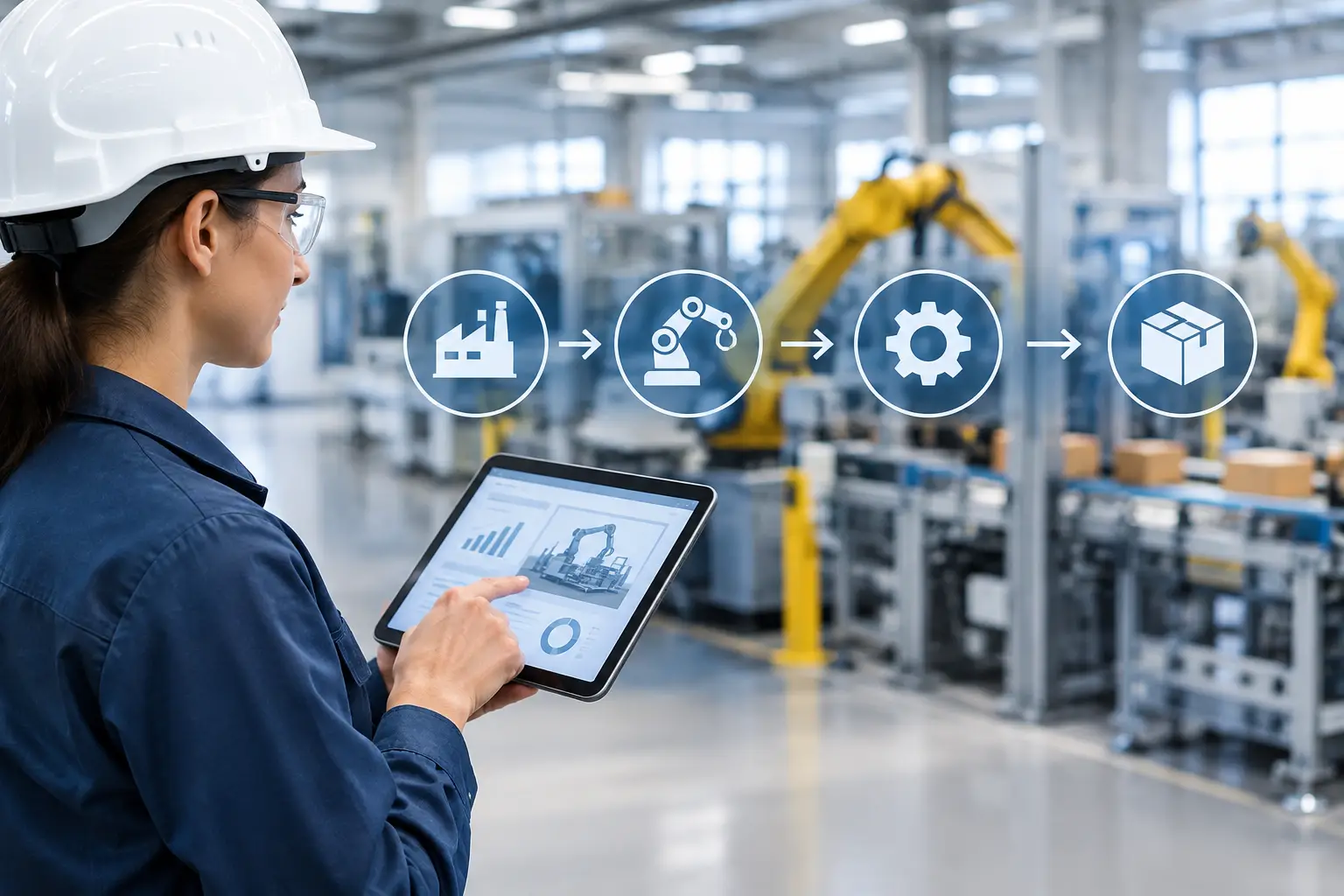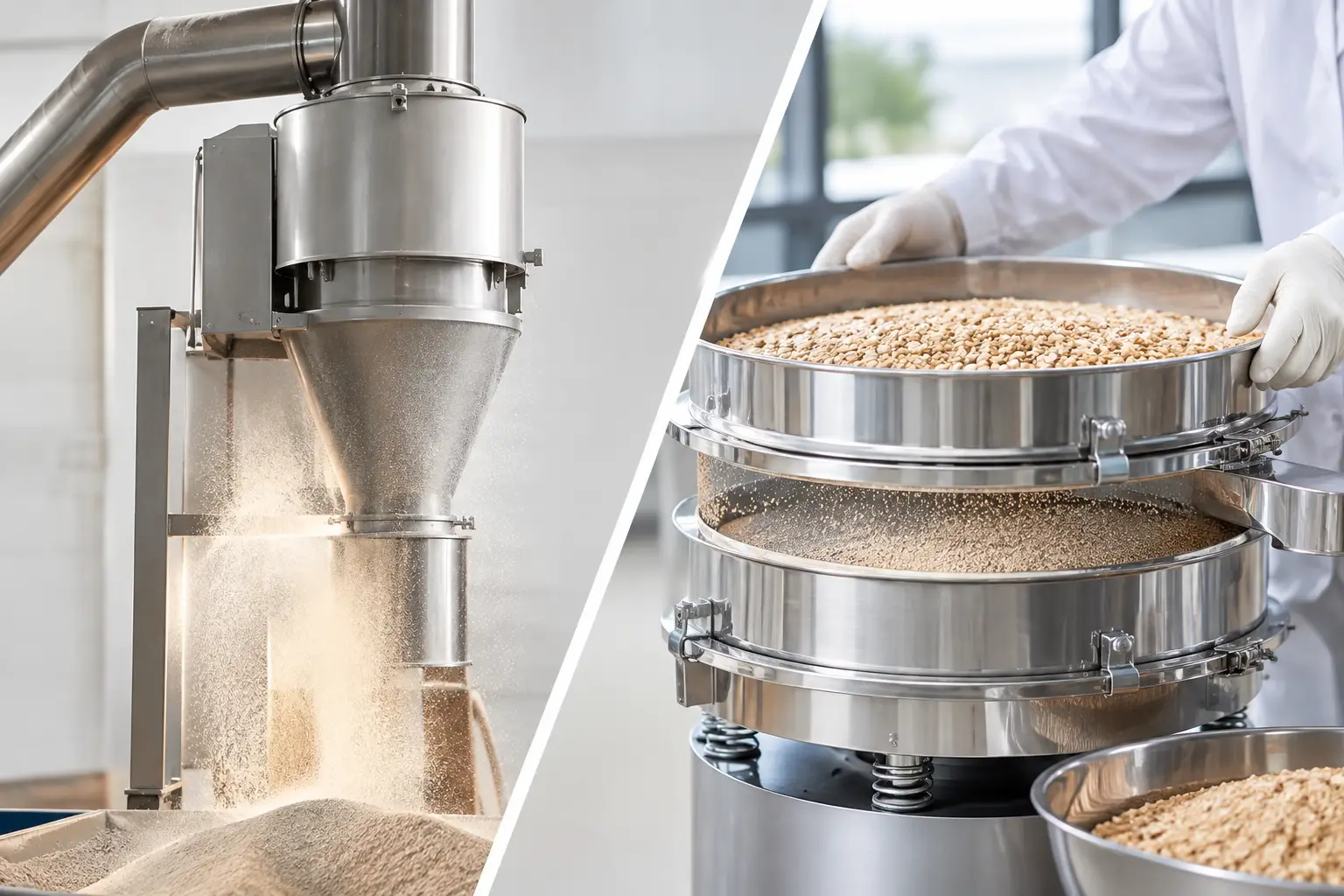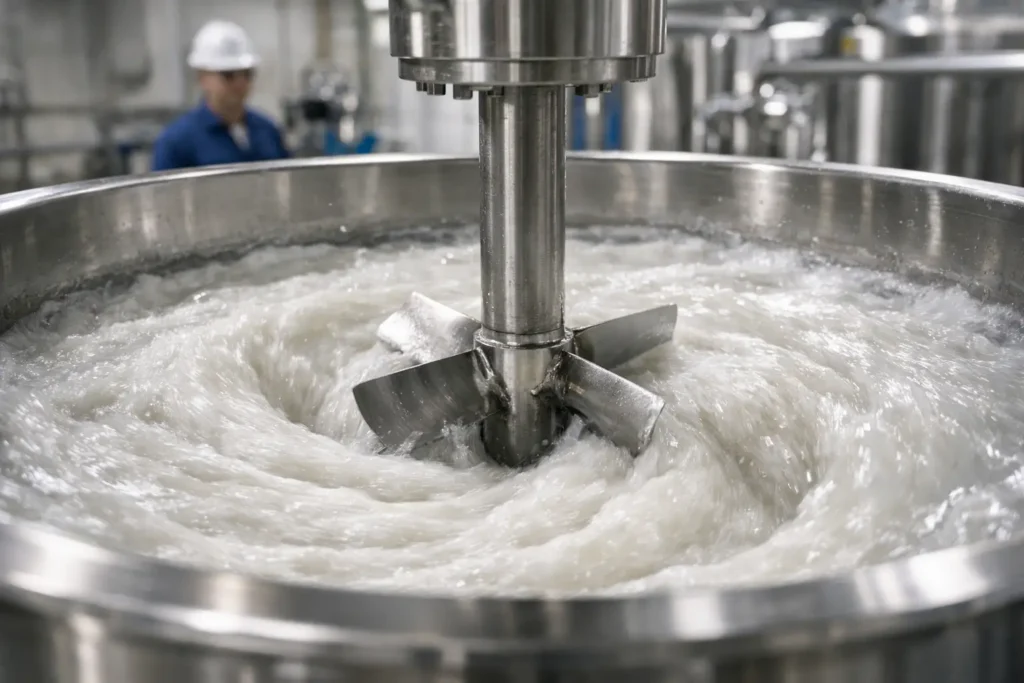
A mixer that hits target blend uniformity in a test run can still become a production liability once upstream handling, downstream transfer, controls, and cleaning realities enter the picture. That is why industrial mixing technology is rarely just a vessel with an agitator. In high-performance manufacturing, it is a process-critical part of a larger system that affects consistency, throughput, validation, maintenance burden, and the speed at which a line reaches stable operation.
For manufacturers working in regulated or high-consequence environments, the real question is not simply which mixer can move material. The question is which mixing approach can hold product quality within specification while integrating cleanly with feeding, dosing, thermal processing, extrusion, packaging, and plant controls. That distinction matters because many mixing failures are not caused by a lack of horsepower. They come from poor process fit, incomplete system engineering, or accountability split across too many vendors.
What industrial mixing technology actually needs to solve
At a technical level, mixing exists to reduce variability. That may mean dispersing powders uniformly, wetting solids without agglomeration, suspending difficult materials, creating a controlled emulsion, or managing heat and shear so the product stays within specification. Each duty places different demands on equipment geometry, agitator design, residence time, energy input, and discharge behavior.
The complication is that production conditions are rarely static. Material properties shift with moisture, particle size distribution, temperature, lot variation, and bulk density. A system that performs well with free-flowing powders may struggle with cohesive blends. A liquid process that looks stable at one viscosity may lose efficiency as solids loading increases. The right industrial mixing technology must therefore be selected around actual process behavior, not generic capacity ratings.
That is also where trade-offs begin. Higher shear can improve dispersion speed, but it may damage sensitive ingredients or increase heat generation. Longer mix cycles can improve homogeneity, but they reduce throughput. More complex agitation systems can widen process capability, but they often add cleaning and maintenance considerations. Good engineering does not ignore these tensions. It makes them visible early so the production line is designed around the realities of the application.
Selecting industrial mixing technology by process objective
The most effective way to evaluate mixers is to start with the process outcome that matters most. If the goal is dry blending, the priority is typically uniformity, gentle handling where required, and reliable discharge without segregation. If the goal is liquid-liquid or liquid-solid dispersion, shear profile, viscosity range, and solids incorporation behavior take center stage. In thermal or reactive processes, heat transfer, residence time control, and batch repeatability become equally important.
This sounds straightforward, but in practice many projects still begin with a preferred machine type rather than a defined process window. That approach creates risk. A mixer chosen for peak throughput alone may force workarounds in upstream feeding or downstream packaging. A system designed without considering clean-in-place requirements may meet production goals while complicating sanitation or validation. In other words, the mixer can be technically functional and still be the wrong answer for the line.
For this reason, process development should account for feed characteristics, batch size variation, target cycle time, cleaning strategy, automation requirements, and expected future capacity. A line built only for current demand often becomes constrained as formulations expand or production volumes rise. Scalable mixing technology should support not just today’s product, but tomorrow’s operating model.
Why integration matters more than a mixer datasheet
A well-specified mixer can underperform if the surrounding system is not engineered to support it. Raw material handling affects feed accuracy and consistency. Milling changes particle size and influences blend behavior. Conveying methods can introduce segregation or material degradation. Controls determine recipe execution, alarm logic, batching accuracy, and traceability. Discharge design affects whether the product reaches the next step consistently or creates accumulation and downtime.
This is why isolated equipment procurement often creates avoidable problems. One supplier may size the mixer correctly, another may provide bulk handling equipment, and another may handle controls. On paper, each package looks acceptable. During commissioning, however, mismatched assumptions begin to surface. Feed rates are unstable. Material transfer timing conflicts with batch sequencing. Control architecture is fragmented. Responsibility becomes difficult to assign because no single party owns total process performance.
In demanding environments, that risk is expensive. Delayed startup, extended validation, off-spec material, and repeated adjustments in the field can erode the business case quickly. A fully integrated approach reduces those variables by aligning mixing technology with the entire production system from the beginning – mechanical design, controls, utilities, process flow, and lifecycle support.
The role of automation in industrial mixing technology
Modern mixing performance depends as much on controls as on mechanical design. Recipe management, load cell feedback, ingredient verification, timed additions, speed control, temperature monitoring, and data capture all influence repeatability. When production targets are tight, manual intervention becomes a source of inconsistency.
Automation does more than reduce operator burden. It establishes process discipline. Controlled sequencing ensures ingredients are introduced at the correct stage. Variable speed profiles can optimize dispersion without unnecessary shear. Integrated alarms help operators correct deviations before they become quality events. In regulated industries, audit-ready records and batch traceability may be just as important as the physical mix itself.
That said, more automation is not always better if it is added without usability in mind. Overly complex interfaces or poorly coordinated logic can slow troubleshooting and frustrate operations teams. Effective automation should make the process easier to run, easier to diagnose, and easier to scale across multiple lines or facilities.
Designing for reliability, cleaning, and lifecycle performance
Mixing technology is often evaluated on installed cost and near-term output, but lifecycle performance deserves equal weight. Bearings, seals, drive systems, agitator assemblies, access points, internal finishes, and wear surfaces all affect long-term reliability. So do maintenance access, spare parts strategy, and the quality of documentation delivered with the system.
Cleaning requirements are especially important. In food, nutraceutical, pharmaceutical, personal care, and specialty chemical production, the time required to clean and verify equipment can be a major determinant of line utilization. The right solution depends on the process. Some applications justify full clean-in-place capability. Others are better served by rapid disassembly and washdown access. The wrong choice can lock a plant into excessive downtime or unnecessary complexity.
This is where system-level engineering changes the discussion. When mixing is considered alongside transfer, thermal treatment, containment, and packaging, cleaning strategy can be coordinated across the whole line rather than optimized at one machine and compromised everywhere else.
Common failure points when specifying a mixing system
Several issues appear repeatedly in underperforming projects. The first is assuming material behavior at production scale will match bench results without enough testing or process modeling. The second is treating capacity as the primary selection criterion while overlooking blend quality, discharge efficiency, and changeover demands. The third is buying around the process – selecting separate machines first and trying to integrate them later.
Another frequent problem is underestimating the cost of fragmented accountability. When mechanical, automation, and process responsibilities are split across vendors, every startup issue takes longer to diagnose and resolve. That may be manageable in simple applications. In high-output or regulated facilities, it becomes a strategic weakness.
Manufacturers that prioritize single-source integration typically do so because they have already experienced the alternative. They have seen what happens when equipment arrives on different schedules, controls do not communicate as expected, and field modifications become the default path to commissioning. The lesson is consistent: process performance improves when one engineering framework governs the whole system.
What strong industrial mixing technology looks like in practice
Strong mixing performance is measurable. It shows up in predictable cycle times, stable product quality, efficient ingredient incorporation, reliable discharge, manageable cleaning intervals, and fewer operator workarounds. It also shows up in how quickly a line reaches repeatable output after installation.
For organizations scaling production, modernizing aging assets, or building new capacity, the best investment is usually not the most aggressive mixer on paper. It is the system engineered around the product, the plant, and the production objectives. That means evaluating mixing as part of a complete process architecture, not as a standalone purchase.
This is the standard performance-driven manufacturers increasingly expect from partners like Proc-X: one manufacturer, one engineering standard, and one point of accountability across the production line. When industrial mixing technology is approached that way, the result is not just better blending. It is a more stable, scalable, and defensible manufacturing operation.
The right mixing system should make the rest of the line easier to run, not harder to explain.