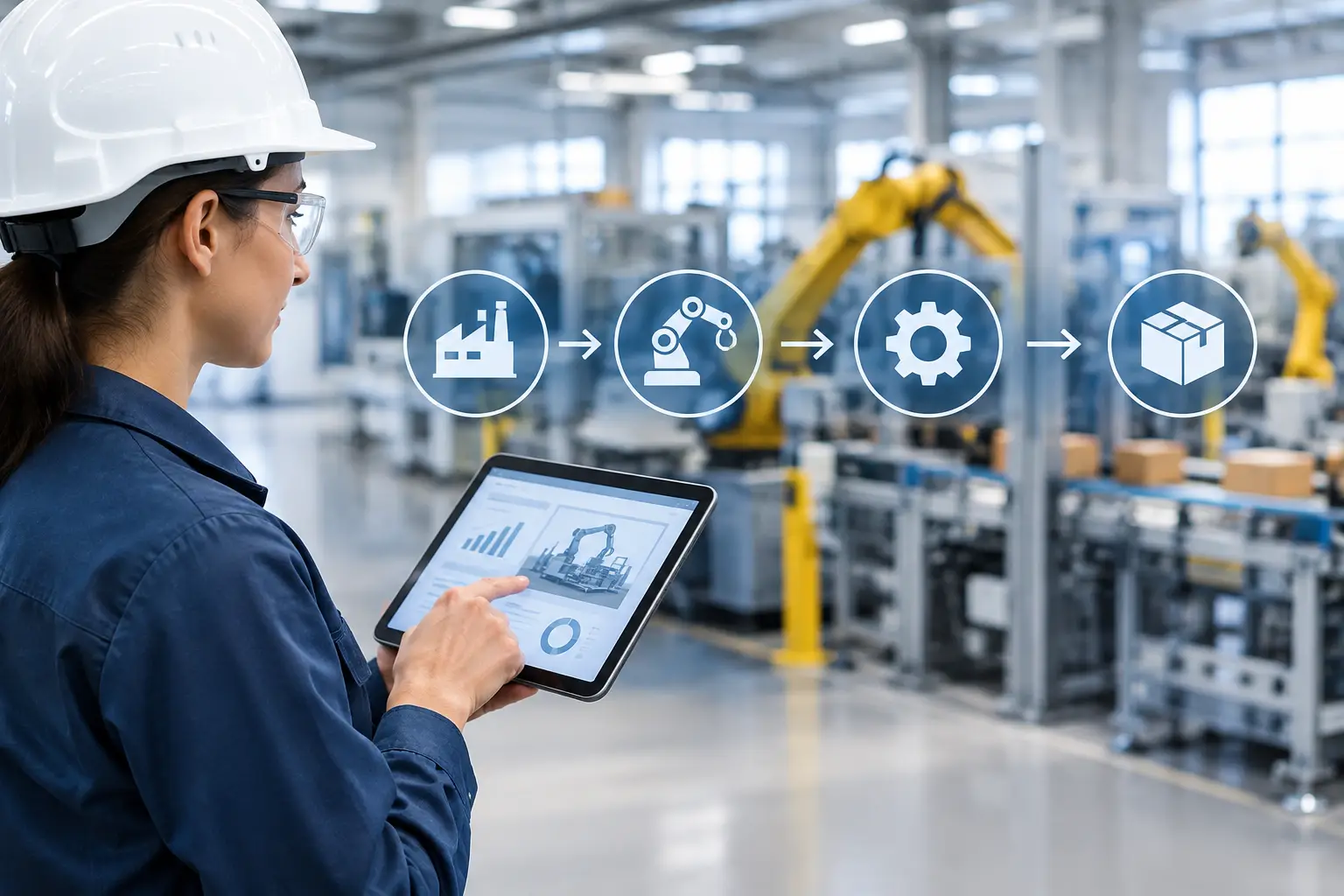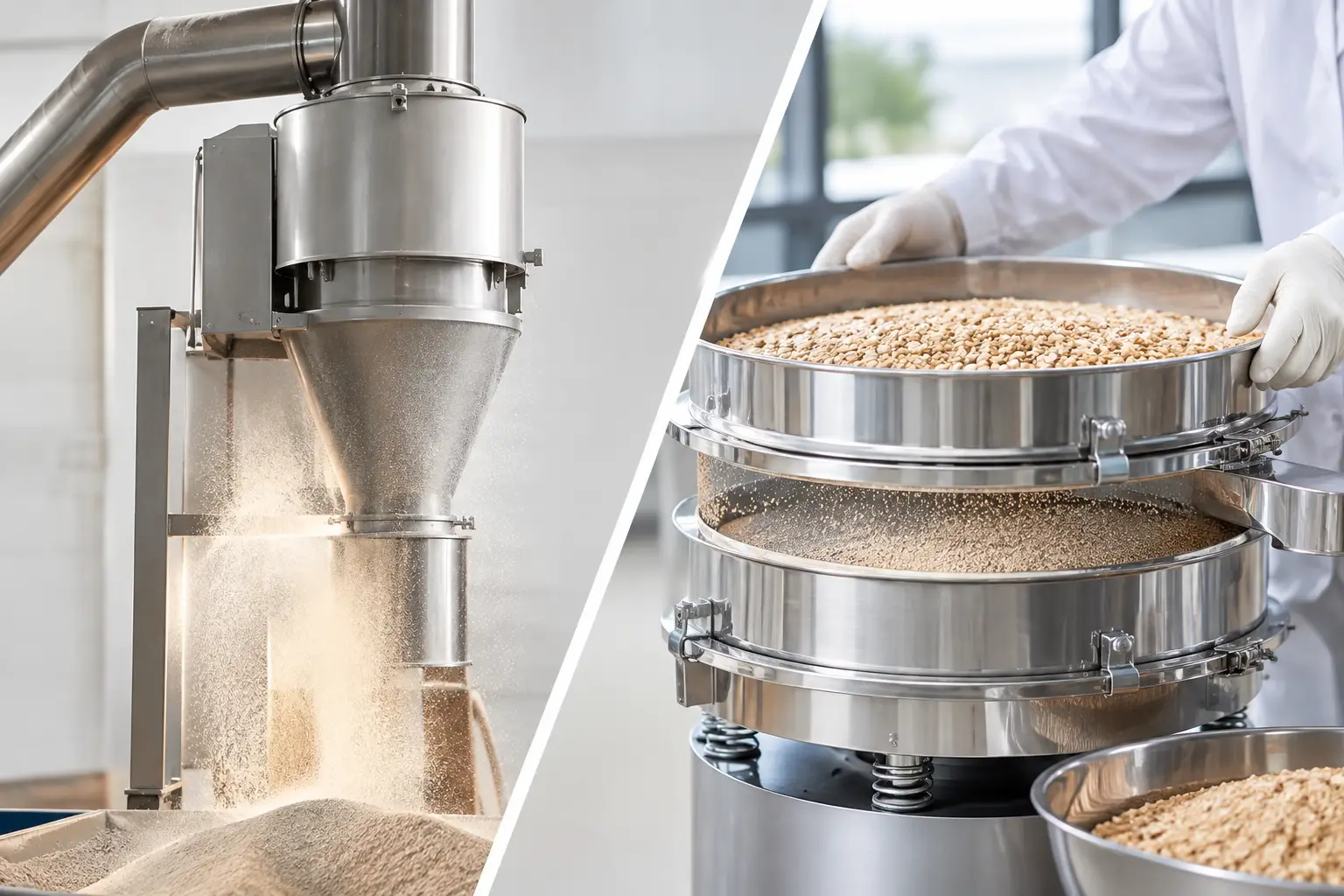
A milling system rarely fails on paper. Problems show up later – when feed variability increases, dust loading climbs, particle size drifts, or upstream and downstream equipment stop behaving like the original model assumed. That is why industrial milling system design has to be approached as a process engineering problem, not a machine selection exercise.
In demanding production environments, milling performance is inseparable from the rest of the line. Raw material handling affects feed consistency. Air management affects classification, temperature, and housekeeping. Controls affect repeatability. Packaging, extrusion, mixing, or thermal processing downstream can expose particle size variation that looked acceptable at the mill discharge. If the system is designed in pieces, those interactions become expensive.
What industrial milling system design actually requires
Effective industrial milling system design starts with a simple question: what must the production line deliver, consistently, under real operating conditions? Throughput matters, but it is only one variable. Most manufacturers are balancing a combination of target particle size distribution, bulk density, moisture sensitivity, heat generation, contamination control, cleanability, yield, and line uptime.
That changes the engineering conversation. The right mill for one application may be the wrong answer in another, even when the nominal capacity looks similar. A chemical producer focused on narrow particle distribution may prioritize classification and thermal control. A food manufacturer may place equal weight on sanitation, allergen changeover, and gentle handling. In battery materials or defense-related applications, containment, material compatibility, and traceability can carry as much weight as throughput.
This is where many capital projects lose ground early. Teams compare isolated equipment ratings rather than evaluating how the milling section behaves inside the full production system. Motor horsepower, screen size, or tip speed are relevant, but they do not define system performance on their own.
The process inputs that shape milling system performance
Mill selection is driven by material behavior first. Friable, fibrous, abrasive, hygroscopic, heat-sensitive, and cohesive materials do not respond the same way to impact, attrition, compression, or shear. Feed form also matters. Powder, granules, chunks, ribbons, flakes, and rework streams each create different loading patterns and feeding challenges.
A disciplined design process evaluates more than the target final size. It should account for feed size range, moisture content, temperature sensitivity, explosive potential, contamination risk, and expected variability lot to lot. Material that runs well during a controlled trial can behave differently in production when upstream dosing changes, storage conditions shift, or operators push for higher throughput.
That is why feed presentation is often underestimated. Inconsistent inlet flow creates inconsistent milling. Poor metering can flood the chamber, increase recirculation, raise fines generation, and destabilize downstream transfer. In many systems, the feeder, airlock, hopper geometry, and conveying method have as much influence on performance as the mill itself.
Throughput and particle size are linked, not separate targets
Manufacturers often want maximum throughput and a tighter particle size distribution at the same time. Sometimes that is achievable. Often it is a trade-off. Higher throughput can reduce residence time control. Tighter classification may lower net output. Lower operating temperatures may require more air handling or staged processing.
Good engineering makes those trade-offs visible before equipment is purchased. It defines the operating window, not just the peak case. That distinction matters because most plants do not fail at nameplate output. They fail when a system becomes unstable outside a narrow ideal range.
Why integration matters more than individual machine performance
The milling section should never be engineered as a standalone island. It has to work with material intake, storage, feeding, aspiration, separation, dust collection, transfer, blending, and packaging or secondary processing. Once those elements are connected, the design priorities become clearer.
Airflow is a good example. In some milling applications, air is not just for dust control. It directly affects cooling, transport, classification efficiency, and housekeeping. Undersized dust collection can reduce throughput and increase maintenance. Oversimplified duct design can create pressure instability that changes how the mill performs over time. What looks like a mill problem is often an air management problem.
Controls architecture is another common gap. If the mill, feeder, blower, valve train, and downstream transfer equipment are supplied by different vendors with different control philosophies, commissioning gets more difficult and operating stability usually suffers. Integrated controls allow coordinated setpoints, alarm management, recipe control, and trend visibility across the full system. That is what turns a line into a repeatable manufacturing asset rather than a collection of machines.
Key design decisions in an industrial milling system
Several engineering decisions tend to determine whether a project performs well after startup.
The first is choosing the right milling technology for the actual duty. Hammer mills, pin mills, roller mills, classifiers, and other size reduction technologies each solve different problems. There is no universal best option. The right choice depends on material response, particle size target, throughput range, and the role of the milling step in the larger process.
The second is defining how the material enters and exits the mill. Feeding method, surge capacity, tramp protection, metal detection, aspiration, discharge containment, and transfer to the next operation all affect uptime and product consistency. Plants that focus only on the mill housing and rotor often inherit avoidable production issues around it.
The third is designing for maintainability. Wear parts, access points, cleaning procedures, bearing service, and inspection time directly influence lifecycle cost. A system that performs well during acceptance testing but requires excessive downtime for screen changes, internal cleaning, or routine maintenance will not support long-term production goals.
Designing for regulated and high-consequence environments
In regulated industries, industrial milling system design must address more than output. Sanitary construction, validation support, dust containment, explosion protection, product traceability, and material segregation may all be mandatory depending on the application.
That is where single-source engineering becomes especially valuable. If containment strategy, controls integration, material transfer, and downstream packaging are designed under one engineering standard, risk is reduced. If each part of the line is sourced separately, accountability gets blurred quickly when performance or compliance problems appear.
For technical buyers, that is not a theoretical concern. It affects startup schedules, site acceptance, operator training, documentation quality, and service response after handover.
Common failure points in milling projects
Most underperforming milling systems do not fail because the technology is fundamentally wrong. They fail because the design basis was incomplete, the interfaces were weak, or the project execution was fragmented.
One common issue is designing around average material behavior instead of actual production variability. Another is underestimating dust handling and pressure balance. A third is treating controls as an afterthought rather than part of process performance. There is also a recurring tendency to buy for immediate capacity without considering future formulations, line expansions, or packaging changes.
Proc-X addresses these risks by engineering milling solutions as part of a complete processing platform, with coordinated material handling, size reduction, automation, and downstream integration under one accountable structure. That approach reduces the compatibility and commissioning issues that often emerge in multi-vendor projects.
How to evaluate a milling system design before you commit
For process engineers and procurement leaders, the right question is not whether a mill can run the product. The right question is whether the full system can sustain the required output, quality, and uptime in normal plant conditions.
That means asking for a clear design basis, defined operating assumptions, documented utility requirements, and a realistic explanation of how the milling section interacts with upstream and downstream equipment. It also means reviewing cleanout strategy, wear expectations, controls scope, service access, and future scalability before fabrication begins.
A credible partner should be able to explain what will happen when feed characteristics shift, when production rates change, or when a new formulation is introduced. If the answer depends on field improvisation, the design is not finished.
The strongest milling systems are engineered with a full-line mindset. They account for variability, support repeatable control, and give operations teams a stable process rather than a narrow test condition. That is what separates a machine that runs from a production system that performs year after year.
When industrial milling system design is treated as an integrated engineering discipline, manufacturers gain more than particle size control. They gain throughput confidence, commissioning clarity, and one less source of operational uncertainty in a process that cannot afford surprises.