A conveying line that moves 20,000 pounds per hour of free-flowing sugar can fail quickly when asked to handle the same rate of a cohesive, moisture-sensitive powder. That distinction is why pneumatic conveying cannot be selected from a capacity chart alone. It is an engineered material-transfer system in which the product, air supply, pipeline geometry, separation equipment, controls, and downstream process must operate as one.
For manufacturers handling powders, granules, pellets, and other dry bulk solids, the right system can reduce manual handling, contain dust, protect product quality, and create a more controlled production flow. The wrong system can create plugging, excessive wear, segregation, product degradation, unstable feed rates, and difficult maintenance. The difference begins with a clear understanding of the material and the process around it.
What Pneumatic Conveying Must Accomplish
Pneumatic conveying uses controlled gas flow, usually air, to transfer bulk material through enclosed pipelines. It is often selected where floor space is limited, multiple pickup or discharge points are needed, dust containment matters, or mechanical conveyors would create difficult routing and sanitation challenges.
Its purpose is not simply to move material from point A to point B. In a production environment, the system must deliver a specified material quantity at the required rate while preserving defined product characteristics. That may mean avoiding attrition in fragile agglomerates, preventing cross-contamination between formulations, limiting oxidation exposure, controlling dust in a combustible environment, or feeding a blender, mill, reactor, packaging line, or storage vessel at a stable rate.
A well-designed system therefore starts with performance requirements: what the material is, how much must move, where it must go, and what cannot happen during transfer. These requirements affect every major design choice.
Dilute Phase and Dense Phase Pneumatic Conveying
The fundamental system decision is usually whether to use dilute-phase or dense-phase conveying. Neither is inherently superior. Each serves different material behavior, conveying distances, capacities, and product-quality objectives.
Dilute-phase conveying
Dilute-phase systems suspend particles in a high-velocity air stream. They are commonly used for free-flowing, non-fragile materials that can tolerate the velocity needed to remain airborne. Their relatively simple operating principle can make them effective for many applications involving grains, plastic pellets, mineral powders, and similar materials.
The trade-off is that high velocity increases particle-to-wall and particle-to-particle contact. For abrasive products, that can accelerate elbow and pipeline wear. For friable materials, it can generate fines and alter particle-size distribution. High velocity can also increase noise, energy demand, and the risk of product segregation when a blend contains components with significantly different densities or particle sizes.
Dense-phase conveying
Dense-phase systems move material at lower air velocity and higher solids loading. Depending on the product and system design, material may travel in plugs, dunes, or a moving bed along the pipe. This approach is often considered for fragile, abrasive, high-value, or difficult-to-handle materials, as well as applications where reduced degradation is a priority.
Dense phase is not a universal answer for sensitive powders. It requires dependable feeding, carefully managed air injection, appropriate pipeline sizing, and controls that can maintain stable conveying conditions. Materials that compact, smear, bridge, or vary substantially in moisture may require testing and additional conditioning before dense-phase transfer is practical.
The right choice depends on measured material behavior and production objectives, not just a preference for a particular conveying method.
Material Data Drives System Design
The most costly pneumatic conveying errors occur when a system is designed around a material name rather than its actual properties. “Calcium carbonate,” “protein powder,” or “plastic regrind” does not provide enough design information. Grade, particle shape, moisture, bulk density, formulation changes, and handling history can change how a material responds in a pipeline.
Engineering should evaluate bulk density, particle-size distribution, flowability, moisture content, cohesiveness, friability, abrasiveness, and temperature. Air permeability and the material’s response to compaction are particularly significant for dense-phase applications. A powder that appears free-flowing in a sample container may behave very differently after sitting in a hopper, receiving pressure from a rotary valve, or traveling through multiple bends.
Material testing is especially valuable when the product is new, variable, high value, hazardous, or difficult to replace after a failed trial. Representative samples should reflect actual production conditions, including expected moisture range, temperature, fines content, and any recycle stream. Testing can establish practical conveying velocities, air requirements, pressure drop, expected degradation, and feeder performance before capital equipment is committed.
The System Is More Than a Blower and Pipe
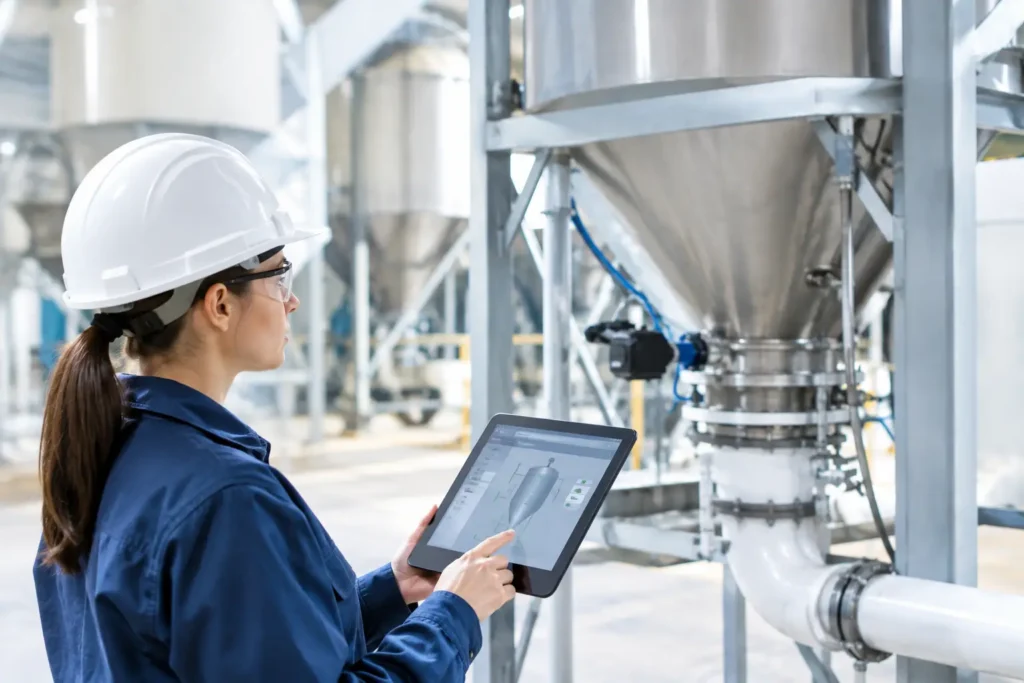
A pneumatic conveying installation succeeds or fails as an integrated system. The blower or compressor must deliver the required airflow and pressure across the operating range, not merely meet a nominal point. The pipeline must accommodate distance, vertical lift, bends, routing constraints, cleanability, and wear exposure. Pickup equipment must meter material consistently without starving or overloading the line.
At the receiving end, filtration and separation equipment must recover the conveyed material while controlling emissions and maintaining airflow. Filter selection affects pressure stability, cleaning frequency, housekeeping, and operator exposure. In hygienic or regulated production, receiver geometry, filter media, clean-in-place requirements, and validation documentation may carry as much weight as the conveying rate.
Pipeline details deserve equal attention. Long-radius bends, wear-resistant elbows, diverter valves, cleanout provisions, and properly designed transitions all affect performance. A piping route that looks economical in a layout drawing can create excessive pressure loss, wear concentration, retention zones, or poor access for maintenance. The lowest installed cost is rarely the lowest lifecycle cost.
Feeding, Air Control, and Automation
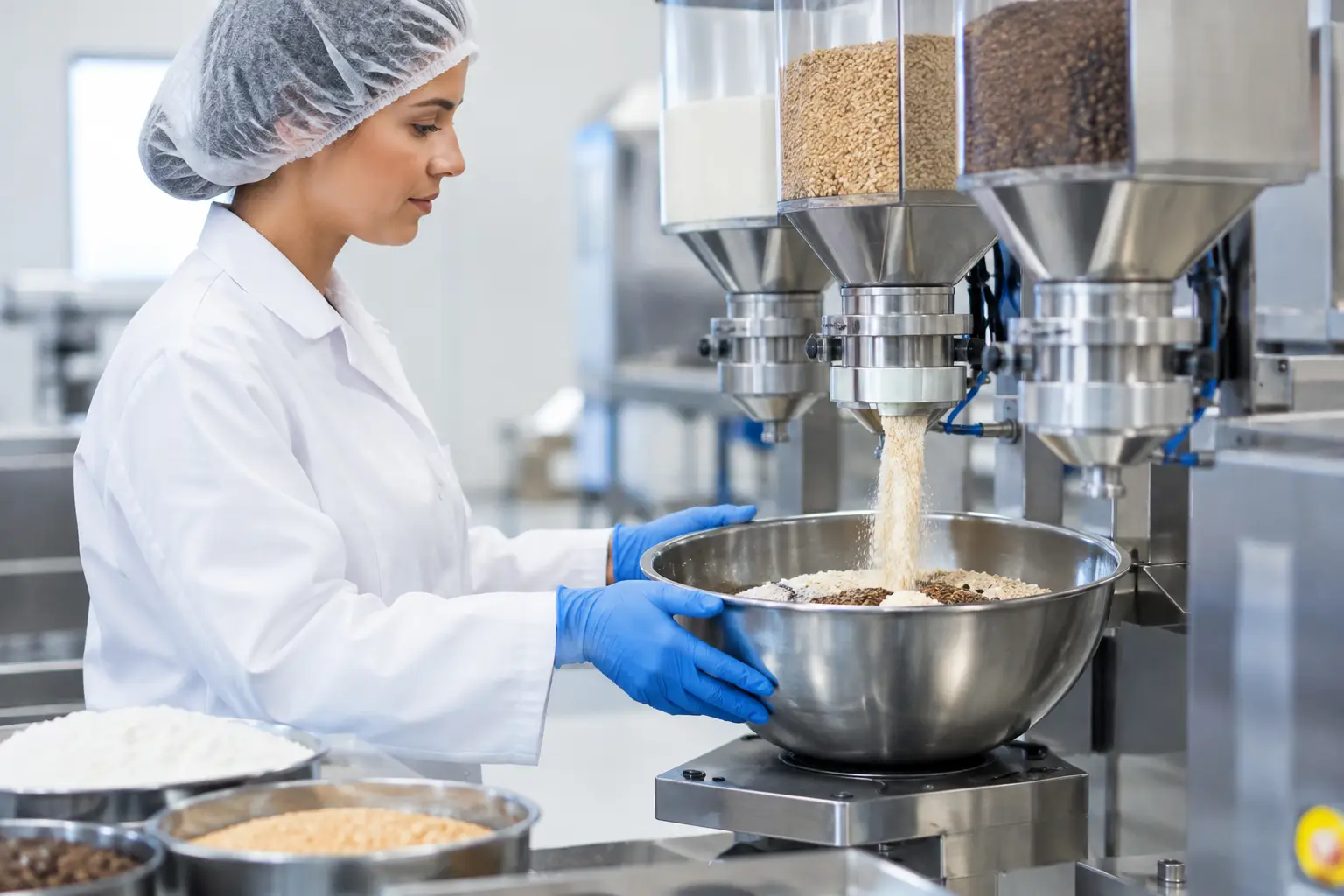
A stable feed is essential. Rotary airlocks, screw feeders, venturi pickups, pressure vessels, and vacuum receivers each serve specific duties. Their selection must account for the material’s tendency to bridge, compact, leak air, or flood. If the feeder cannot consistently introduce material into the conveying line, no amount of downstream air control will correct the problem.
Air control is equally important. Variable-frequency drives, pressure transmitters, airflow measurement, sequence logic, and controlled air injection can help maintain operation across changing line conditions. Automation should identify abnormal pressure trends before a blockage occurs, confirm vessel discharge, protect blowers from improper operating conditions, and coordinate transfer with upstream storage and downstream equipment.
For multi-ingredient systems, controls also provide traceability and recipe discipline. A transfer system may need to verify source selection, prevent incompatible routing, confirm receiver capacity, and record batch movement. These functions are not accessories. They are part of the production control strategy.
Design for Product Quality and Plant Reality
Pneumatic transfer can influence finished-product quality well before blending, milling, or packaging. A powder may pick up moisture from inadequately conditioned conveying air. A blend may segregate through repeated transfers. An abrasive mineral can contaminate product through worn piping. A heat-sensitive ingredient can be affected by compressed-air temperature or prolonged residence time in a poorly designed receiver.
The operating environment also changes the specification. Food, pharmaceutical, nutraceutical, and cosmetic applications may require sanitary construction, allergen controls, cleanability, and materials of construction appropriate for product contact. Chemical, battery, metal powder, and combustible-dust applications may require specialized containment, grounding, explosion protection, inerting, or hazard-area compliance. These considerations must be resolved early, because they affect the entire system architecture.
Maintainability should be designed in rather than addressed after startup. Operators and maintenance teams need access to filters, valves, blowers, bends, instruments, and cleanout points. Wear components should be identifiable and replaceable without major disassembly. Controls should provide useful diagnostics instead of a generic fault indication that leaves the team searching across hundreds of feet of pipe.
Specify the Transfer System in Process Context
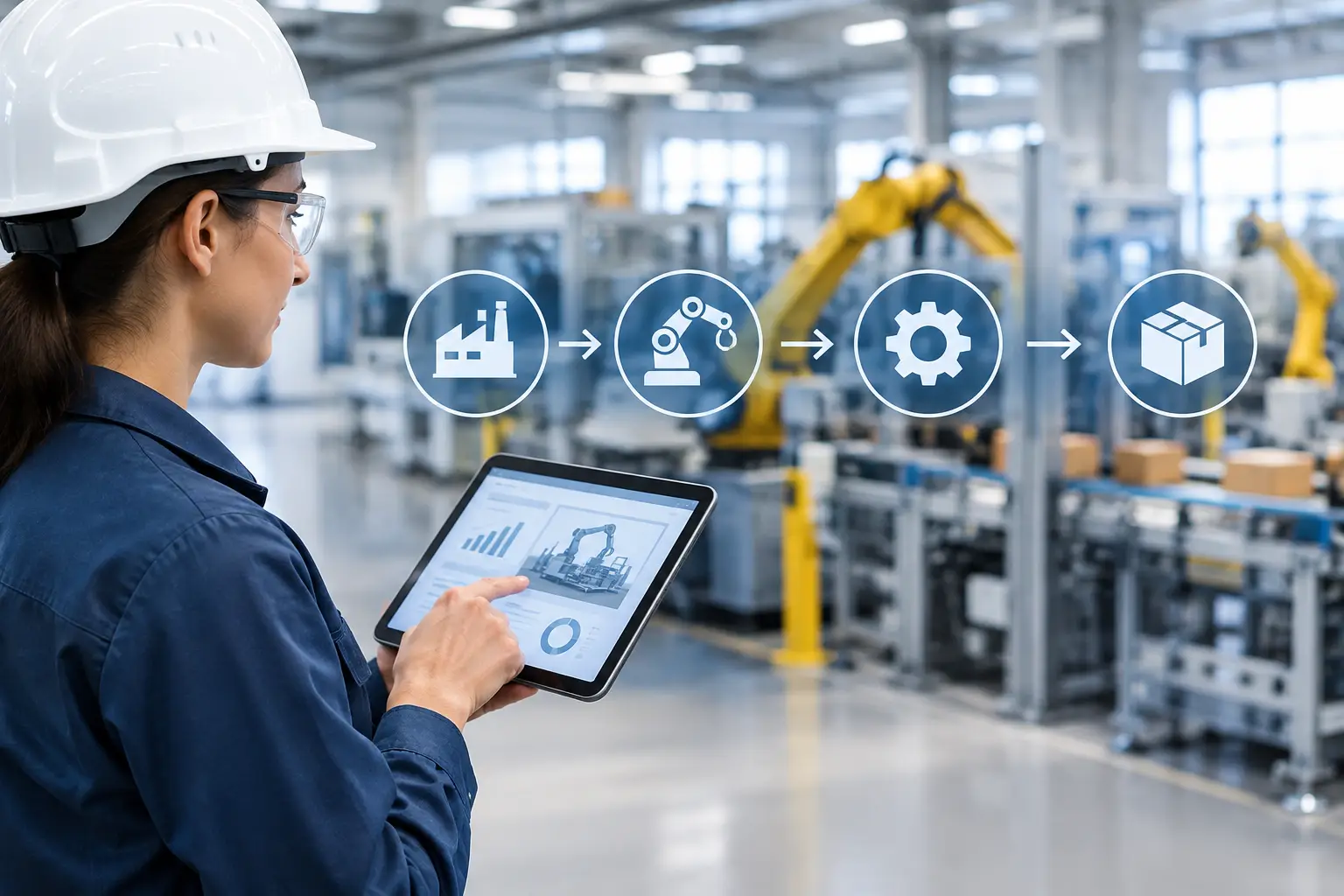
A pneumatic conveying system should be specified as part of the complete process, not as an isolated utility package. The conveyor may receive material from bulk bag unloaders, silos, bag dump stations, mills, or loss-in-weight feeders. It may discharge to surge hoppers, blenders, reactors, extruders, tablet presses, or packaging equipment. Each connection introduces constraints involving rate, elevation, batch size, timing, containment, and cleanability.
The most productive project discussions establish a clear design basis before equipment selection. This includes normal and peak throughput, batch versus continuous operation, conveying distance and elevation, material characteristics, source and destination equipment, allowable degradation, utility availability, dust-control requirements, cleaning expectations, and future expansion plans. It also identifies what happens during interruptions: where material resides, how the line is cleared, and how the system restarts without compromising the batch.
Proc-X approaches bulk-material transfer as part of a coordinated processing system, with responsibility for how conveying interacts with feeding, size reduction, mixing, automation, and downstream packaging. That systems perspective is critical when capacity, quality, safety, and uptime are all non-negotiable.
The best pneumatic conveying design is rarely the one with the highest air velocity or the most elaborate controls. It is the one that moves the actual material reliably, protects the process it serves, and gives the operating team predictable control shift after shift.