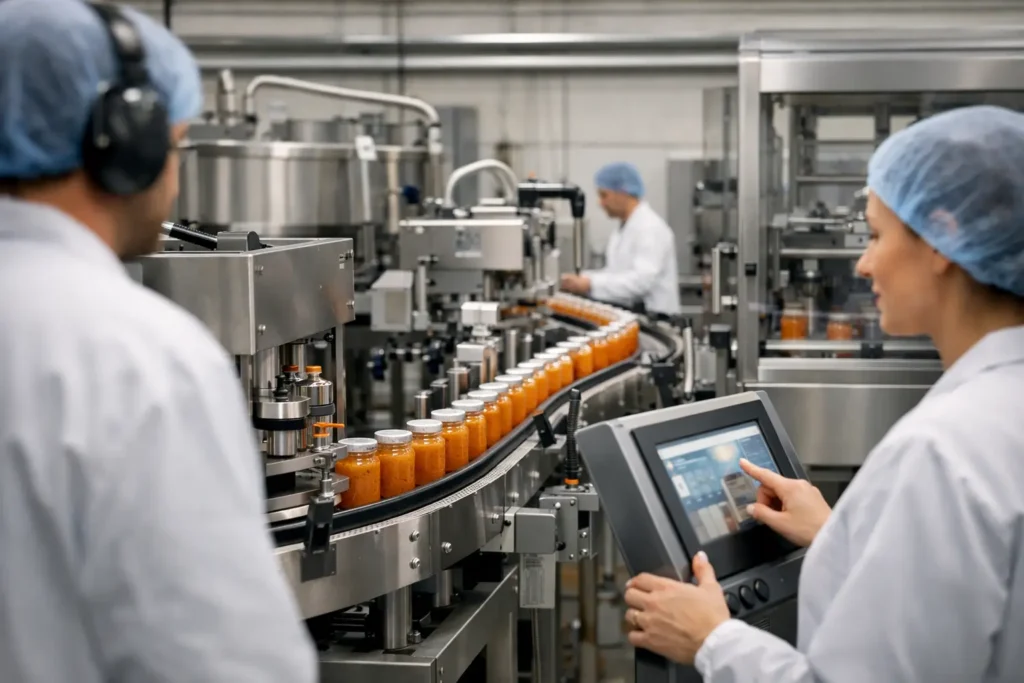
A production line rarely fails because one machine cannot perform its assigned task. It fails at the handoffs: a feeder that cannot maintain the mixer’s demand, a transfer system that segregates material, a control sequence that allows a vessel to run before its upstream conditions are met. Effective process line integration addresses those handoffs as engineered process requirements, not field-installation details.
For manufacturers processing powders, granules, liquids, slurries, pastes, or high-viscosity materials, the objective is not simply to connect equipment. It is to create a controlled production system that consistently converts incoming material into finished product at the required rate, quality standard, and operating cost. That requires accountability for material behavior, equipment interfaces, automation, safety, sanitation, and future capacity from the beginning of the project.
Process Line Integration Begins With the Material
A line diagram may show a hopper, feeder, mill, mixer, conveyor, and packaging machine in sequence. That diagram does not establish whether the line will operate as intended. The material determines many of the integration decisions that follow.
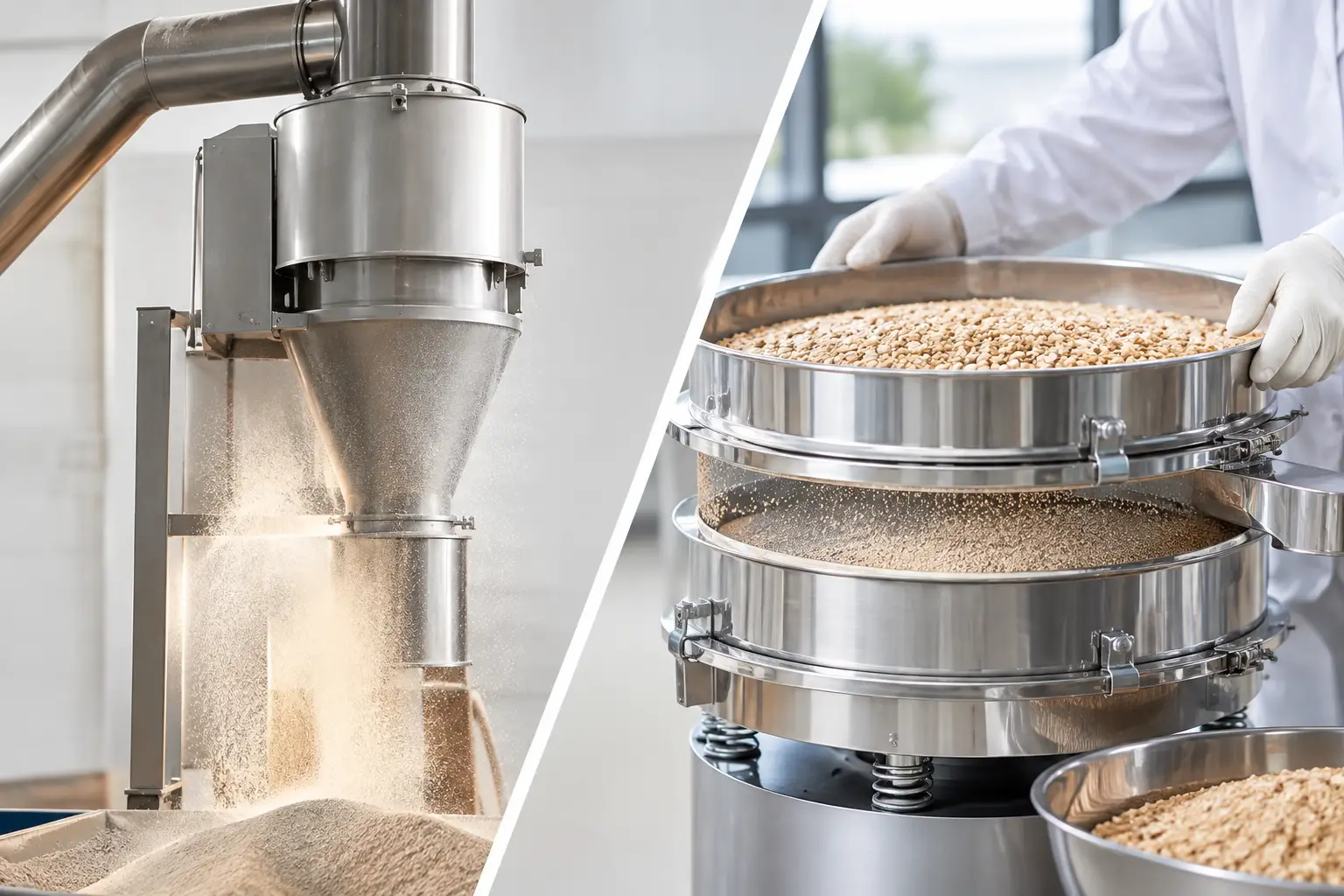
A free-flowing granular ingredient may transfer predictably through pneumatic or mechanical conveying equipment. A cohesive powder can bridge in a hopper, flood through a feeder, adhere to filters, or resist discharge from a blender. A heat-sensitive formulation may lose performance if milling, mixing, or vacuum processing introduces too much energy. An abrasive mineral can shorten the service life of elbows, valves, and classifier components. Each condition changes the design basis for the entire line.
This is why material characterization should occur before final equipment selection. Bulk density, particle-size distribution, moisture level, flowability, friability, electrostatic behavior, temperature sensitivity, and abrasiveness influence equipment sizing and arrangement. They also determine whether transfer velocities, feeder accuracy, residence time, dust collection, and cleaning methods are compatible with the finished-product specification.
For regulated food, pharmaceutical, nutraceutical, and specialty chemical applications, the product-contact design and validation strategy must be defined at the same stage. A line that meets throughput expectations but creates inaccessible cleanout areas or inconsistent batch records is not an integrated solution.
Define the Production Objective Before Selecting Machines
Equipment should serve the process objective, not dictate it. The first engineering question is usually not, “Which mixer?” It is, “What must the product look and perform like when it leaves the line?”
That question establishes the critical process parameters. For a dry blend, those may include component distribution, batch time, particle integrity, dust containment, and packaging weight accuracy. For an emulsion or high-viscosity paste, they may include droplet size, temperature profile, vacuum level, shear exposure, deaeration, and filling behavior. For battery materials or advanced powders, contamination control, particle morphology, moisture management, and traceability may be central requirements.
Production rate deserves similar scrutiny. A stated target of 5,000 pounds per hour can mean very different things depending on batch size, changeover frequency, uptime assumptions, packaging format, and downstream accumulation. Designing every machine around its nominal maximum rate often produces a line with mismatched operating windows. One undersized transfer step or slow cleanout cycle can set the practical capacity of the entire system.
A sound process line integration plan identifies the true bottleneck and sizes surrounding operations around achievable sustained output. It also accounts for startup, shutdown, product transitions, rework, off-spec handling, and planned maintenance. These are normal operating conditions, not exceptions that can be left for commissioning.
Engineer the Interfaces, Not Just the Equipment
The interface between two pieces of equipment is often where quality and productivity are won or lost. Material may compact as it enters a feeder, segregate during conveyance, accumulate in a transition chute, or remain in a pipe after a batch ends. These effects can create weight variation, blend inconsistency, cross-contamination, and unnecessary downtime.
Mechanical integration addresses the physical system: elevations, access platforms, equipment support, clearances, piping routes, dust pickup points, and the discharge geometry between operations. It also considers whether maintenance teams can safely inspect, remove, and replace wear components without dismantling adjacent equipment.
Process integration addresses what happens to the material across those same interfaces. A pneumatic conveying line, for example, must be selected around the powder’s fragility, transfer distance, required rate, and acceptable air-to-material ratio. A system optimized solely for velocity may degrade fragile agglomerates. A system designed with velocity too low may plug or allow line buildup. There is no universal answer because material properties and production priorities differ.
Controls integration connects the physical and process layers. Feeders must respond to demand without starving or overloading downstream equipment. Level instrumentation must be reliable under the actual dust, foam, vapor, or product-coating conditions present. Interlocks must prevent an operator from starting a downstream machine when critical upstream conditions have not been satisfied. Recipes, batch records, alarm management, and data collection need the same level of definition as motors and valves.
Automation Should Make Process Performance Visible
A modern integrated line does more than automate starts and stops. It gives operators and engineers a clear view of material movement, process status, and deviations that affect product quality.
The control architecture should reflect how the plant will actually run. Batch operations require coordinated sequencing, ingredient verification, weight tolerances, hold points, and electronic records. Continuous operations require stable feed control, material balance, rate monitoring, and rapid response to drift. In either case, the human-machine interface should present useful operating decisions rather than burying the team in alarms.
Traceability requirements vary by industry, but the principle is consistent: critical materials and critical conditions should be documented at the point where they occur. Lot tracking, weighment data, processing temperatures, vacuum levels, mixing times, and packaging verification can support quality investigations and continuous improvement when they are collected in a structured way.
Automation also needs practical boundaries. Full automation is not always the best economic choice for lower-volume operations, frequent product development, or processes requiring manual inspection. The right approach may combine automated dosing and transfer with controlled manual additions. The decision should be based on repeatability, labor exposure, contamination risk, expected changeovers, and lifecycle cost rather than automation for its own sake.
Design for Cleaning, Safety, and Maintainability
A line that meets its output target but takes too long to clean or maintain will not achieve its planned availability. Cleaning strategy must match the product family and regulatory environment. Dry cleanout may be appropriate for some powders; other applications require wet cleaning, clean-in-place capability, or validated disassembly procedures. The selected approach affects vessel design, pipe routing, filter arrangement, drainage, instrumentation, and access.
Dust control is equally integral to performance. Fine powders can affect operator safety, housekeeping, product yield, and equipment reliability. Where combustible dust is present, the line must be engineered with the appropriate hazard analysis and protection strategy. This can influence isolation devices, venting arrangements, grounding, dust-collection design, and equipment location. These elements cannot be treated as add-ons after the process equipment is installed.
Maintainability deserves the same discipline. Wear-resistant materials may be justified for abrasive products even when their initial cost is higher. Quick-access filters, removable conveying sections, clear maintenance zones, and standardized components can reduce the duration and risk of planned service. The best design depends on the cost of downtime, availability of maintenance labor, and the product’s impact on equipment wear.
Commissioning Is the First Proof of Integration
Factory acceptance testing, site acceptance testing, and production commissioning should verify more than individual equipment operation. The system must demonstrate that it can deliver the intended product under representative operating conditions.
That includes proving recipe execution, weighing accuracy, transfer reliability, process control response, safety interlocks, cleaning performance, and data capture. Acceptance criteria should be established early enough that equipment suppliers, controls engineers, quality teams, and plant operations share the same definition of success.
Commissioning also provides the opportunity to tune the line around real material behavior. Setpoints established during design are starting points. Feeder parameters, conveying air rates, mixing times, thermal profiles, and alarm limits may need adjustment once the complete process is operating. A coordinated project structure makes those adjustments faster because the teams responsible for equipment, controls, and process performance are working from one engineering standard.
Proc-X approaches line projects with that system-level accountability: individual technologies selected for the application, then engineered to operate as one production environment. For a capital project team, the practical next step is to document the product, operating targets, constraints, and acceptance criteria before issuing equipment specifications. That discipline gives every subsequent decision a measurable purpose.